
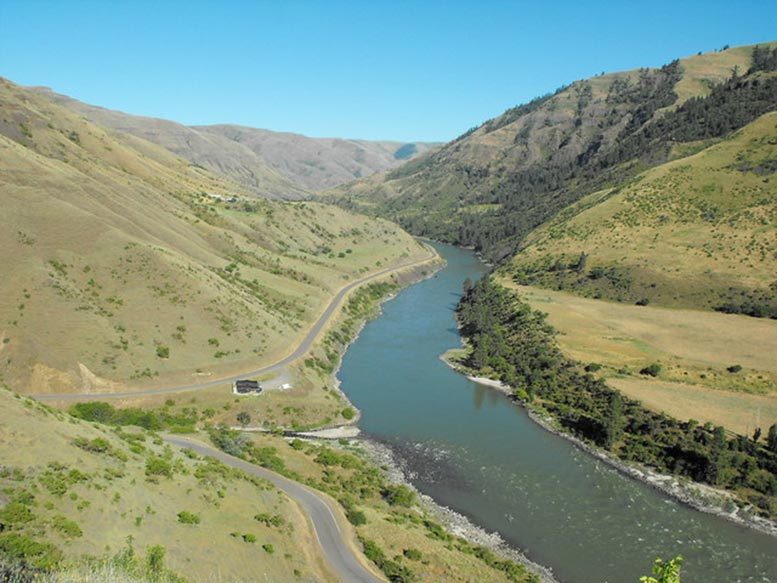
Stone tools and other artifacts unearthed from an archeological dig at the Cooper’s Ferry site in western Idaho suggest that people lived in the area 16,000 years ago, more than a thousand years earlier than scientists previously thought.
The artifacts would be considered among the earliest evidence of people in North America.
The findings, to be published tomorrow (August 30) in the journal Science, add weight to the hypothesis that initial human migration to the Americas followed a Pacific coastal route rather than through the opening of an inland ice-free corridor, said Loren Davis, a professor of anthropology at Oregon State University and the study’s lead author.
“The Cooper’s Ferry site is located along the Salmon River, which is a tributary of the larger Columbia River basin. Early peoples moving south along the Pacific coast would have encountered the Columbia River as the first place below the glaciers where they could easily walk and paddle into North America,” Davis said. “Essentially, the Columbia River corridor was the first off-ramp of a Pacific coast migration route.
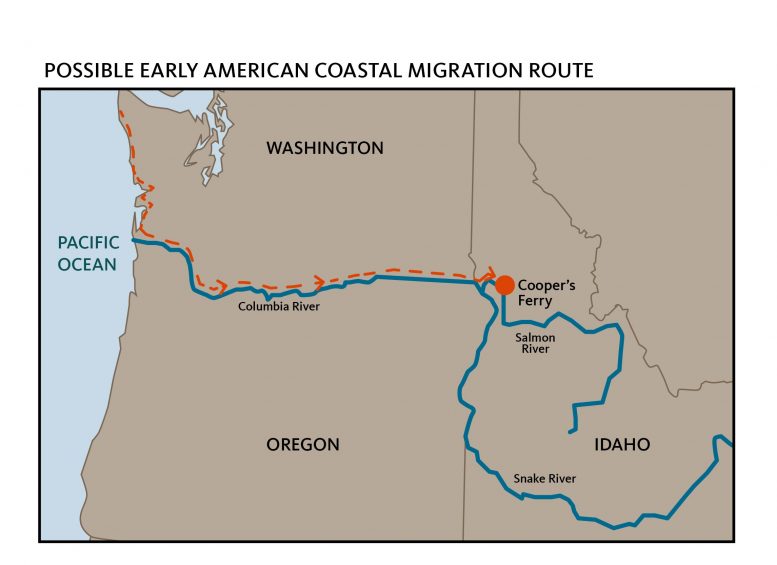
“The timing and position of the Cooper’s Ferry site are consistent with and most easily explained as the result of an early Pacific coastal migration.”
Cooper’s Ferry, located at the confluence of Rock Creek and the lower Salmon River, is known by the Nez Perce Tribe as an ancient village site named Nipéhe. Today the site is managed by the U.S. Bureau of Land Management.
Davis first began studying Cooper’s Ferry as an archaeologist for the BLM in the 1990s. After joining the Oregon State faculty, he partnered with the BLM to establish a summer archaeological field school there, bringing undergraduate and graduate students from Oregon State and elsewhere for eight weeks each summer from 2009 to 2018 to help with the research.
The site includes two dig areas; the published findings are about artifacts found in area A. In the lower part of that area, researchers uncovered several hundred artifacts, including stone tools; charcoal; fire-cracked rock; and bone fragments likely from medium- to large-bodied animals, Davis said. They also found evidence of a fire hearth, a food processing station, and other pits created as part of domestic activities at the site.
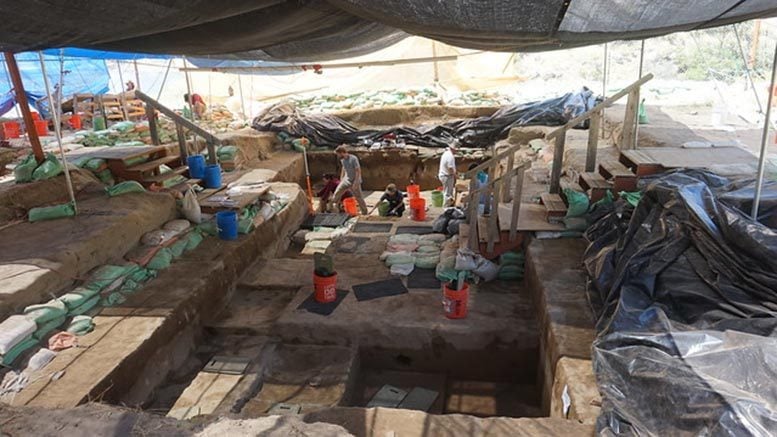
Over the last two summers, the team of students and researchers reached the lower layers of the site, which, as expected, contained some of the oldest artifacts uncovered, Davis said. He worked with a team of researchers at Oxford University, who were able to successfully radiocarbon date a number of the animal bone fragments.
The results showed many artifacts from the lowest layers are associated with dates in the range of 15,000 to 16,000 years old.
“Prior to getting these radiocarbon ages, the oldest things we’d found dated mostly in the 13,000-year range, and the earliest evidence of people in the Americas had been dated to just before 14,000 years old in a handful of other sites,” Davis said. “When I first saw that the lower archaeological layer contained radiocarbon ages older than 14,000 years, I was stunned but skeptical and needed to see those numbers repeated over and over just to be sure they’re right. So we ran more radiocarbon dates, and the lower layer consistently dated between 14,000-16,000 years old.”
The dates from the oldest artifacts challenge the long-held “Clovis First” theory of early migration to the Americas, which suggested that people crossed from Siberia into North America and traveled down through an opening in the ice sheet near the present-day Dakotas. The ice-free corridor is hypothesized to have opened as early as 14,800 years ago, well after the date of the oldest artifacts found at Cooper’s Ferry, Davis said.
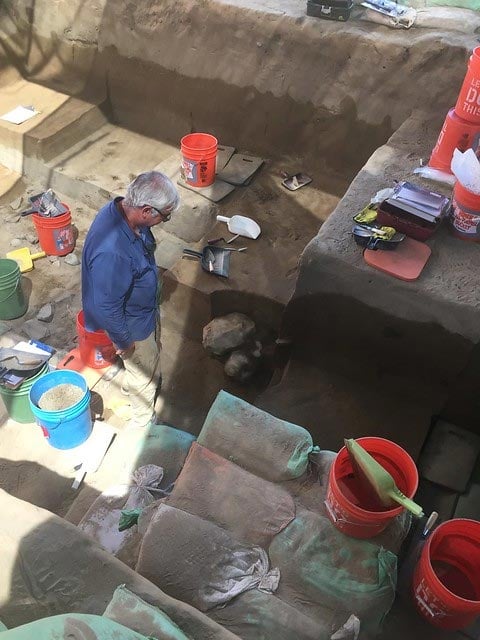
“Now we have good evidence that people were in Idaho before that corridor opened,” he said. “This evidence leads us to conclude that early peoples moved south of continental ice sheets along the Pacific coast.”
Davis’s team also found tooth fragments from an extinct form of horse known to have lived in North America at the end of the last glacial period. These tooth fragments, along with the radiocarbon dating, show that Cooper’s Ferry is the oldest radiocarbon-dated site in North America that includes artifacts associated with the bones of extinct animals, Davis said.
The oldest artifacts uncovered at Cooper’s Ferry also are very similar in form to older artifacts found in northeastern Asia, and particularly, Japan, Davis said. He is now collaborating with Japanese researchers to do further comparisons of artifacts from Japan, Russia, and Cooper’s Ferry. He is also awaiting carbon-dating information from artifacts from a second dig location at the Cooper’s Ferry site.
“We have 10 years’ worth of excavated artifacts and samples to analyze,” Davis said. “We anticipate we’ll make other exciting discoveries as we continue to study the artifacts and samples from our excavations.”
Co-authors of the paper include David Sisson, an archaeologist with the BLM; David Madsen of the University of Texas at Austin; Lorena Becerra Valdivia and Thomas Higham of the Oxford University radiocarbon accelerator unit; and other researchers in the U.S., Japan, and Canada. The research was funded in part by the Keystone Archaeological Research Fund and the Bernice Peltier Huber Charitable Trust.
Reference: “Late Upper Paleolithic occupation at Cooper’s Ferry, Idaho, USA, ~16,000 years ago” by Loren G. Davis, David B. Madsen, Lorena Becerra-Valdivia, Thomas Higham, David A. Sisson, Sarah M. Skinner, Daniel Stueber, Alexander J. Nyers, Amanda Keen-Zebert, Christina Neudorf, Melissa Cheyney, Masami Izuho, Fumie Iizuka, Samuel R. Burns, Clinton W. Epps, Samuel C. Willis and Ian Buvit, 30 August 2019, Science.
DOI: 10.1126/science.aax9830
Never miss a breakthrough: Join the SciTechDaily newsletter.
Follow us on Google and Google News.