
Close Menu
    Facebook X (Twitter) Instagram
    SciTechDaily
    • Biology
    • Chemistry
    • Earth
    • Health
    • Physics
    • Science
    • Space
    • Technology
    Facebook X (Twitter) Pinterest YouTube RSS
    SciTechDaily
    Home»Biology»Birds Learn To Avoid Plants That Host Dangerous Insects
    Biology

    Birds Learn To Avoid Plants That Host Dangerous Insects

    By University of BristolOctober 12, 2021No Comments3 Mins Read
    Facebook Twitter Pinterest Telegram LinkedIn WhatsApp Email Reddit
    Share
    Facebook Twitter LinkedIn Pinterest Telegram Email Reddit
    Cinnabar Larvae Feeding on Ragwort
    Cinnabar larvae feeding on ragwort. Credit: Callum McLellan

    The findings shed new light on how warning signals and toxicity may have evolved in insect prey.

    Young birds that eat insects with conspicuous warning coloration to advertise their toxicity to would-be predators quickly learn to avoid other prey that carry the same markings. Developing on this understanding, a University of Bristol team has shown for the very first time that birds don’t just learn the colors of dangerous prey, they can also learn the appearance of the plants such insects live on.

    To do this, the scientists exposed artificial cinnabar caterpillars, characterized by bright yellow and black stripes, and non-signaling fake caterpillar targets to wild avian predation by presenting them on ragwort and a non-toxic plant — bramble, which is not a natural host of the cinnabar. Both target types survived better on ragwort compared to bramble when experienced predators were abundant in the population.
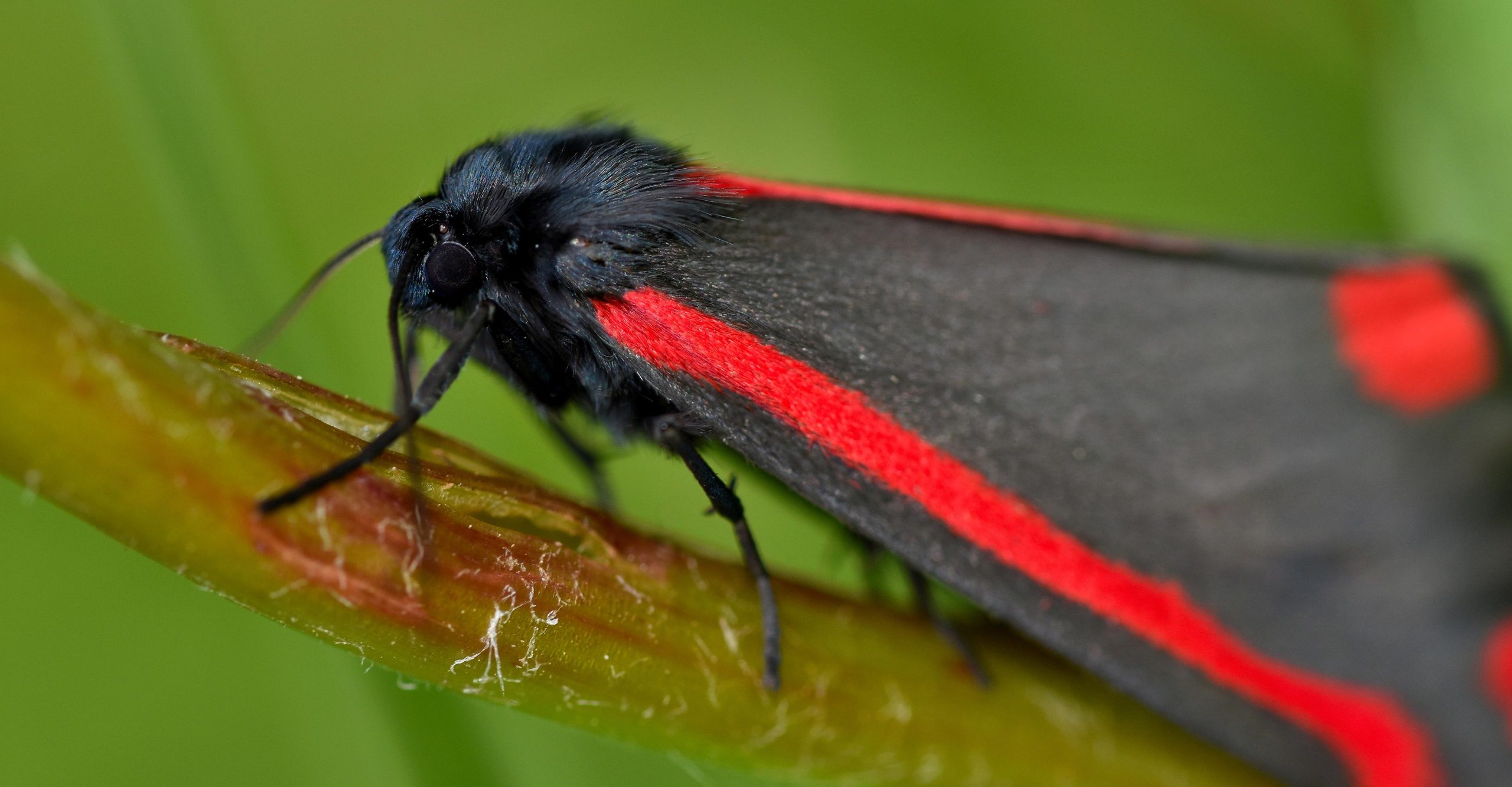
    Adult Cinnabar Moth on Ragwort
    An adult cinnabar moth on a ragwort stem. Credit: Callum McLellan

    They were also interested in whether birds use the bright yellow flowers of ragwort as a cue for avoidance. They tested this by removing spikes of flowers from the ragwort and pinning them onto bramble, then recording target survival on either plant. In this second experiment, only the non-signaling targets survived better on plants with ragwort flowers, compared to the same plant type without the flowers. The survival of the cinnabar-like target was equal across all plant treatments

    Lead author Callum McLellan, a graduate student at the School of Biological Sciences, said “Cinnabar caterpillars have this really recognizable, stripey yellow and black appearance. They also only live and feed on ragwort, which itself has distinctive yellow flowers. We have shown that birds learn that the ragwort flowers are a cue for danger, so can avoid going anywhere near toxic prey. It’s more efficient to avoid the whole plant than make decisions about individual caterpillars.”
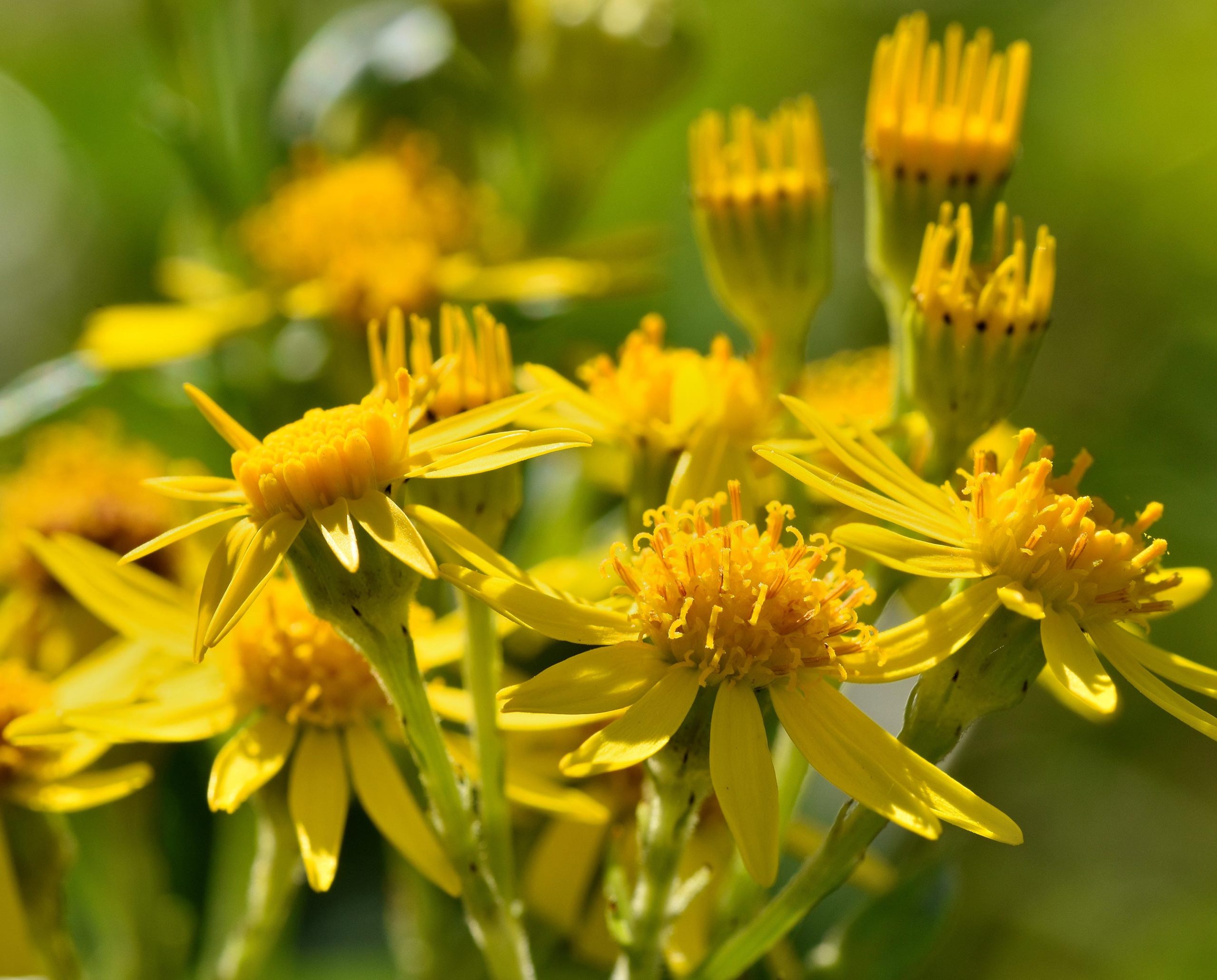
    Ragwort
    Ragwort. Credit: Callum McLellan

    Co-author Prof Nick Scott-Samuel of the School of Psychological Science, said: “Our findings suggest that insect herbivores that specialize on easily recognizable host plants gain enhanced protection from predation, independent of their warning signal alone.”

    Prof Innes Cuthill, who conceived the study, added “Interestingly, any camouflaged caterpillars living on the same plant also benefit from birds’ learned wariness of ragwort, despite being perfectly good to eat.

    “Our results provide the opening to a brand-new discussion on how toxicity initially evolved in insect prey, and the conditions under which warning coloration is, or is not, favored.”

    Reference: “Birds learn to avoid aposematic prey by using the appearance of host plants” by Callum F. McLellan, Nicholas E. Scott-Samuel and Innes C. Cuthill, 7 October 2021, Current Biology.
    DOI: 10.1016/j.cub.2021.09.048

    Never miss a breakthrough: Join the SciTechDaily newsletter.
    Follow us on Google and Google News.

    Birds Insect Ornithology University of Bristol
    Share. Facebook Twitter Pinterest LinkedIn Email Reddit

    Related Articles

    Scientists Make Birds Watch TV – Here’s What They Learned

    New Changes in Bird Migration Discovered After Examining 50 Years of Data

    Scientists Identified a New Bird Species: It Looks Identical to Another With Very Different Genes

    How Flight Feathers Evolved: Study of Chickens, Ostriches, Penguins, Ducks and Eagles

    Record Shattered for Loudest Bird Call Ever Measured by White Bellbirds in Amazon [Video]

    GPS Tracking Reveals Rare ‘Itinerant Breeding’ Behavior in California Bird

    Urban Birds Use Cigarette Butts to Get Rid of Pests

    Transgendered Bellbird Discovered in New Zealand

    Researchers Recreate the Song of 165 Million Year Old Katydid

    Leave A Reply Cancel Reply

    • Facebook
    • Twitter
    • Pinterest
    • YouTube

    Don't Miss a Discovery

    Subscribe for the Latest in Science & Tech!

    Trending News

    Breakthrough Parkinson’s Drug Targets Disease at Its Genetic Roots

    Just 4 Weeks of Simple Diet Changes Reversed Signs of Aging in Older Adults

    Scientists May Have Finally Solved Why Humans Are Right-Handed

    NASA’s Hubble Accidentally Witnesses a Comet Shattering in Space

    Researchers Discover the Body’s Hidden “Off Switch” for Inflammation

    Scientists Discover Metformin Doesn’t Work the Way We Thought

    Tea or Coffee? Your Daily Choice Could Affect Osteoporosis Risk

    Vitamin C May Fight Cancer in a Surprising Way

    Follow SciTechDaily
    • Facebook
    • Twitter
    • YouTube
    • Pinterest
    • Newsletter
    • RSS
    SciTech News
    • Biology News
    • Chemistry News
    • Earth News
    • Health News
    • Physics News
    • Science News
    • Space News
    • Technology News
    Recent Posts
    • New Research Uncovers Lithium’s Surprising Effect on Alzheimer’s
    • New Anti-Clotting Medication Prevents Strokes Without the Usual Bleeding Risk
    • Simple Fiber Supplement Cuts Knee Arthritis Pain in Just 6 Weeks, Study Finds
    • Scientists Discover the Secret Bacteria Behind Artisan Cheeses – and They May Be Good for Your Health
    • Banned Antibiotic Discovered in Fish Raises Food Safety Concerns
    Copyright © 1998 - 2026 SciTechDaily. All Rights Reserved.
    • Science News
    • About
    • Contact
    • Editorial Board
    • Privacy Policy
    • Terms of Use

    Type above and press Enter to search. Press Esc to cancel.