
Close Menu
    Facebook X (Twitter) Instagram
    SciTechDaily
    • Biology
    • Chemistry
    • Earth
    • Health
    • Physics
    • Science
    • Space
    • Technology
    Facebook X (Twitter) Pinterest YouTube RSS
    SciTechDaily
    Home»Chemistry»Caltech Discovery Moves Solar Fuel Production Closer to Reality
    Chemistry

    Caltech Discovery Moves Solar Fuel Production Closer to Reality

    By Emily Velasco, CaltechFebruary 6, 2018No Comments3 Mins Read
    Facebook Twitter Pinterest Telegram LinkedIn WhatsApp Email Reddit
    Share
    Facebook Twitter LinkedIn Pinterest Telegram Email Reddit
    Production of Solar Fuels Inches Closer with New Discovery
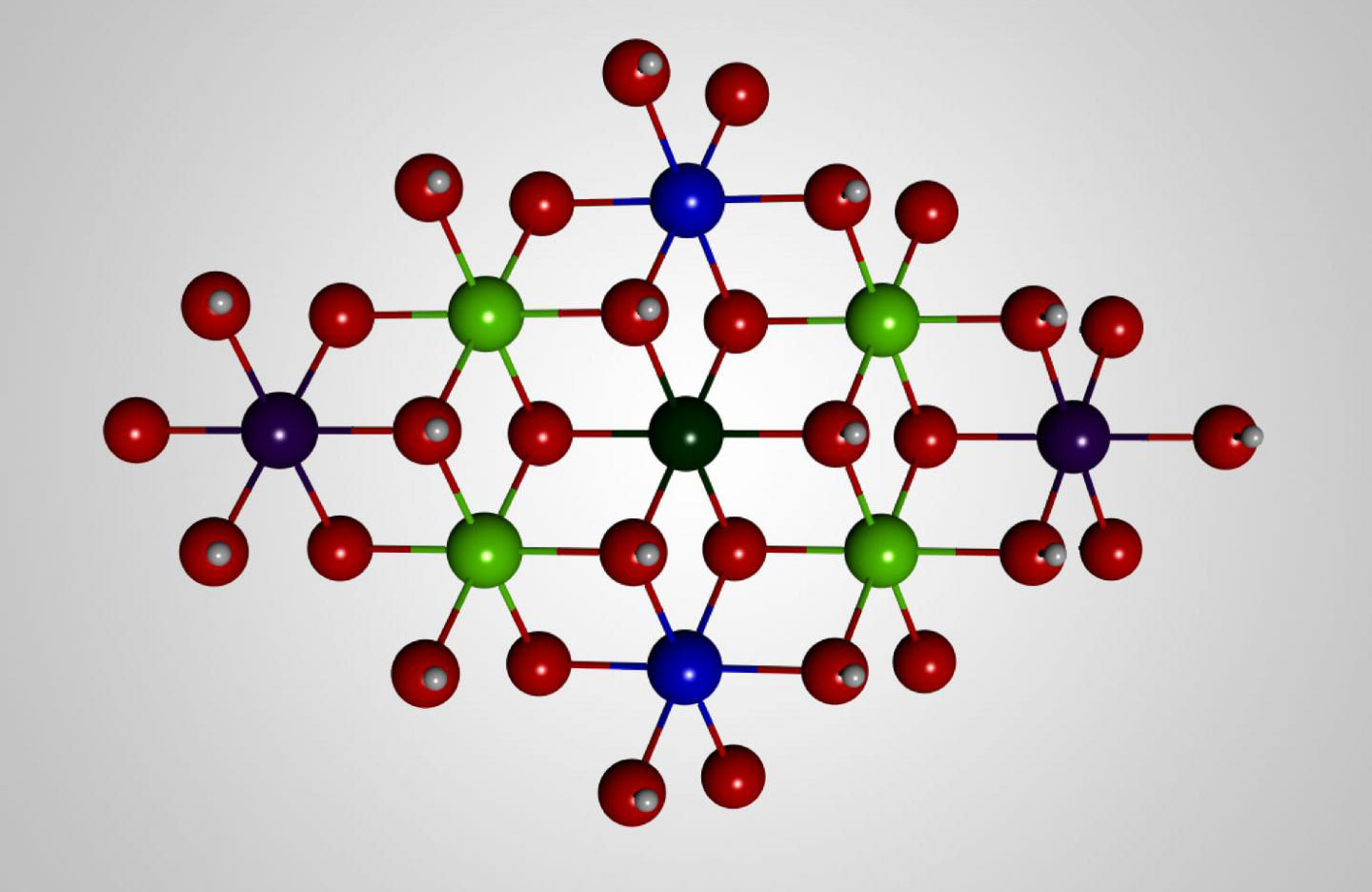
    A graphical representation of the molecular structure of the solar-fuel catalyst developed at Caltech. Blue represents iron atoms; green is nickel; red is oxygen; white is hydrogen. Credit: Caltech

    Caltech researchers have made a discovery that they say could lead to the economically viable production of solar fuels in the next few years.

    For years, solar-fuel research has focused on developing catalysts that can split water into hydrogen and oxygen using only sunlight. The resulting hydrogen fuel could be used to power motor vehicles, electrical plants, and fuel cells. Since the only thing produced by burning hydrogen is water, no carbon pollution is added to the atmosphere.

    In 2014, researchers in the lab of Harry Gray, Caltech’s Arnold O. Beckman Professor of Chemistry, developed a water-splitting catalyst made of layers of nickel and iron. However, no one was entirely sure how it worked. Many researchers hypothesized that the nickel layers, and not the iron atoms, were responsible for the water-splitting ability of the catalyst (and others like it).

    To find out for sure, Bryan Hunter (Ph.D. ’17), a former fellow at the Resnick Institute, and his colleagues in Gray’s lab created an experimental setup that starved the catalyst of water. “When you take away some of the water, the reaction slows down, and you are able to take a picture of what’s happening during the reaction,” he says.

    Those pictures revealed the active site of the catalyst–the specific location where water is broken down into oxygen–and showed that iron was performing the water-splitting reaction, not nickel.
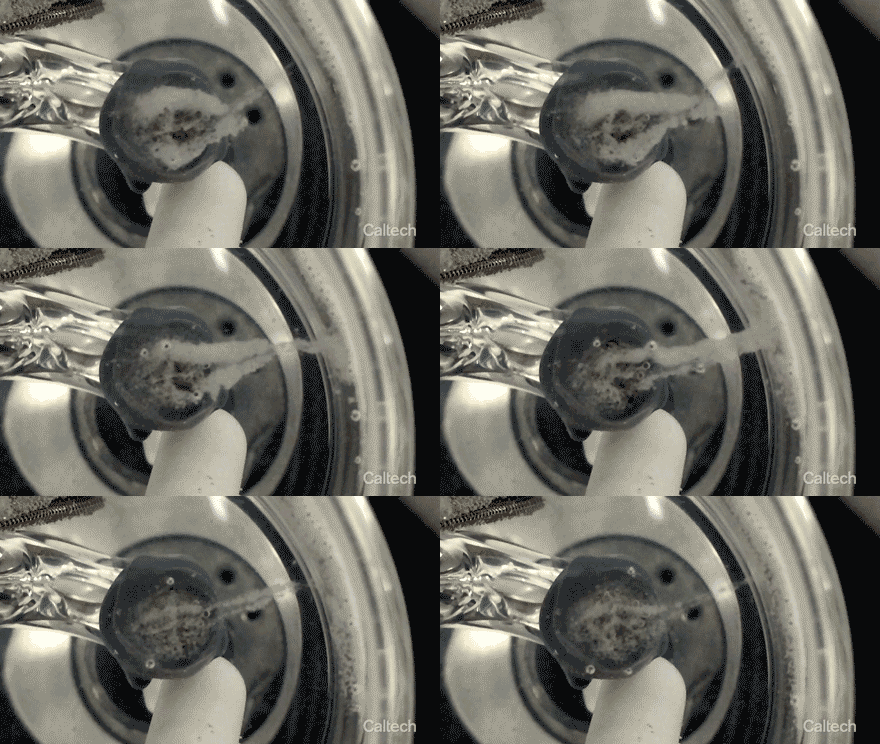
    Solar Fuels Inches Closer to Reality
    Water is converted to hydrogen and oxygen gases by a solar-fuel catalyst.

    “Our experimentally supported mechanism is very different than what was proposed,” says Hunter, first author of a paper published February 6 in Joule, a journal of sustainable-energy research, describing the discovery. “Now we can start making changes to this material to improve it.”

    Gray, whose work has focused on solar fuels for decades, says the discovery could be a “game changer” for the field.

    “This will alert people worldwide that iron is particularly good for this kind of catalysis,” he says. “I wouldn’t be at all shocked if people start using these catalysts in commercial applications in four or five years.”

    Reference: “Trapping an Iron(VI) Water Splitting Intermediate in Nonaqueous Media” by Bryan M. Hunter, Niklas B. Thompson, Astrid M. Müller, George R. Rossman, Michael G. Hill, Jay R. Winkler and Harry B. Gray, 6 February 2018, Joule.
    DOI: 10.1016/j.joule.2018.01.008

    Never miss a breakthrough: Join the SciTechDaily newsletter.
    Follow us on Google and Google News.

    California Institute of Technology Green Technology Renewable Energy Solar Fuels
    Share. Facebook Twitter Pinterest LinkedIn Email Reddit

    Related Articles

    Scientists Show Renewable Energies Can Save Millions of Lives

    Protonic Ceramic Fuel Cells Demonstrate Exceptional Power Density and Stability

    Algae-Powered Fuel Cells Move a Step Closer to Reality

    New Catalyst Promotes Carbon Dioxide Conversion into Fuels

    Graphene Helps Turn Engine Heat Into Electricity to Boost Gas Mileage

    Scientists Create a Copper-Based Catalyst that Produces Large Quantities of Ethanol

    Researchers Use Nanoparticles to Split Water into Hydrogen and Oxygen

    Nanoparticle Triggers Chemical Reaction that Generates Hydrogen from Water

    Dempsey’s Mechanism, Pathway that Catalysts Use to Generate Hydrogen

    Leave A Reply Cancel Reply

    • Facebook
    • Twitter
    • Pinterest
    • YouTube

    Don't Miss a Discovery

    Subscribe for the Latest in Science & Tech!

    Trending News

    Scientists Recreate a Nuclear Fireball and Uncover Fallout’s Hidden Chemistry

    These Tiny Gut Particles Could Be Accelerating Aging Throughout the Body

    Doctors Changed One Thing and Weight Gain Stopped

    Magnetic Fields May Solve a Longstanding Binary Star Mystery

    The Probiotic Breakthrough for Natural Anxiety Relief and Better Mental Health

    Animal vs. Plant Protein: Scientists Found a Surprising Nutritional Difference

    According to Scientists, This Simple Dietary Change Is Linked to Lower Depression Scores

    Researchers Discover a Hidden Vitamin D Problem That Persists Year-Round

    Follow SciTechDaily
    • Facebook
    • Twitter
    • YouTube
    • Pinterest
    • Newsletter
    • RSS
    SciTech News
    • Biology News
    • Chemistry News
    • Earth News
    • Health News
    • Physics News
    • Science News
    • Space News
    • Technology News
    Recent Posts
    • Buried for 1.7 Billion Years: These Ancient Fossils May Rewrite the Story of Complex Life
    • NASA Spots Giant Ocean Swell Signaling a Potential El Niño Comeback
    • The “Impossible” Earthquake Beneath Utah Was Real After All
    • Scientists Uncover Why Walking Gets Slower and More Exhausting As We Age
    • 24 Hours Without Sleep Changes Your Saliva in Measurable Ways
    Copyright © 1998 - 2026 SciTechDaily. All Rights Reserved.
    • Science News
    • About
    • Contact
    • Editorial Board
    • Privacy Policy
    • Terms of Use

    Type above and press Enter to search. Press Esc to cancel.