
Close Menu
    Facebook X (Twitter) Instagram
    SciTechDaily
    • Biology
    • Chemistry
    • Earth
    • Health
    • Physics
    • Science
    • Space
    • Technology
    Facebook X (Twitter) Pinterest YouTube RSS
    SciTechDaily
    Home»Earth»Carbon Monoxide From Brazil Fires Mapped by NASA Satellite
    Earth

    Carbon Monoxide From Brazil Fires Mapped by NASA Satellite

    By Esprit Smith, Jet Propulsion LaboratoryAugust 25, 2019No Comments2 Mins Read
    Facebook Twitter Pinterest Telegram LinkedIn WhatsApp Email Reddit
    Share
    Facebook Twitter LinkedIn Pinterest Telegram Email Reddit
    AIRS Carbon Monoxide Timelapse
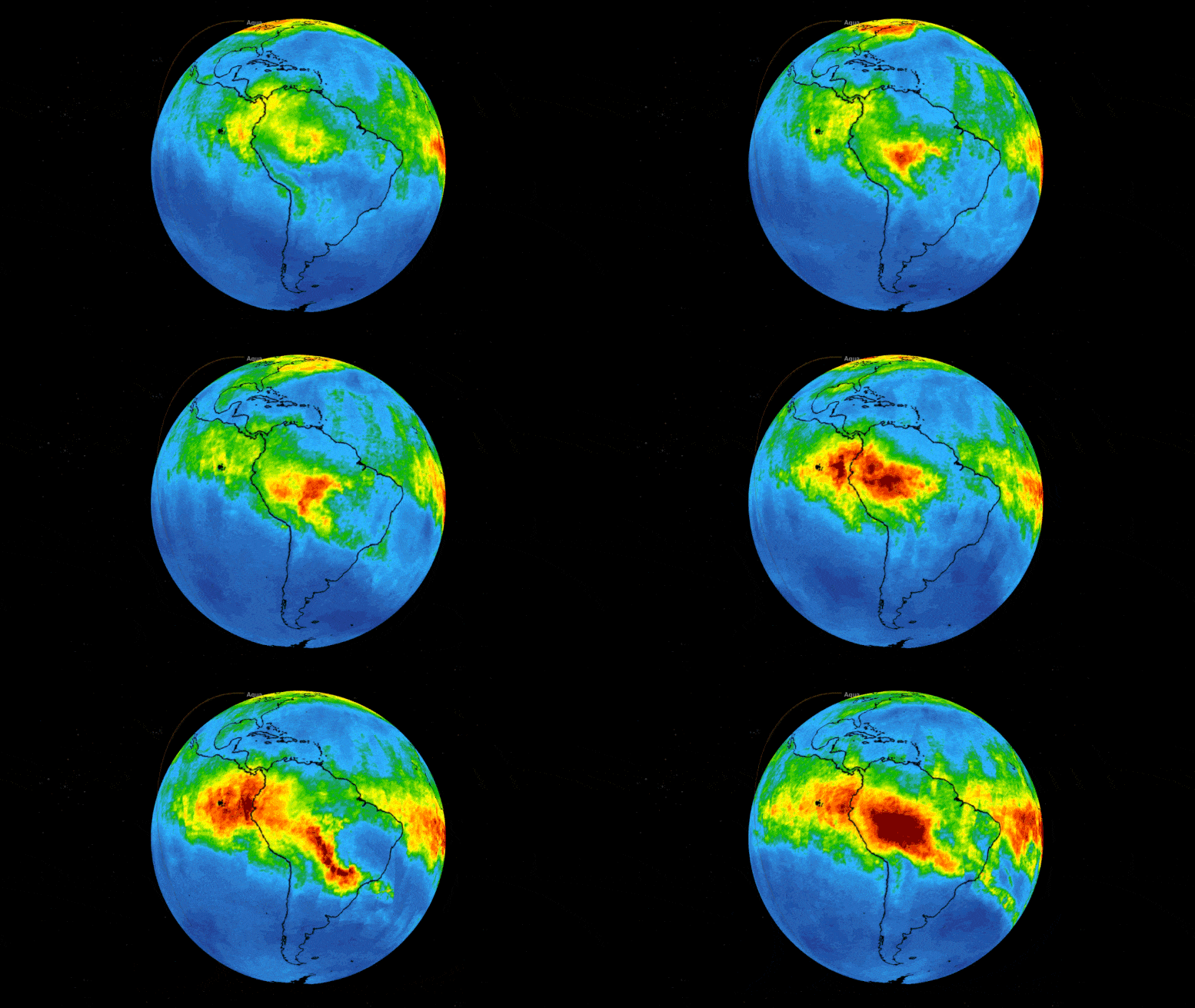
    This time series shows carbon monoxide associated with fires from the Amazon region in Brazil from August 8-22, 2019. Made with data collected from the Atmospheric Infrared Sounder (AIRS) on NASA’s Aqua satellite, the images map carbon monoxide at approximately 18,000 feet (5,500 meters) altitude. Each “day” in the series is made by averaging three day’s-worth of measurements. Credit: NASA/JPL-Caltech

    New data from NASA’s Atmospheric Infrared Sounder (AIRS) instrument, aboard the Aqua satellite, shows the movement high in the atmosphere of carbon monoxide associated with fires in the Amazon region of Brazil.

    This time series maps carbon monoxide at an altitude of 18,000 feet (5,500 meters) from August 8-22, 2019. As the series progresses, the carbon monoxide plume grows in the northwest Amazon region then drifts in a more concentrated plume toward the southeastern part of the country.

    Each “day” in the series is made by averaging three days’ worth of measurements, a technique used to eliminate data gaps. Green indicates concentrations of carbon monoxide at approximately 100 parts per billion by volume (ppbv); yellow, at about 120 ppbv; and dark red, at about 160 ppbv. Local values can be significantly higher.

    A pollutant that can travel large distances, carbon monoxide can persist in the atmosphere for about a month. At the high altitude mapped in these images, the gas has little effect on the air we breathe; however, strong winds can carry it downward to where it can significantly impact air quality. Carbon monoxide plays a role in both air pollution and climate change.

    AIRS, in conjunction with the Advanced Microwave Sounding Unit (AMSU), senses emitted infrared and microwave radiation from Earth to provide a three-dimensional look at Earth’s weather and climate. With more than 2,000 channels sensing different regions of the atmosphere, the instruments create a global, three-dimensional map of atmospheric temperature and humidity, cloud amounts and heights, greenhouse gas concentrations and many other atmospheric phenomena.

    The AIRS and AMSU instruments are managed by NASA’s Jet Propulsion Laboratory in Pasadena, California, under contract to NASA. JPL is a division of Caltech.

    Never miss a breakthrough: Join the SciTechDaily newsletter.
    Follow us on Google and Google News.

    Amazon JPL NASA Satellites Wildfires
    Share. Facebook Twitter Pinterest LinkedIn Email Reddit

    Related Articles

    NASA Monitors Atmospheric Carbon Monoxide From California Wildfires

    NASA Tracks California’s Wildfires From Space and in the Air

    NASA Finds Conditions Ripe for Active Amazon Fire, Atlantic Hurricane Seasons

    NASA’s Terra Satellite Sees Arizona’s Massive Bighorn Fire Burn Scar From Space

    NASA: Amazon Fires Were Fueled by Drought-Stressed Forest

    Human Activities Are Drying Out the Amazon – Ecosystems Vulnerable to Fires and Drought

    NASA’s Terra Satellite Images California’s Kincade Fire Burn Scar From Space

    NASA’s ECOSTRESS Detects Amazon Fires from International Space Station

    NASA Satellite Image: Amazon Fires Shroud South America in Smoke

    Leave A Reply Cancel Reply

    • Facebook
    • Twitter
    • Pinterest
    • YouTube

    Don't Miss a Discovery

    Subscribe for the Latest in Science & Tech!

    Trending News

    Wasp Colonies Explode Into Violence After Losing Their Queen

    Scientists Create “Living Plastic” That Self-Destructs in Just Six Days

    Your Blood May Carry a 700-Million-Year-Old Secret

    Scientists Discover Some “Zombie Cells” May Actually Help You Live Longer

    Earth May Be Seeding Venus With Life, According to New Research

    What Scientists Found Inside a 117-Year-Old Woman Reveals New Clues to Long Life

    Scientists Discover Mysterious Creature Living in the Great Salt Lake – and It Exists Nowhere Else on Earth

    It’s Alive? Surprising Discovery Changes What We Know About Fog

    Follow SciTechDaily
    • Facebook
    • Twitter
    • YouTube
    • Pinterest
    • Newsletter
    • RSS
    SciTech News
    • Biology News
    • Chemistry News
    • Earth News
    • Health News
    • Physics News
    • Science News
    • Space News
    • Technology News
    Recent Posts
    • Scientists Crack Major Ammonia Problem With a Platinum Catalyst Breakthrough
    • MIT Engineers Solve a Major Lidar Problem That Has Stumped Researchers for Years
    • NASA’s X-59 Sonic Boom Killer Is Ready for Its Biggest Test Yet
    • Why Some Cancers Turn Deadly: Researchers Uncover a Hidden Trigger
    • The Best Exercise Combination for Longevity, According to a 30-Year Study
    Copyright © 1998 - 2026 SciTechDaily. All Rights Reserved.
    • Science News
    • About
    • Contact
    • Editorial Board
    • Privacy Policy
    • Terms of Use

    Type above and press Enter to search. Press Esc to cancel.