
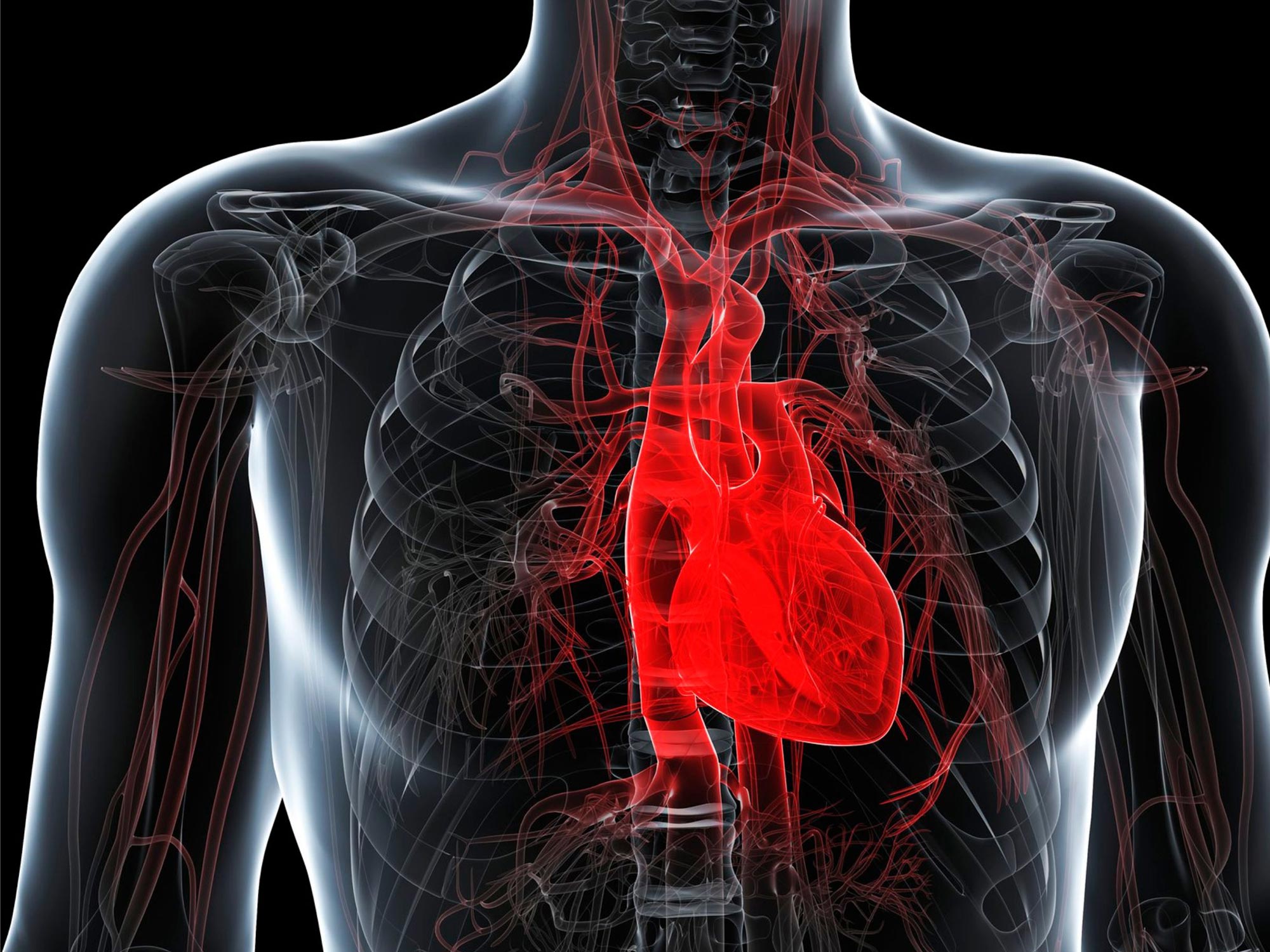
A major trial found that implantable cardioverter-defibrillators may benefit some patients younger than 70 with mild-to-moderate heart dysfunction and cardiac scarring.
A more than decade-long randomized trial suggests that implantable cardioverter-defibrillators may benefit some patients who have heart scarring and only mild-to-moderate loss of heart function, a group that currently falls outside standard treatment guidelines.
Although the devices did not significantly reduce the trial’s primary endpoint across all age groups, a prespecified analysis found a significant reduction among patients younger than 70, while sudden cardiac death was also reduced as a secondary endpoint across the full study group.
Flinders University Professor Joseph Selvanayagam, from Adelaide’s Heart & Vascular, presented the findings at the 2026 European Society of Cardiology Congress in Munich. The results were also published in the Journal of the American Medical Association (JAMA).
Trial tests ICDs in a wider group
The trial involved 18 sites across Australia, Germany, and the United Kingdom and examined whether a device currently reserved for people with severe heart dysfunction could benefit patients with less severe disease.
An implantable cardioverter-defibrillator (ICD) is a small device placed inside the body that detects and corrects dangerous heart rhythms that can otherwise lead to sudden cardiac death. Current guidelines offer ICDs only to patients whose heart function is severely reduced.
Selvanayagam and his colleagues instead studied patients with mild-to-moderate heart dysfunction, a left ventricular ejection fraction (LVEF) of 36-50%, and heart muscle scarring detected by cardiac MRI. They tested whether implanting an ICD could reduce sudden cardiac death or serious ventricular arrhythmia in this group.
Younger patients showed a clearer benefit
Across all age groups, ICD implantation did not produce a statistically significant reduction in the primary endpoint combining sudden cardiac death and serious ventricular arrhythmia. However, a prespecified analysis of patients younger than 70 did find a significant reduction in that endpoint.
The researchers also found that ICD implantation was associated with a reduction in sudden cardiac death, a secondary endpoint, across the entire study group. According to the researchers, this is the first randomized trial designed to help clinicians make decisions about ICD implantation in patients with heart scarring and an LVEF of 36-50%.
Findings could guide treatment discussions
“An ICD is like having a personal paramedic for your heart, 24/7,” Prof. Selvanayagam said.
“But the treatment gap right now is that most patients who die suddenly from a heart event don’t have underlying severe heart dysfunction, so currently don’t get offered an ICD as it is outside of accepted treatment guidelines. This research has made a new finding that could potentially save lives.”
He continues, “The reduction in sudden cardiac death and the benefit observed in younger patients provide important insights for individual treatment decisions. If you have mild-to-moderately reduced heart function due to a cardiomyopathy or previous heart attack then you should have a cardiac MRI. If you then have significant scarring in your heart MRI, you should probably have a discussion with your cardiologist about whether an ICD should be implanted, particularly if you are less than 70 years.”
Reference: “Cardiovascular Magnetic Resonance to Guide Defibrillator Implantation for LVEF of 36% to 50%: The CMR GUIDE Randomized Clinical Trial” by Joseph B. Selvanayagam, John G. F. Cleland, Graham S. Hillis, Sivabaskari Pasupathy, Laurent Billot, Katherine E. George, John J. Atherton, Colin Berry, Ivaylo Tonchev, Chris Gianacas, Werner Jung, Sanjay K. Prasad, Carmine G. De Pasquale, Johannes Brachmann, Anand Ganesan, Cardiovascular Magnetic Resonance–Guided Management of Mild to Moderate Left Ventricular Systolic Dysfunction Trial Investigators, Rajiv Ananthakrishna, Margaret Arstall, Niall Campbell, Derek T Connelly, David Ferreira, Daniel Garofalo, Jemima Gore, Suchi Grover, John Hill, Nicola Johnston, Alamgir Kabir, David Kaye, Sau Lee, Tina Lin, Scott Lorensini, Jakob Lüker, Paul D MacIntyre, Christian Mahnkopf, Andrew Martin, Gerry P McCann, Ashley Nisbet, Gaetano Nucifora, Bhupesh Pathik, Andreas Pflaumer, Sven Plein,, David Prior, Kurt C Roberts-Thomson, Wolfgang Rudolf Bauer, Ranjit Shah, Karthigesh Sree Raman, Martin Stiles, Paul Stobie, Nikola Stoyanov, Rajesh Subbiah, Miriyalini Sundararajah, Sukumaran Thevathasan, Julia Vogler, Tom Wong, Glenn Young, John F Younger, Jufen Zhang and Vlada Zvereva, 28 August 2026, JAMA.
DOI: 10.1001/jama.2026.17078
Never miss a breakthrough: Join the SciTechDaily newsletter.
Follow us on Google and Google News.