
New analysis of strontium isotopes reveals how the global carbon cycle has responded to changes in climate and sea level through geologic time.
A new analysis of strontium isotopes in marine sediments has enabled scientists to reconstruct fluctuations in ocean chemistry related to changing climate conditions over the past 35 million years.
The results, published on March 26, 2021, in the journal Science, provide new insights into the inner workings of the global carbon cycle and, in particular, the processes by which carbon is removed from the environment through the deposition of carbonates.
“Strontium is very similar to calcium, so it gets incorporated into the calcium carbonate shells of marine organisms,” explained lead author Adina Paytan, research professor in the Institute of Marine Sciences at UC Santa Cruz.
Paytan and her coauthors looked at the ratios of different isotopes of strontium, including radiogenic isotopes (produced by radioactive decay) and stable isotopes, which provide complementary information about geochemical processes. They found that the stable isotope ratio of strontium in the ocean has changed considerably over the past 35 million years, and it is still changing today, implying large changes in seawater strontium concentration.
“It’s not in a steady state, so what’s coming into the ocean and what’s leaving don’t match,” Paytan said. “The strontium composition of seawater changes depending on how and where carbonates are deposited, and that is influenced by changes in sea level and climate.”
A Window into Earth’s Geologic Shifts
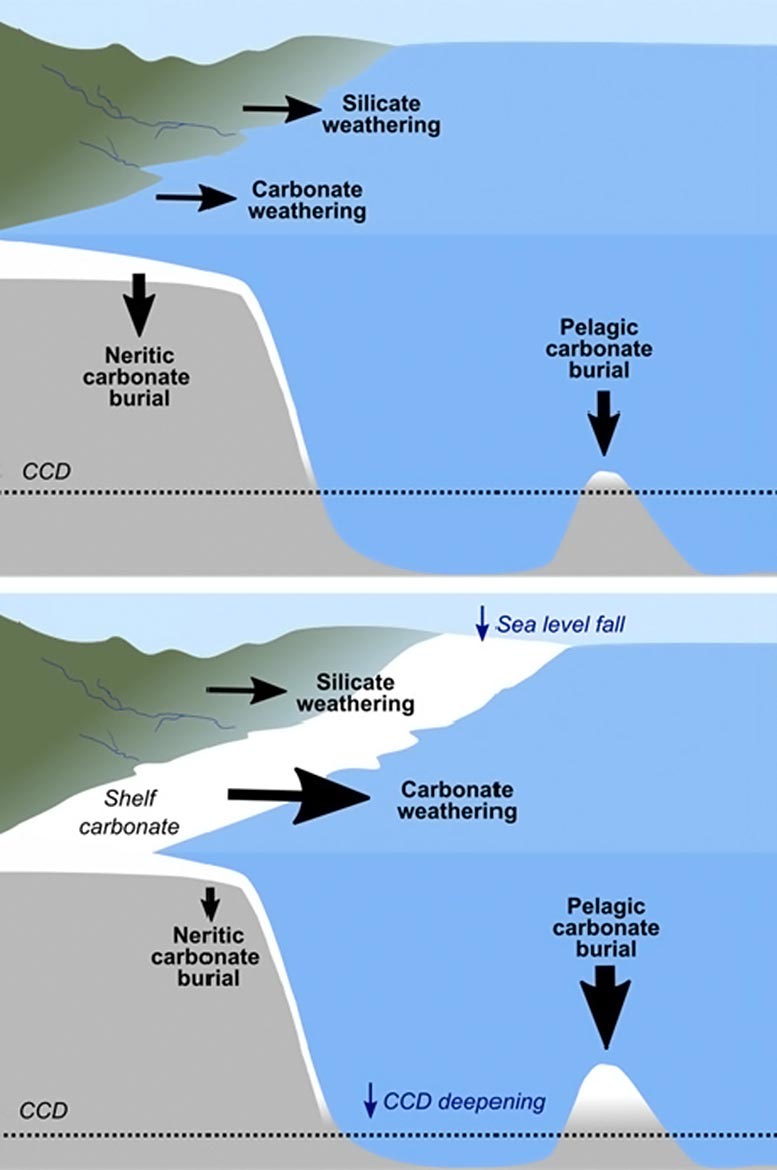
The fluctuations in strontium isotope ratios analyzed in this study reflect the combined effect of shifts in the global balance of geologic processes including weathering of rocks on land, hydrothermal activity, and the formation of carbonate sediments in both deep-sea and shallow, nearshore marine environments.
Carbonate deposition in the open ocean comes from marine plankton like coccolithophores and foraminifera, which build their shells of the calcium carbonate mineral calcite. In shallow water on the continental shelves, hard corals are more abundant, and they build their skeletons of a different mineral of calcium carbonate, aragonite, which incorporates more strontium than calcite does.
Sea Levels, Corals, and Strontium Fluctuations
“When corals form, they remove strontium, and when they are exposed, this strontium washes out and goes back into the ocean,” Paytan said. “With changes in sea level, more or less of the continental shelf where corals grow is exposed, so that impacts the strontium composition of seawater.”
Carbonate deposition also feeds back into the climate system, because the ocean absorbs carbon dioxide from the atmosphere, and carbonate deposition on geological timescales removes carbon from the system. The global carbon cycle and atmospheric carbon dioxide are tightly coupled to climate change, both in the long-term and during the recurring ups and downs of recent ice age cycles.
“The new type of information we can read from the stable strontium isotopes now allows us to take a close look at the business end of the global carbon cycle, when carbon is removed from the environment and laid down into marine carbonate beds,” said coauthor Mathis Hain, assistant professor of Earth and planetary sciences at UCSC.
Lessons for Today’s Climate Crisis
“These findings throw open a new window to let us see how the global carbon cycle adjusted to sea level and climate change through geologic time,” he added. “We will need these insights in guiding our response to our current climate emergency and to mitigate the worst effects of ocean acidification.”
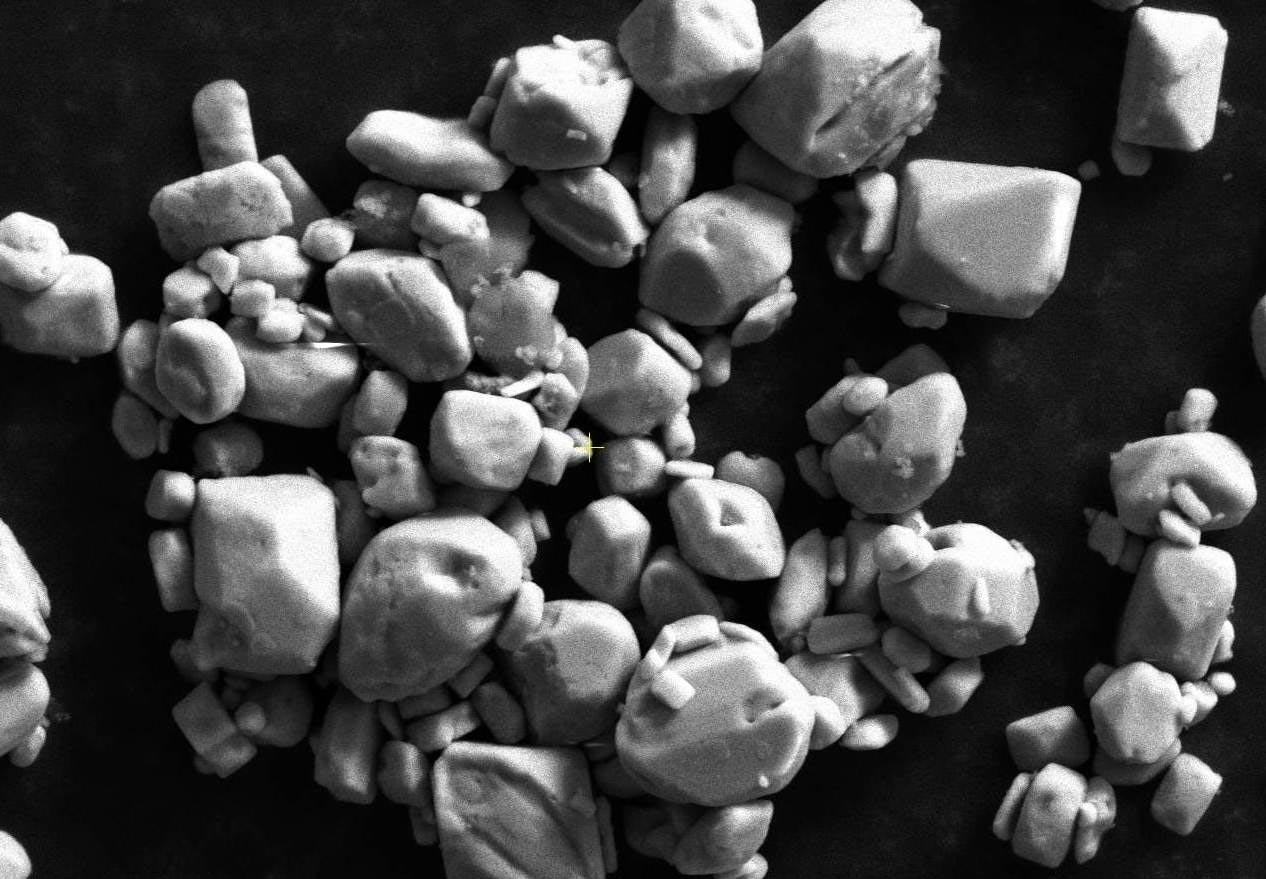
The researchers were able to reconstruct a robust and detailed record of strontium isotope variations in seawater based on an analysis of marine barite extracted from deep-sea sediment cores.
“Records like this are critical to understanding how our earth operates over geologic times,” said coauthor Elizabeth Griffith at Ohio State University. “Our international team worked together to both create this unique record and explain its significance through mathematical modeling, so we can reconstruct changes in the past when the climate conditions were different. The hope is to gain insight into how our blue planet might operate in the future.”
Reference: “A 35-million-year record of seawater stable Sr isotopes reveals a fluctuating global carbon cycle” by Adina Paytan, Elizabeth M. Griffith, Anton Eisenhauer, Mathis P. Hain, Klaus Wallmann and Andrew Ridgwell, 26 March 2021, Science.
DOI: 10.1126/science.aaz9266
In addition to Paytan, Hain, and Griffith, the coauthors of the paper include Anton Eisenhauer and Klaus Wallmann at the GEOMAR Helmholtz Center for Ocean Research in Germany, and Andrew Ridgwell at UC Riverside. This work was supported by the National Science Foundation.
Never miss a breakthrough: Join the SciTechDaily newsletter.
Follow us on Google and Google News.