
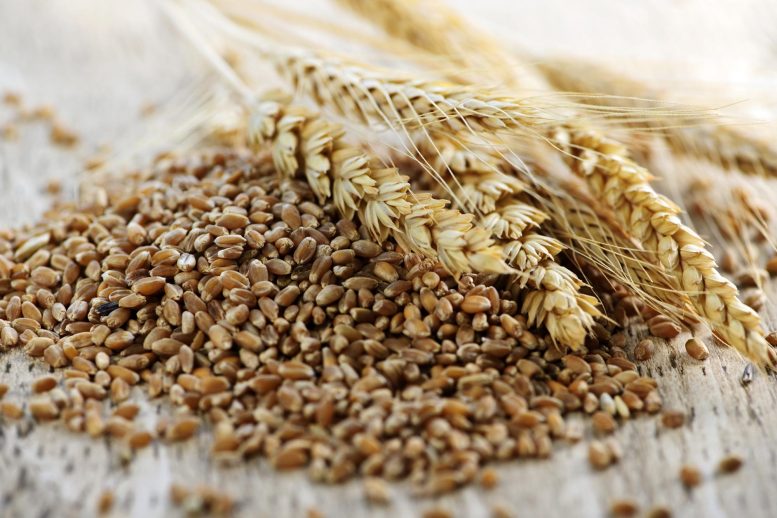
A recent study has highlighted the need for a unified definition of whole-grain foods, as there are currently multiple competing definitions in use.
A new study by researchers at the Friedman School of Nutrition Science and Policy at Tufts University has found that while Americans are consuming more whole-grain foods than ever before, there is still a significant gap between current consumption and the recommended daily intake.
The study, which was published in the American Journal of Clinical Nutrition, also revealed that there are competing definitions of what constitutes a whole-grain food, which can lead to confusion and inaccuracies in measuring consumption levels. The researchers call for a unified definition to be established in order to accurately track and promote the consumption of whole-grain foods for optimal health benefits.
The researchers say there’s a clear need to standardize how consumers, researchers, and policymakers talk about whole-grain foods. The study compared overlapping definitions from five institutions: the Dietary Guidelines for Americans, the U.S. Food and Drug Administration (FDA), the American Heart Association, the American Association of Cereal Chemists International, and the Whole Grains Council. The research team applied the various definitions of a whole-grain food to the dietary intakes of over 39,700 adults captured by the National Health and Nutrition Examination Survey (NHANES) between 2003 and 2018.
Impacts of Definitions on Whole-Grain Intake Measurements
“We found that each definition captured very different types of grain- or flour-containing foods as whole-grain foods, resulting in differences in the average consumption of whole-grain foods and the associated trends,” says lead author of the study Mengxi Du, a Ph.D. candidate in the Nutrition Epidemiology and Data Science program at the Friedman School. As a consumer, she said she has had the experience of struggling to identify what is or isn’t a whole-grain food via the packaging labels. Recent surveys suggest nearly half of the American consumers have similar challenges.
When looking at the different categories of whole-grain foods identified by these definitions, while some similarities were identified—whole-grain bread consumption increased under all definitions—there were more differences. The government-led FDA’s definition was the strictest, categorizing the fewest foods as whole-grain foods compared to the industry-led Whole Grains Council’s, which was the most lenient but could be least healthy based on a prior study.
Disparities in Whole-Grain Intake Among Populations
One surprising finding was how the foods of different population subgroups were classified depending on the applied definition. For example, individuals who are non-Hispanic white had a higher intake of whole-grain foods compared with other racial/ethnical groups under all definitions, except for the definition proposed by the American Heart Association, under which Hispanic individuals had the highest intake. The possible reason is that the American Heart Association’s definition is more sensitive to identifying dishes such as corn-based burritos, tacos, and nachos as whole-grain foods.
“We can’t say which is the best definition yet as we need to assess the nutrient profiles of each and how these different definitions are associated with health outcomes. Our findings, however, underscore the imperative need for a consensus on the whole-grain food definition. A consistent definition across agencies is essential to further promoting whole-grain food consumption in the U.S. population,” says Fang Fang Zhang, senior author of the study and interim chair of the Division of Nutrition Epidemiology and Data Science at the Friedman School.
Reference: “Whole-grain food intake among US adults, based on different definitions of whole-grain foods, NHANES 2003–2018” by Mengxi Du, Dariush Mozaffarian, John B Wong, Jennifer L Pomeranz, Parke Wilde and Fang Fang Zhang, 30 November 2022, American Journal of Clinical Nutrition.
DOI: 10.1093/ajcn/nqac267
The study was funded by the National Institute on Minority Health and Health Disparities.
Never miss a breakthrough: Join the SciTechDaily newsletter.
Follow us on Google and Google News.
1 Comment
I’m confident there is a strong correlation between obesity rates and grain consumption.