
Close Menu
    Facebook X (Twitter) Instagram
    SciTechDaily
    • Biology
    • Chemistry
    • Earth
    • Health
    • Physics
    • Science
    • Space
    • Technology
    Facebook X (Twitter) Pinterest YouTube RSS
    SciTechDaily
    Home»Science»Changing the Silkworm’s Diet to Spin Silk 2x Stronger
    Science

    Changing the Silkworm’s Diet to Spin Silk 2x Stronger

    By Tohoku UniversityMarch 21, 2021No Comments3 Mins Read
    Facebook Twitter Pinterest Telegram LinkedIn WhatsApp Email Reddit
    Share
    Facebook Twitter LinkedIn Pinterest Telegram Email Reddit
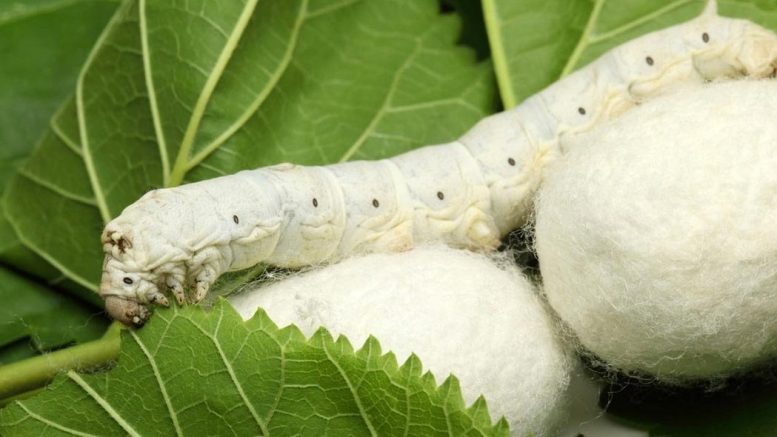
    Silkworm
    Combining cellulose nanofiber (CNF) with regular food significantly enhanced the strength and tensile properties of silk produced by silkworms.

    Feeding silkworms cellulose nanofibers produced silk twice as strong, offering a sustainable, chemical-free method to enhance biomaterials.

    Tohoku University researchers have produced cellulose nanofiber (CNF) synthesized silk naturally through a simple tweak to silkworms’ diet. Mixing CNF with commercially available food and feeding the silkworms resulted in a stronger and more tensile silk.
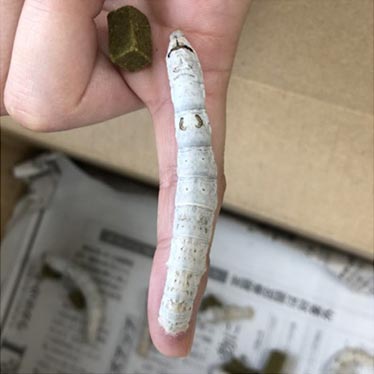
    Silkworm Spin Stronger Silk
    The silk worm and its CNF containing feed. Credit: Tohoku University

    The results of their research were published in the journal Materials and Design on February 1, 2021.

    “The idea for our research came to us when we realized the flow-focusing method by which silkworms produce silk is optimal for the nanofibril alignment of CNF,” said Tohoku University materials engineer Fumio Narita and co-author of the study.

    Silk is usually associated with clothes. But its usage is incredibly diverse thanks to its strength and elastic properties. Its biocompatibility makes it even safe to use inside the human body.

    A Safer, Greener Path to Stronger Silk

    Because of this, researchers have been investigating ways to further strengthen silk. Processes investigated thus far, however, require the use of toxic chemicals that are harmful to humans and the environment.

    Cellulose nanofibers — plant-derived fibers that have been refined to the micro-level — show promise in synthesizing low-cost, lightweight, high-strength, and sustainable nanocomposites such as silk.
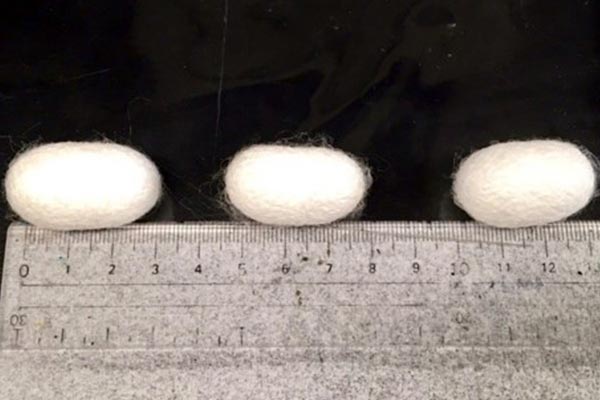
    Stronger Silk
    The resultant cocoons with different CNF wt% (0,5, and 10 wt% from left to right). Credit: Tohoku University

    However, previous CNF-based synthesized materials have demonstrated few mechanical improvements, even with the benefit of expensive equipment, due to the lack of nanofibril alignment.

    In contrast, silkworms produce silk in a flow-focused method. Silk is dispersed via their salivary glands, orientating the fibrils along the flow direction and thus enabling better nanofibril alignment.

    CNF Synthesized Silk Production
    An illustration showing the sustainable cycle of CNF synthesized silk production based on the current study. Credit: Tohoku University

    Stronger Silk, Naturally

    In the present study, silkworm larvae were divided into three groups and reared on food containing differing amounts of CNF content. The research group performed strength tests on the drawn silk fibers which were found to be about 2.0 times stronger than the silk from non-CNF-fed silkworms.

    “Our findings demonstrate an environmentally friendly way to produce sustainable biomaterials by simply using the CNF as bait,” said Narita.

    Reference: “Nanocellulose reinforced silkworm silk fibers for application to biodegradable polymers” by Chen Wu, Satoshi Egawa, Teruyoshi Kanno, Hiroki Kurita, Zhenjin Wang, Eiji Iida and Fumio Narita, 1 February 2021, Materials & Design.
    DOI: 10.1016/j.matdes.2021.109537

    Never miss a breakthrough: Join the SciTechDaily newsletter.
    Follow us on Google and Google News.

    Agriculture Materials Science Silk Silk Worm Tohoku University
    Share. Facebook Twitter Pinterest LinkedIn Email Reddit

    Related Articles

    MRI Technology Cracks the Code on Lithium-Ion Battery Decay

    Superelastic Alloy Stays Strong from Liquid Helium to Boiling Water, Transforming Space and Medicine

    No More Cracked Phone Screens: Scientists Crack the Code to Stronger, More Durable Glass

    New Luminescent Material Could Be the Answer to Crumbling Infrastructure

    Unmasking the Mystery of Glass: Scientists Uncover Hidden Atomic Structure Secrets

    6x Tougher Than Kevlar: Spider Silk Is Spun by Genetically Modified Silkworms for the First Time

    Researchers Strengthen Machines That Produce “Super Engineering Plastics”

    Silk Fibers May Represent Natural Metamaterials, Capable of light Confinement

    Reconstituted Silk Can Be Several Times Stronger Than The Natural Fiber

    Leave A Reply Cancel Reply

    • Facebook
    • Twitter
    • Pinterest
    • YouTube

    Don't Miss a Discovery

    Subscribe for the Latest in Science & Tech!

    Trending News

    The Universe Is Expanding Too Fast and Scientists Can’t Explain Why

    “Like Liquid Metal”: Scientists Create Strange Shape-Shifting Material

    Early Warning Signals of Esophageal Cancer May Be Hiding in Plain Sight

    Common Blood Pressure Drug Shows Surprising Power Against Deadly Antibiotic-Resistant Superbug

    Scientists Uncover Dangerous Connection Between Serotonin and Heart Valve Disease

    Scientists Discover a “Protector” Protein That Could Help Reverse Hair Loss

    Bone-Strengthening Discovery Could Reverse Osteoporosis

    Scientists Uncover Hidden Trigger Behind Stem Cell Aging

    Follow SciTechDaily
    • Facebook
    • Twitter
    • YouTube
    • Pinterest
    • Newsletter
    • RSS
    SciTech News
    • Biology News
    • Chemistry News
    • Earth News
    • Health News
    • Physics News
    • Science News
    • Space News
    • Technology News
    Recent Posts
    • A Common Diabetes Drug May Hold the Key to Stopping HIV From Coming Back
    • Ancient “Syphilis-Like” Disease in Vietnam Challenges Key Scientific Assumptions
    • Drinking Alcohol To Cope in Your 20s Could Damage Your Brain for Life
    • Scientists Crack Alfalfa’s Chromosome Mystery After Decades of Debate
    • Ancient Ant-Plant Alliance Collapses As Predatory Wasps Move In
    Copyright © 1998 - 2026 SciTechDaily. All Rights Reserved.
    • Science News
    • About
    • Contact
    • Editorial Board
    • Privacy Policy
    • Terms of Use

    Type above and press Enter to search. Press Esc to cancel.