
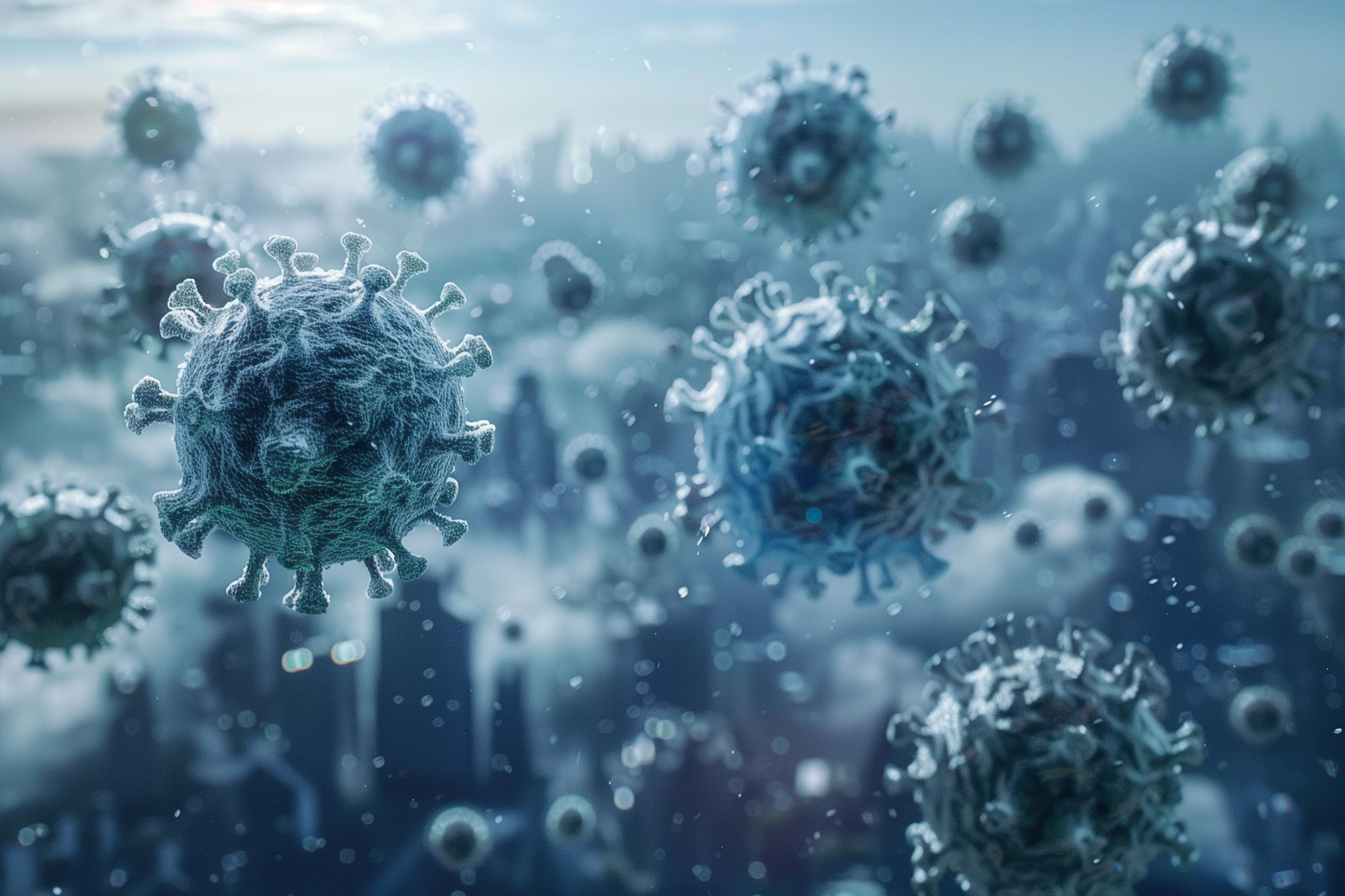
Experts highlight the connection between climate change and infectious diseases, urging medical professionals to prepare for new disease patterns and advocate for climate action.
A team of infectious diseases experts called for more awareness and preparedness in the medical field to deal with the impact of climate change on the spread of diseases. Their article, published on March 20 in JAMA raises the alarm about the emergence and spread of harmful pathogens. The authors also urge the medical community to update their education and training and take steps to combat global warming.
“Clinicians need to be ready to deal with the changes in the infectious disease landscape,” said lead author George R. Thompson. Thompson is a professor at the UC Davis School of Medicine in the Department of Internal Medicine, Division of Infectious Diseases, and the Department of Medical Microbiology and Immunology. “Learning about the connection between climate change and disease behavior can help guide diagnoses, treatment, and prevention of infectious diseases.”
Thompson encouraged physicians and practitioners to maintain “a high index of suspicion of diseases on the move.” “I think with improvements in our understanding of the disease, there will be more testing and we’ll miss fewer cases that way,” he said.
Understanding the Changing Disease Landscape
Infectious diseases can be caused by viruses, bacteria, fungi or parasites. Many of these diseases are transmitted from animal to human or from human to human.
One type of infectious disease is vector-borne diseases. They are caused by pathogens carried by vectors like mosquitoes, fleas and ticks. Some diseases caused by vectors are dengue, malaria, and Zika.
Changing rain patterns are expanding vectors’ range and their active periods. Shorter, warmer winters and longer summers are also linked to more vector-borne diseases. For example, diseases caused by ticks (like babesiosis and Lyme disease) are now occurring in the winter too. They’re also being found in regions farther west and north than in the past.
“We’re seeing cases of tick-borne diseases in January and February,” said first author of the study Matthew Phillips. Phillips is an infectious diseases fellow at Massachusetts General Hospital and Harvard Medical School. “The tick season is starting earlier and with more active ticks in a wider range. This means that the number of tick bites is going up and with it, the tick-borne diseases.”
Another concern is malaria. The mosquitos that transmit the disease are expanding northward, a climate-induced change. Changing rain patterns have led to more mosquitos and a higher disease transmission rate.
“As an infectious disease clinician, one of the scariest things that happened last summer was the locally acquired cases of malaria. We saw cases in Texas and Florida and then all the way north in Maryland, which was really surprising. They happened to people who didn’t travel outside the U.S.,” Phillips said.
Risks of Zoonotic and Waterborne Diseases
Zoonotic diseases, such as plague and hantavirus (carried by rodents), are also showing changes in incidence and location. The experts noted changes in animal migration patterns and natural ranges. Due to their habitat loss, wild animals are coming closer to humans. With that comes a higher risk of animal diseases spilling over to humans and for new pathogens to develop.
The study also pointed to the emergence of new fungal infections, such as Candida auris (C. auris), and changes in the location of some fungal pathogens. For example, the fungal infection Coccidioides (also known as Valley fever) was endemic to hot, dry areas in California and Arizona. But Valley fever was recently diagnosed as far north as Washington State.
Changes in rain patterns and coastal water temperature can also affect the spread of waterborne diseases, such as E. coli and Vibrio. According to the team, the sea level is rising, and storm surges and coastal flooding that used to be rare or extreme events are happening more frequently.
Urgent Call to Action for the Medical Community
Over the last few years, infectious diseases, such as COVID-19, impacted the world enormously.
“They can spring up and cause absolute chaos for the whole world and then we kind of forget about them for a while. Yet, the epidemic and pandemic potential of infections really mandates that we stay involved with federal funding agencies and advisory groups to make sure that infectious diseases don’t slip back too far on the public’s radar,” Thomspon explained.
The team called for stronger measures for infectious disease surveillance and urged medical educators to train clinicians to anticipate the changes in infectious disease patterns.
“It’s not a hopeless situation. There are distinct steps that we can take to prepare for and help deal with these changes. Clinicians see first-hand the impact of climate change on people’s health. As such, they have a role in advocating for policies that can slow climate change,” Phillips said.
Reference: “Infectious Diseases in a Changing Climate” by Matthew C. Phillips, Regina C. LaRocque and George R. Thompson, 20 March 2024, JAMA.
DOI: 10.1001/jama.2023.27724
Regina C. LaRocque, associate professor of medicine at Harvard Medical School and infectious diseases physician at Harvard Medical School, is a coauthor of this study.
This study was partially supported by National Institutes of Health grants T32AI007061 and 5U19AI166798.
Never miss a breakthrough: Join the SciTechDaily newsletter.
Follow us on Google and Google News.