
Close Menu
    Facebook X (Twitter) Instagram
    SciTechDaily
    • Biology
    • Chemistry
    • Earth
    • Health
    • Physics
    • Science
    • Space
    • Technology
    Facebook X (Twitter) Pinterest YouTube RSS
    SciTechDaily
    Home»Earth»Climate Regions of Earth Redefined by the Distribution of Vertebrate Animals
    Earth

    Climate Regions of Earth Redefined by the Distribution of Vertebrate Animals

    By Umea UniversityMarch 20, 20211 Comment3 Mins Read
    Facebook Twitter Pinterest Telegram LinkedIn WhatsApp Email Reddit
    Share
    Facebook Twitter LinkedIn Pinterest Telegram Email Reddit
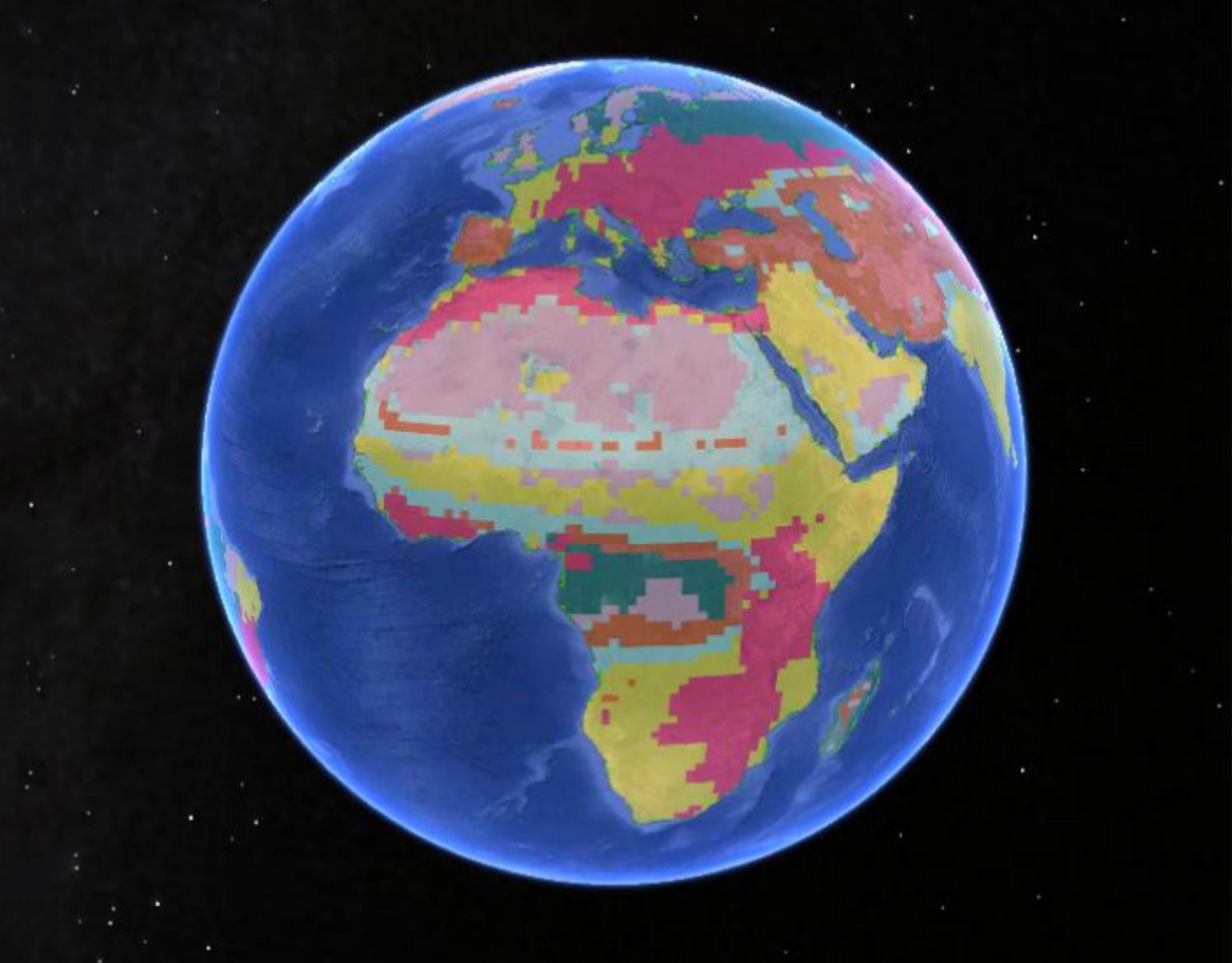
    Climate Regions in the World
    Climate regions in the world. Credit: Icelab at Umeå University

    Rethinking Climate Classifications Through Vertebrate Lenses

    The distribution of vegetation is routinely used to classify climate regions worldwide, yet whether these regions are relevant to other organisms is unknown. Umeå researchers have established climate regions based on vertebrate species’ distributions in a new study published in eLife. They found that while high-energy climate regions are similar across vertebrate and plant groups, there are large differences in temperate and cold climates.

    Climate determines how life organizes across the world. Understanding which climatic conditions drive important changes in ecosystems is crucial to understanding and predicting how life functions and evolves.

    Human well-being critically depends on vertebrate diversity, and yet we don’t know enough about the climates that promote the organization of these species. We know for instance that dry environments promote the generation of deserts, and humid and hot environments allow evergreen forests to thrive. But what conditions drive the distribution of vertebrates like mammals, frogs, birds, and more?

    New Network-Based Method to Map Vertebrate Climates

    “To fill this gap, we studied the climates driving the organization of vertebrates on Earth. We developed a network-based approach that connects species to their preferred climatic conditions. Then, we searched for climatic conditions preferred by similar vertebrate species,” explains main author Joaquín Calatayud former postdoc at Integrated Science Lab, Umeå University, and today working at King Juan Carlos University in Spain.

    With this approach, the authors presented the climate regions that define the distribution of vertebrates. Climates with high energy, such as deserts, tropical savannas, and steppes, were found to be similar across different groups of vertebrates and plants. This was not the case for temperate and cold climates. Regions characterized by those climates differed across all groups. For instance, warm-blooded birds and mammals define regions of polar climates that are not observed in the case of cold-blooded amphibians and reptiles. This suggests that inhabiting these climates requires possessing specific climatic adaptations that have not appeared in all groups.

    Species-Specific Climate Classifications

    “Our results indicate that specific climate classifications are required to study the ecology, evolution, and conservation of specific groups of species,” says Joaquín Calatayud.

    This study can build the basis for a better understanding of climate-driven ecological and evolutionary processes, leading to better conservation strategies, the authors say.

    “Do ecosystem functions or evolutionary processes vary among climate regions? Do climatic regions hold a similar conservation status? These are some of the questions that our results could help to answer.”

    Reference: “Regularities in species’ niches reveal the world’s climate regions” by Joaquín Calatayud, Magnus Neuman, Alexis Rojas, Anton Eriksson and Martin Rosvall, 8 February 2021, eLife.
    DOI: 10.7554/eLife.58397


    Never miss a breakthrough: Join the SciTechDaily newsletter.
    Follow us on Google and Google News.

    Climate Change Climate Science Ecology Evolution Geography Umea University
    Share. Facebook Twitter Pinterest LinkedIn Email Reddit

    Related Articles

    Species Come and Go – Their Ecosystems Persist Over Millions of Years

    New Research Shows How Reflecting Sunlight Could Cool the Earth’s Ecosystem

    Weird Asymmetry: Nights Warming Faster Than Days Across Much of the Planet

    Alarming New Climate Research: Earth to Reach Critical Temperature Tipping Point in 20–30 Years

    800 Years of Paleoclimate Patterns Unearthed in Largest Study of Asia’s Rivers

    Unraveling the Mystery of How Early Animals Survived Most Severe Ice Age

    Yale Study Shows Geoengineering the Climate Could Have Dangerous Consequences

    Climate Change Threatens Boreal Coniferous Forests

    Study Looks at the Role of Climate Change in Extinction

    Leave A Reply Cancel Reply

    • Facebook
    • Twitter
    • Pinterest
    • YouTube

    Don't Miss a Discovery

    Subscribe for the Latest in Science & Tech!

    Trending News

    Mezcal “Worm” in a Bottle Mystery: DNA Testing Reveals a Surprise

    New Research Reveals That Your Morning Coffee Activates an Ancient Longevity Switch

    This Is What Makes You Irresistible to Mosquitoes

    Shockingly Powerful Giant Octopuses Ruled the Seas 100 Million Years Ago

    Scientists Stunned by New Organic Molecules Found on Mars

    Rewriting Dinosaur Evolution: Scientists Unearth Remarkable 150-Million-Year-Old Stegosaur Skull

    Omega-3 Supplements Linked to Cognitive Decline in Surprising New Study

    First-of-Its-Kind Discovery: Homer’s Iliad Found Embedded in a 1,600-Year-Old Egyptian Mummy

    Follow SciTechDaily
    • Facebook
    • Twitter
    • YouTube
    • Pinterest
    • Newsletter
    • RSS
    SciTech News
    • Biology News
    • Chemistry News
    • Earth News
    • Health News
    • Physics News
    • Science News
    • Space News
    • Technology News
    Recent Posts
    • Male Birth Control Breakthrough: Scientists Find Way To Turn Sperm Production Off and Back On
    • A Common Vitamin Could Hold the Key to Treating Fatty Liver Disease
    • New Research Shows Vitamin B12 May Hold the Key to Healthy Aging
    • Scientists Map Thousands of Brain Connections With RNA Barcodes
    • This Gene Tweak Turns Strawberries Into Healthier, Tastier Superfruit
    Copyright © 1998 - 2026 SciTechDaily. All Rights Reserved.
    • Science News
    • About
    • Contact
    • Editorial Board
    • Privacy Policy
    • Terms of Use

    Type above and press Enter to search. Press Esc to cancel.