
Close Menu
    Facebook X (Twitter) Instagram
    SciTechDaily
    • Biology
    • Chemistry
    • Earth
    • Health
    • Physics
    • Science
    • Space
    • Technology
    Facebook X (Twitter) Pinterest YouTube RSS
    SciTechDaily
    Home»Space»Cold Interstellar Molecular Clouds as Cosmic Ray Detectors
    Space

    Cold Interstellar Molecular Clouds as Cosmic Ray Detectors

    By Harvard-Smithsonian Center for AstrophysicsJuly 28, 2021No Comments3 Mins Read
    Facebook Twitter Pinterest Telegram LinkedIn WhatsApp Email Reddit
    Share
    Facebook Twitter LinkedIn Pinterest Telegram Email Reddit
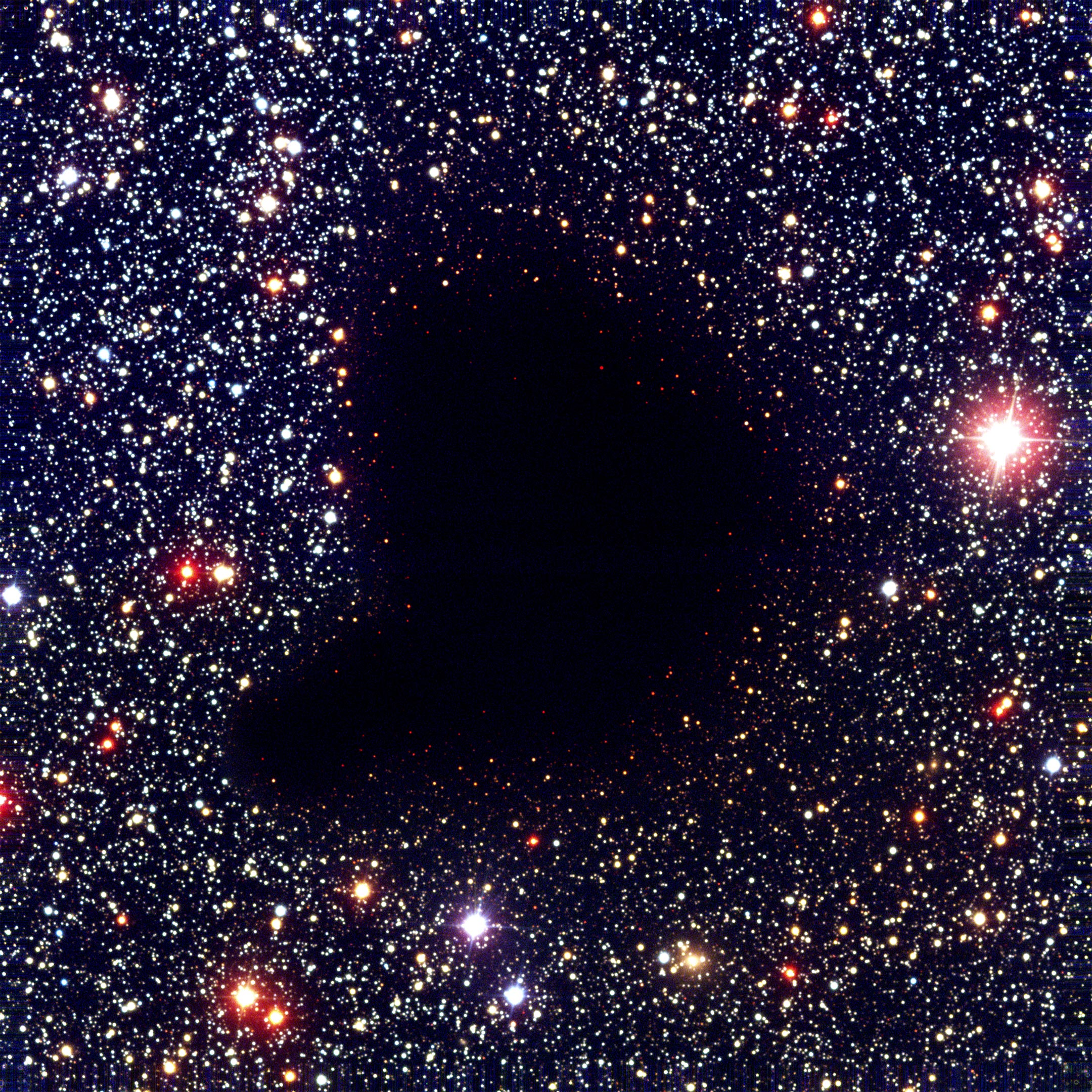
    Barnard 68
    A composite visible and near-infrared image of the interstellar dark cloud, Barnard 68. The gas and dust in its interior is very cold, but can be heated by cosmic rays. A new study predicts that the infrared emission lines of molecular hydrogen in dark clouds provide key diagnostics of cosmic rays in the interstellar medium. Credit: ESO; VLT/ANTU and FORS1

    Cosmic rays excite cold molecular hydrogen, producing unique signals that reveal how these energetic particles shape interstellar clouds.

    The ionization of the neutral gas in an interstellar molecular cloud plays a key role in the cloud’s evolution, helping to regulate the heating and cooling processes, the chemistry and molecule formation, and coupling the gas to magnetic fields.

    Usually starlight provides this ultraviolet radiation, but it is mostly restricted to localized regions near massive stars. For the bulk of the neutral gas in the Milky Way, ionization is governed by low energy cosmic-rays (CRs), fast-moving protons or atomic nuclei. Direct observations from the Earth can only probe high energy CRs because the solar wind restricts the penetration of CR into the solar system, but in the past few decades, the total CR ionization rate has been estimated indirectly with observations of diagnostic molecules and ions. Those values, however, rely on some uncertain estimates like the abundances of secondary species, gas densities, the rates of chemical reactions and not least, the amount of the dominant molecular species, molecular hydrogen.

    The mass of molecular clouds is dominated by molecular hydrogen. The gas in these clouds is very cold, perhaps only a few tens of degrees above absolute zero, and hydrogen molecules are in their least excited state. Shocks passing through the gas can temporarily heat the molecules; the radiation they then emit as they cool down has been seen for decades. Ultraviolet light can also excite the gas to radiate. But shocks are rare and ultraviolet radiation cannot penetrate into the depths of these cold clouds. Cosmic rays can penetrate the clouds, and therefore are expected to dominate the ionization and excitation of the molecular hydrogen.

    CfA astronomer Shmuel Bialy has modeled the emission lines from molecular hydrogen in cold clouds excited by cosmic rays. He finds that the brightest emission comes from lines with near-infrared wavelengths arising from vibration and rotation of the molecules. Using the ratios of line strengths, he is able to determine if the molecules have been excited by cosmic rays, and determine their strength. Observation of these lines in clouds across the galaxy could determine how effectively the cosmic rays penetrate the clouds and constrain the cloud formation processes, and how much the cosmic ray flux varies between locations in the galaxy.

    Reference: “Cold clouds as cosmic-ray detectors” by Shmuel Bialy, 7 February 2020, Communications Physics.
    DOI: 10.1038/s42005-020-0293-7

    Never miss a breakthrough: Join the SciTechDaily newsletter.
    Follow us on Google and Google News.

    Astronomy Astrophysics Harvard-Smithsonian Center for Astrophysics
    Share. Facebook Twitter Pinterest LinkedIn Email Reddit

    Related Articles

    X-Ray Emission From Mysterious Dark Matter

    Analyzing Dust Storm Sequences on Mars

    Intriguing Remains of a Rare Stellar Explosion Discovered in Milky Way Center

    Puzzling Astrophysics of Quasars in the Early Universe

    Four Exoplanets – Including a Super-Earth Planet – Discovered by High School Students

    Massive Rotating Stars in the Pleiades Cluster

    Astronomers Discover First Cloudless, Jupiter-Like Planet – “Smoking Gun Evidence”

    Chandra X-ray Observatory Studies Extraordinary Magnetar [Video]

    Chandra Studies Extraordinary Magnetar: Fastest Spinning and Possibly the Youngest Magnetar Known

    Leave A Reply Cancel Reply

    • Facebook
    • Twitter
    • Pinterest
    • YouTube

    Don't Miss a Discovery

    Subscribe for the Latest in Science & Tech!

    Trending News

    On the Brink of Extinction, These Giant Sea Turtles Are Doing Something Unexpected

    Coffee May Be Changing Your Gut in Ways Scientists Are Only Beginning To Understand

    Scientists Uncover Why a Common Nutrient Can Be Dangerous for Blood Vessels

    Mysterious Radio Signals From 5,000 Light-Years Away Lead Scientists to a Surprising Discovery

    New FDA-Approved Pill Lowers High Blood Pressure and May Slow Kidney Disease

    Scientists Just Challenged a Decades-Old Belief About How Cells Work

    Scientists Uncover a Natural Molecule That Makes Muscles Stronger and More Resistant to Fatigue

    Scientists Find That Mice, Not Deer, Hold a Major Clue to Lyme Disease Risk

    Follow SciTechDaily
    • Facebook
    • Twitter
    • YouTube
    • Pinterest
    • Newsletter
    • RSS
    SciTech News
    • Biology News
    • Chemistry News
    • Earth News
    • Health News
    • Physics News
    • Science News
    • Space News
    • Technology News
    Recent Posts
    • Researchers Just Sent an Unblockable Message Through a Solid Wall Using Gravity
    • A 360-Year-Old Manuscript Reveals Galileo May Have Built a Telescope Far Ahead of Its Time
    • Scientists Discover That Young Chimpanzees May Develop Accents Just Like Humans
    • Your Personality May Be Partly Written in Your DNA, Massive Study of 1 Million People Reveals
    • Pancreatic Cancer’s “Don’t Eat Me” Signal Reveals a Potential New Treatment Target
    Copyright © 1998 - 2026 SciTechDaily. All Rights Reserved.
    • Science News
    • About
    • Contact
    • Editorial Board
    • Privacy Policy
    • Terms of Use

    Type above and press Enter to search. Press Esc to cancel.