

Scientists champion global genomic surveillance using the latest technologies and a ‘One Health’ approach to protect against novel pathogens like avian influenza and antimicrobial resistance, catching epidemics before they start.
The COVID-19 pandemic turned the world upside down. In fighting it, one of our most important weapons was genomic surveillance, based on whole genome sequencing, which collects all the genetic data of a given microorganism. This powerful technology tracked the spread and evolution of the virus, helping to guide public health responses and the development of vaccines and treatments.
But genomic surveillance could do much more to reduce the toll of disease and death worldwide than just protect us from COVID-19. Writing in the journal Frontiers in Science, an international collective of clinical and public health microbiologists from the European Society for Clinical Microbiology and Infectious Diseases (ESCMID) calls for investment in technology, capacity, expertise, and collaboration to put genomic surveillance of pathogens at the forefront of future pandemic preparedness.
“Epidemic-prone infectious diseases cross borders as fast as people and trade goods travel around the world,” said lead author Prof Marc Struelens of the Université libre de Bruxelles, Belgium, and formerly Chief Microbiologist at the European Centre for Disease Prevention and Control (ECDC). “A local outbreak today may become the world’s next pandemic crisis tomorrow.”
A Vital Head Start
Most illnesses not seen before in humans are zoonoses—diseases found in animals that infect humans. Many diseases in animals are also treated with antibiotics and other antimicrobials that are used for humans. However, the widespread use of antimicrobials in humans and animals has led to resistance, as microbes evolve to survive. So we face two major, overlapping public health threats: one from new infectious diseases that are zoonoses, and one from rising antimicrobial resistance. Tackling these threats requires a collaborative One Health approach—championed by the World Health Organization (WHO)—which recognizes that human health is dependent on the health of our ecosystem.
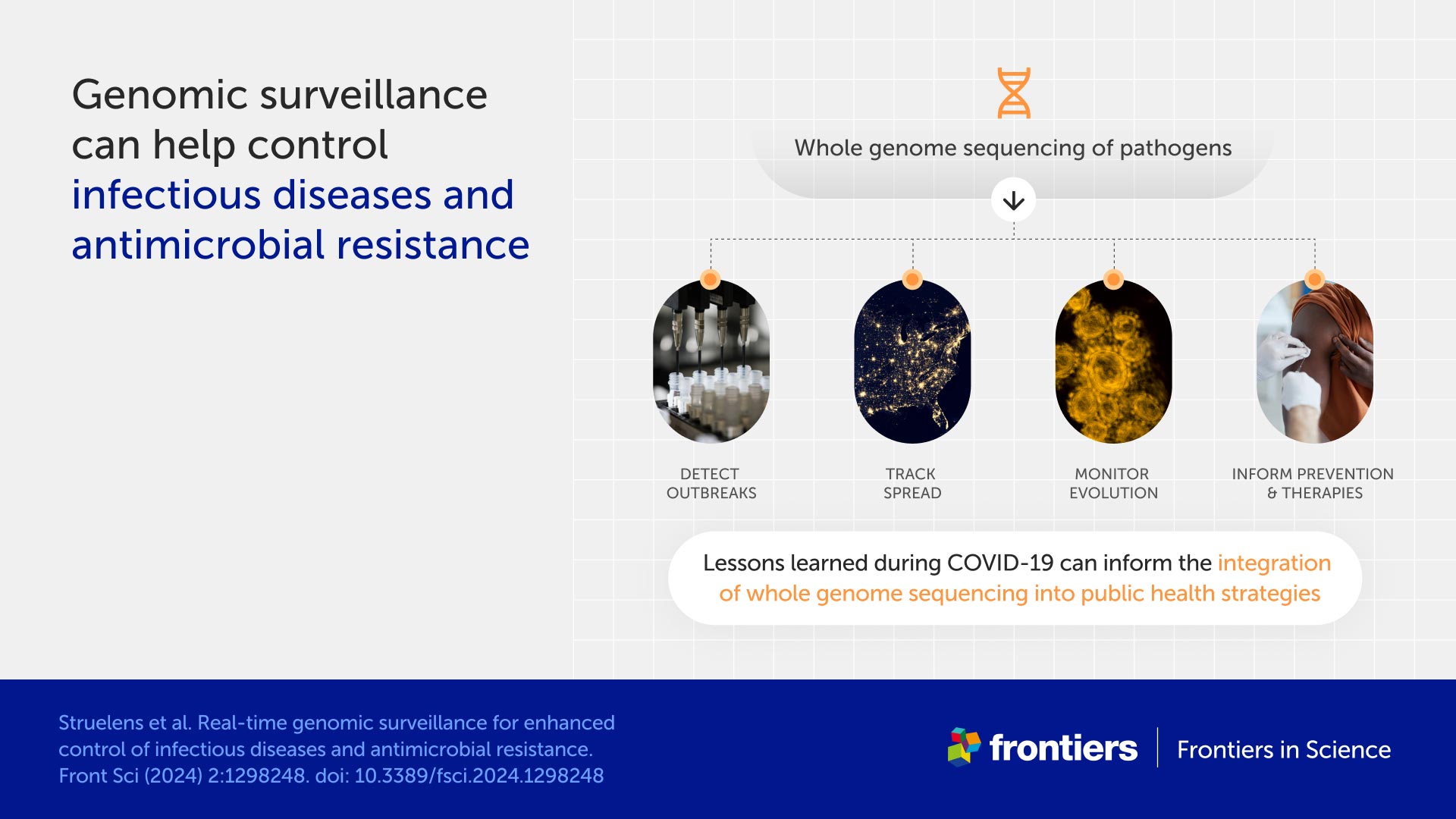
The answer, the scientists say, is to repurpose the increased genomic surveillance technology and capacity brought by COVID-19 to act as sentinels. Genomic surveillance that brings together public health agencies, veterinarians, and doctors need to be used to monitor human and animal diseases and antimicrobial resistance. By integrating epidemiological and clinical data from all these fields, we can get a comprehensive picture of pathogens and the risks they pose.
“Pathogen genomic surveillance is a tool that looks at the interplay between antimicrobial selective pressure on populations of microbes and the adaptive evolution of those microbes towards drug resistance,” said Struelens. “It lets us detect the emergence and disentangle the transmission dynamics of super-fit, multidrug-resistant epidemic clones—’superbugs’. Genomic surveillance can help track both zoonotic and inter-human transmission of viral variants, strains of bacteria, and signs of drug resistance.”
Rapid Detection and Response
Real-time genomic surveillance of pathogens can allow us to quickly detect new strains of resistant bacteria and new diseases making the jump between humans and animals, and to monitor their spread and evolution.
This information can inform vaccination campaigns, help design targeted treatments, and guide public health responses—all of which could help prevent epidemics from flaring up.
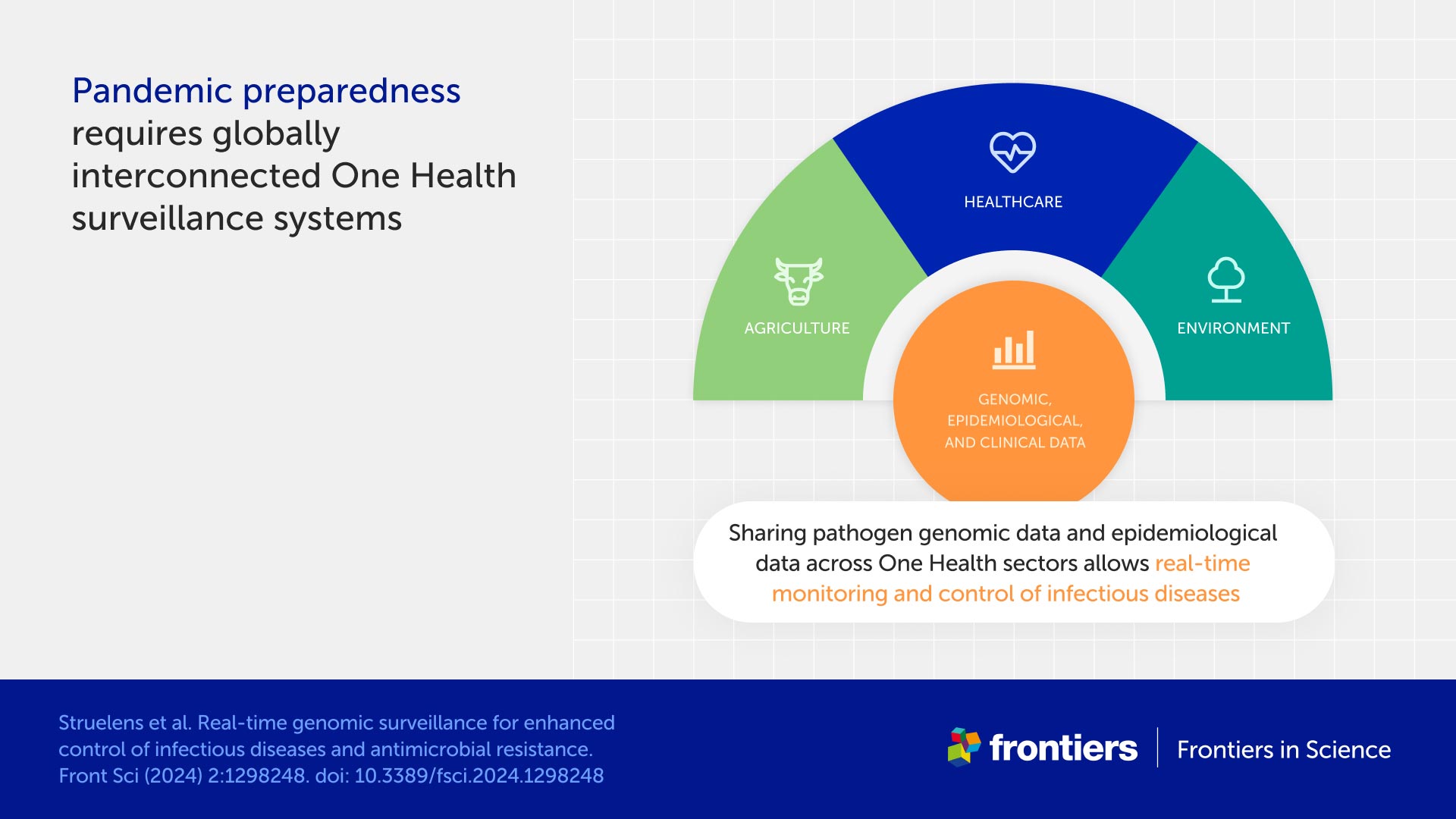
Monitoring whole genomes would also allow us to study new diseases and the evolution of known diseases in more depth, to gauge how dangerous they are and identify countermeasures. In a globalized world, where pathogens travel quickly, genomic surveillance would make it possible to diagnose and treat infections equally quickly.
Struelens and his colleagues highlight how new sequencing technologies, including long-read genomic sequencing, ultra-rapid sequencing, and single-cell sequencing, and artificial intelligence are helping to drive progress in surveillance in some parts of the world.
“There are many places where genomic surveillance is already providing crucial protection against the spread of disease,” said Struelens. “This includes foodborne infections in Europe, North America, and Australia, and epidemic viral diseases like avian influenza across many countries worldwide.”
Building Global Surveillance Networks
To make genomic surveillance effective, the scientists say, we need worldwide, accessible, real-time data. To achieve this, we need massive investment in capacity and expertise that takes into account different levels of infrastructure and training available around the world. During the COVID-19 pandemic, countries that already had access to genomic surveillance expertise and equipment had a major advantage in monitoring the pandemic and tailoring their response. The authors provide a framework for the equitable implementation of globally interconnected surveillance systems that include lower- and middle-income countries.
“The article by Struelens et al. is a must-read for anyone interested in genomic surveillance as part of epidemic preparedness,” said Prof Marion Koopmans from the Erasmus Medical Center in Rotterdam, Netherlands, in an accompanying editorial. “The tools and ambition are there—the next step is to build equitable, collaborative surveillance infrastructures for future global health. The proposed WHO ‘Pandemic Treaty’ will be key, defining some of the rules of international engagement for better preparedness. Interesting times ahead!”
We also urgently need to invest in collaboration, to build bridges between disciplines in animal health, human, and public health, and to liaise between countries and health agencies. This will be critical to ensure not just that stakeholders can work together but that we reach agreements over data management and regulation, so that patients’ data is anonymized and safeguarded.
“To ensure universal participation in collaborative systems of genomic surveillance around the world, our critical challenges are sufficient laboratory and sequencing capacity, the training of an expert workforce, and access to validated genomic data analysis and sharing tools within a comprehensive, secure digital health information infrastructure,” said Struelens. “Integrating epidemic pathogen genomic information with epidemiological information must happen at scale, from the local to global level.”
Reference: “Real-time genomic surveillance for enhanced control of infectious diseases and antimicrobial resistance” by Marc J. Struelens, Catherine Ludden, Guido Werner, Vitali Sintchenko, Pikka Jokelainen and Margaret Ip, 2 April 2024, Frontiers in Science.
DOI: 10.3389/fsci.2024.1298248
Never miss a breakthrough: Join the SciTechDaily newsletter.
Follow us on Google and Google News.