
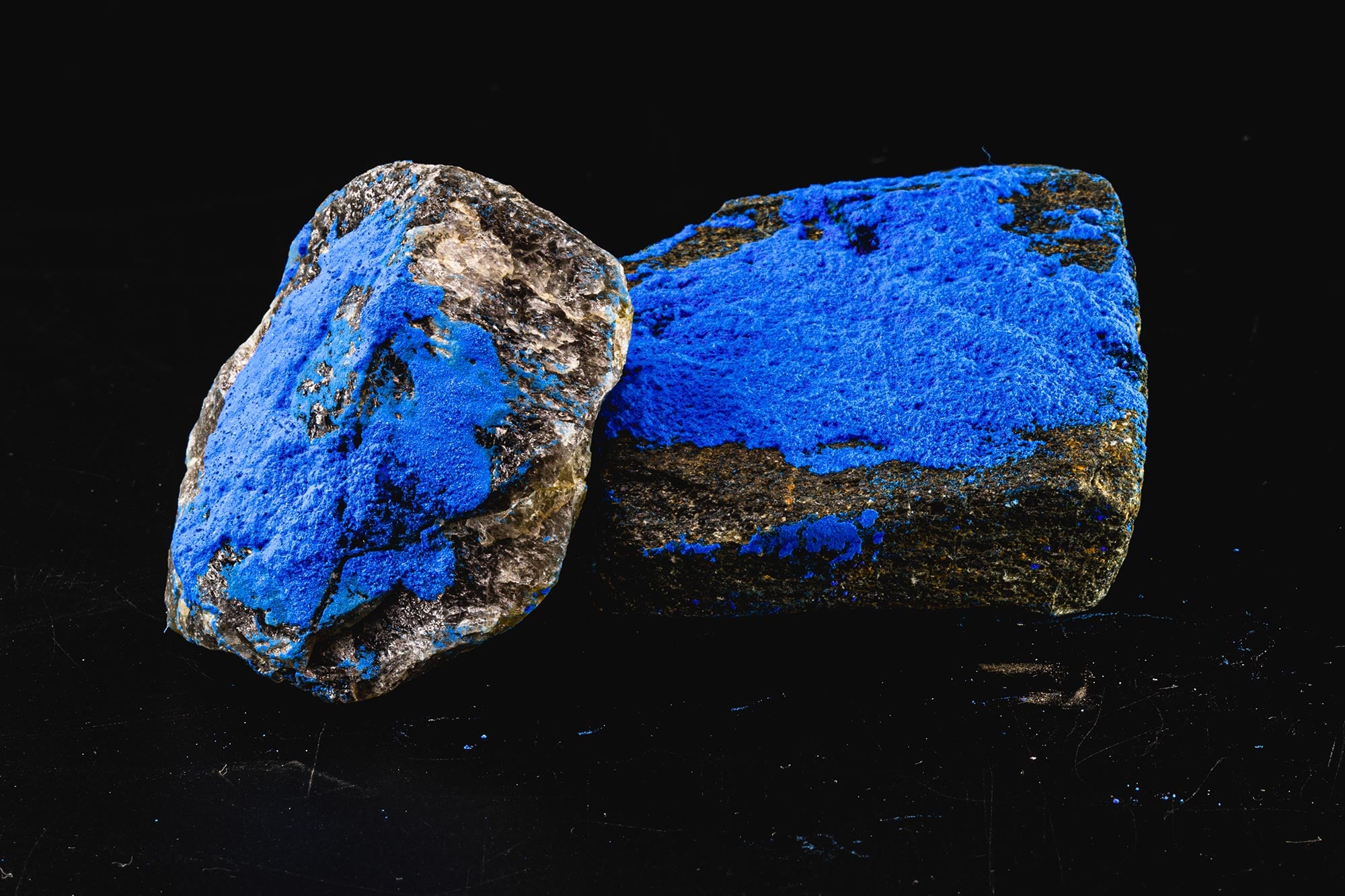
Researchers have created a cobalt-based thin film in which local honeycomb structures generate strong magnetic interactions linked to Kitaev-type quantum materials.
A common metal may offer a cheaper route to materials used in quantum research. Scientists created a thin film in which cobalt atoms form local honeycomb patterns and generate strong magnetic interactions linked to Kitaev materials.
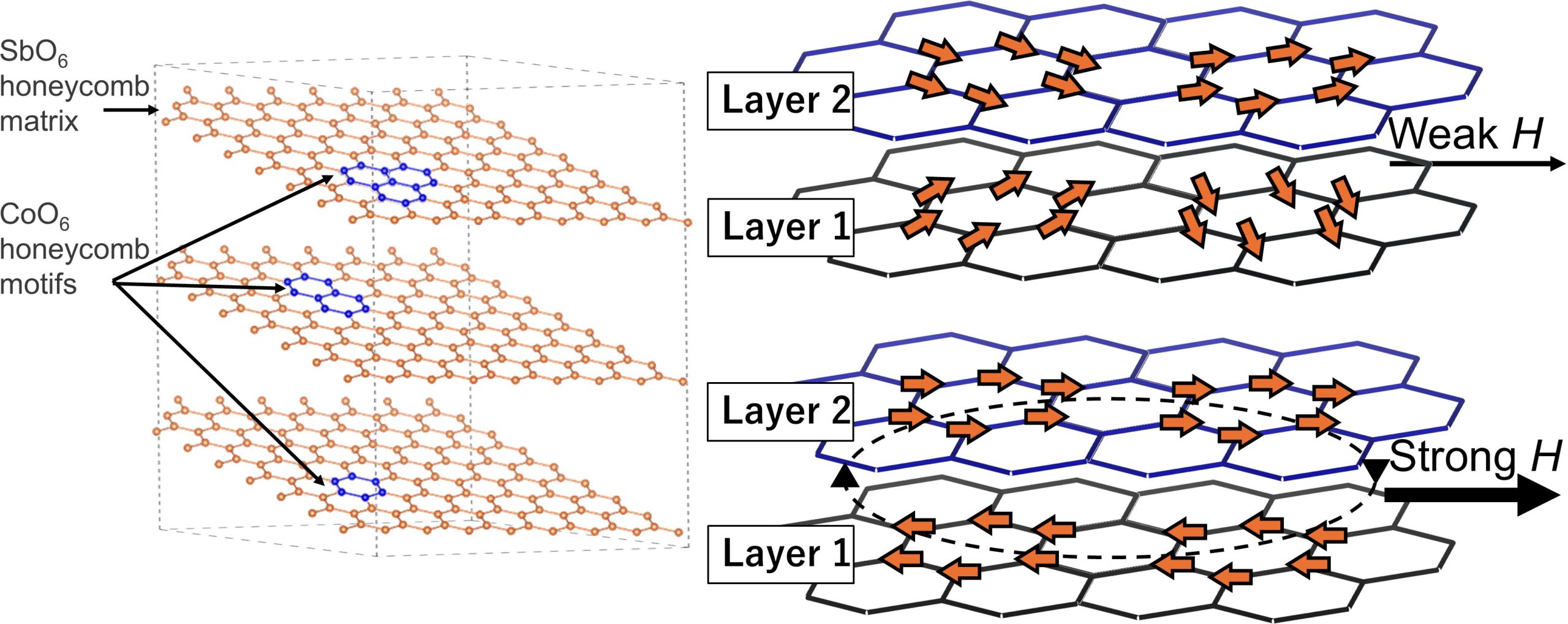
The material is based on sodium antimonate (NaSbO3), which already has a layered honeycomb structure. Adding about 4% cobalt produced localized CoO6 honeycomb motifs without disrupting the larger crystal.
Replacing Rare Metals
Kitaev materials are studied because some may support quantum spin liquids, unusual states in which atomic spins remain dynamic instead of settling into conventional magnetic order. Research has often relied on compounds containing scarce metals such as ruthenium and iridium.
“Previous work in this area has largely been limited to rare metals like ruthenium and iridium,” says lead author Hao-Bo Li. “We asked whether cobalt, one of the most common transition metals on Earth, could be made to form the same honeycomb structure and display the same intriguing physics.”
Cobalt Forms the Structure Naturally
Microscopy confirmed that the cobalt atoms clustered into the predicted honeycomb motifs without creating unwanted secondary phases.
“What excites us is that these cobalt honeycombs appear to form naturally, without any special coaxing,” explains senior author Hidekazu Tanaka. “They even produce a clear magnetic signal that matches what theory predicts for this type of structure.”
Magnetic measurements showed a ferromagnetic-like state near 88 K, or about minus 301 degrees Fahrenheit. Calculations indicate that this behavior comes from the local arrangement of cobalt atoms within the CoO6 structures.
A More Accessible Quantum Material
The material has not been shown to host a quantum spin liquid, but it provides a cobalt-based system for studying Kitaev-type magnetism without relying on rare metals.
“Cobalt is relatively cheap, widely available, and already used in semiconductor manufacturing,” remarks Li. “This approach could eventually lead to quantum computing components that are far more practical to produce at scale.”
The researchers are now working to further engineer the material and test its quantum properties in greater detail.
Reference: “Ferromagnetic-like behavior emerging from local honeycomb motifs in Co-doped thin films” by Hao-Bo Li, Weitao Yan, Shunsuke Kobayashi, Kousuke Ooe, Takahiro Ozawa, Hidefumi Takahashi, Shintaro Ishiwata, Chengchao Zhong, Tong Zhu, Wei-Hua Wang, Hiroshi Takatsu, Hiroshi Kageyama and Hidekazu Tanaka, 22 May 2026, Physical Review Materials.
DOI: 10.1103/54cx-6r5s
Never miss a breakthrough: Join the SciTechDaily newsletter.
Follow us on Google and Google News.
2 Comments
Would lie to have better understanding of this. I am 79 years old…….this is over my education level !!!
You are right. If this link still works, please browse: https://zhuanlan.zhihu.com/p/2088659998394077633.
Ladies and gentlemen,” he spread his arms as if embracing the entire world, his voice dripping with unquestionable divinity, “we no longer need to understand how God plays dice. We only need to learn to embrace uncertainty, and we don’t even need to know why. Quantum entanglement, the ‘spooky’ ghost that once baffled Einstein, has now become the source of our computing power. It does not need to be understood; it only needs to be consumed.”
What Are The Quantum Materials? The audience applauded like a tide. On the screen behind him, a menacing black cat skeleton pulsed with an eerie glow, like some cyberpunk totem.