
Recent Research Reveals That Dopamine Neurons Are More Diverse Than Previously Thought
Dopamine: It’s not just for rewards anymore.
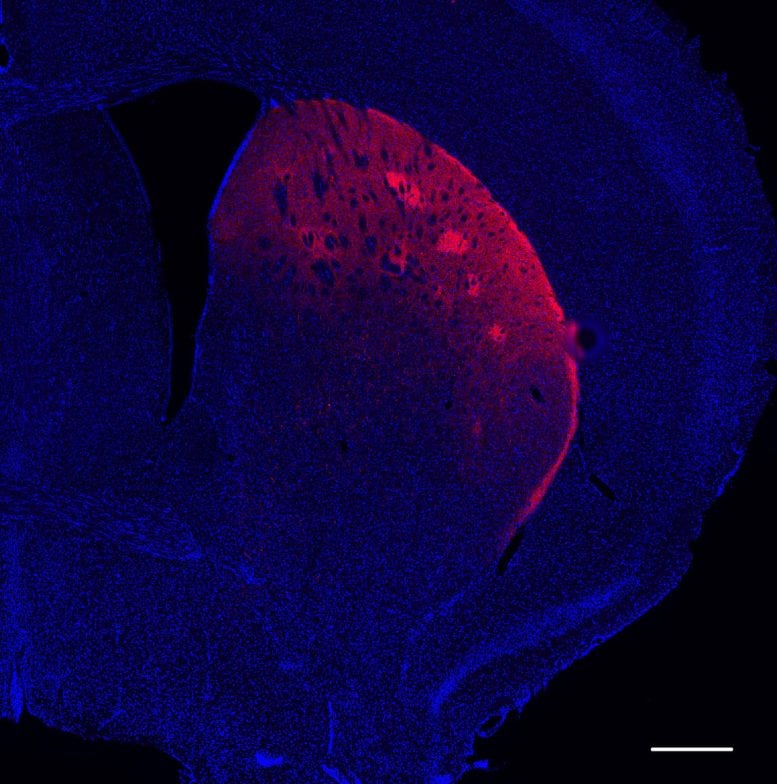
In a new Northwestern University-led study, scientists identified and recorded three genetic subtypes of dopamine neurons in the midbrain area of a mouse model.
Contrary to the widely accepted belief that dopamine neurons predominantly, if not exclusively, respond to rewards or reward-predicting cues, the researchers uncovered that one of these genetic subtypes activates in response to bodily movement. Even more unexpected was the finding that these neurons did not respond to rewards in any way.
Not only does this finding shed new light on the mysterious nature of the brain, it also opens new research directions for further understanding and potentially even treating Parkinson’s disease, which is characterized by the loss of dopamine neurons yet affects the motor system.
The study was recently published in the journal Nature Neuroscience.
“When people think about dopamine, they likely think about reward signals,” said Northwestern’s Daniel Dombeck, who co-led the study. “But when the dopamine neurons die, people have trouble with movement. That’s what happens with Parkinson’s disease, and it’s been a confusing problem for the field. We found a subtype that are motor signaling without any reward response, and they sit right where dopamine neurons first die in Parkinson’s disease. That’s just another hint and clue that seems to suggest that there’s some genetic subtype that’s more susceptible to degradation over time as people age.”
“This genetic subtype is correlated with acceleration,” added Northwestern’s Rajeshwar Awatramani, who co-led the study with Dombeck. “Whenever the mouse accelerated, we saw activity, but in contrast we did not see activity in response to a rewarding stimulus. This goes against the dogma of what most people think these neurons should be doing. Not all dopamine neurons respond to rewards. That’s a big change for the field. And now we found a signature for that dopamine neuron that does not show reward response.”
Dombeck is a professor of neurobiology at Northwestern’s Weinberg College of Arts and Sciences. Awatramani is the John Eccles Professor of Neurology at Northwestern University Feinberg School of Medicine. The paper’s first authors are Maite Azcorra and Zachary Gaertner, both graduate students in Dombeck’s and Awatramani’s laboratories.
Motor-Driving Signals
This new discovery builds on a previous study from Dombeck’s lab, which found a population of dopamine neurons associated with movement in mice.
“At the time, we thought it was just a tiny fraction of neurons,” Dombeck said. “And others continued to assume that all dopamine neurons were still reward neurons. Maybe some of them just had motor signals too.”
To probe this question further, Dombeck teamed with Awatramani, who used genetic tools to isolate and label populations of neurons based on their gene expression. Using this information, Dombeck’s team then tagged neurons in the brains of a genetically modified mouse model, which was generated at the Northwestern Transgenic and Targeted Mutagenesis Lab, with fluorescent sensors. This enabled the researchers to see which neurons glowed during behavior — ultimately revealing which neurons control different specific functions.
In the experiments, about 30% of dopamine neurons only glowed when the mice moved. These neurons were one of the genetic subtypes that Awatramani’s team identified. The other populations of dopamine neurons responded to aversive stimuli (causing an avoidance response) or to rewards.
The Parkinson’s Connection
For decades, researchers have been confounded by why patients with Parkinson’s disease lose dopamine neurons yet have difficulties moving.
“It’s not like people with Parkinson’s disease only lose their drive to be happy because their dopamine response is damaged,” Dombeck said. “Something else is going on that affects motor skills.”
Dombeck and Awatramani’s new study might provide the missing piece to the puzzle.
In their work, the researchers noted that dopamine neurons correlated with acceleration in mice appear to be in the same location of the midbrain as those that tend to die in patients with Parkinson’s disease. But the dopamine neurons that survive are correlated with deceleration. The discovery leads to a new hypothesis that Dombeck and Awatramani plan to explore in the future.
“We’re wondering if it’s not just the loss of the motor-driving signal that’s leading to the disease — but the preservation of the anti-movement signal that’s active when animals decelerate,” Dombeck said. “It could be this signal imbalance that strengthens the signal to stop moving. That might explain some of the symptoms. It’s not just that patients with Parkinson’s can’t move. It could also be that they are being driven to stop moving.”
“We’re still trying to figure out what this all means,” Awatramani said. “I would say this is a starting point. It’s a new way of thinking about the brain in Parkinson’s.”
Reference: “Unique functional responses differentially map onto genetic subtypes of dopamine neurons” by Maite Azcorra, Zachary Gaertner, Connor Davidson, Qianzi He, Hailey Kim, Shivathmihai Nagappan, Cooper K. Hayes, Charu Ramakrishnan, Lief Fenno, Yoon Seok Kim, Karl Deisseroth, Richard Longnecker, Rajeshwar Awatramani and Daniel A. Dombeck, 3 August 2023, Nature Neuroscience.
DOI: 10.1038/s41593-023-01401-9
The study was funded by the Michael J. Fox Foundation for Parkinson’s Research, the National Institutes of Health, the National Institute of Neurological Disorders and Stroke, and the National Institute of General Medical Sciences.
Never miss a breakthrough: Join the SciTechDaily newsletter.
Follow us on Google and Google News.