
An ancient immune response regulates the development of beneficial symbioses.
Microalgae of the dinoflagellate group are known for their ability to survive in other animal cells. These tiny single-cell organisms have engaged in mutually beneficial relationships with corals since primeval times. By passing on critical nutrients to their hosts, dinoflagellates allow corals to thrive even in barren areas. A research team from the Centre for Organismal Studies (COS) of Heidelberg University recently discovered that such symbioses within the cell essentially depend on the ability of the algae to suppress the immune system of their host cell and thereby avoid being “spit out” again. At the same time, the researchers found indications that this cellular immune response is an evolutionarily ancient immune mechanism that is more widespread than previously assumed.
Symbiosis Depends on Immune Suppression
This mechanism is known as vomocytosis. Contrary to previous assumptions, microalgae ingested by corals are not digested by the cell if they prove unsuitable as symbionts – that is, partners in a symbiotic relationship. Instead, they are “spit out” again in the process of vomocytosis. Special dinoflagellates are able to specifically suppress this immune response of their host cells in order to remain in the cell. A study led by cell biologist Prof. Dr. Annika Guse at the COS demonstrated how they are able to do that. “The challenge for the corals is to differentiate between beneficial and potentially harmful microorganisms. For their part, the algae have to circumvent the immune response of the host cell, establish an intracellular niche where they can survive, and coordinate their own cell functions with those of their host to efficiently exchange nutrients,” explains the researcher.
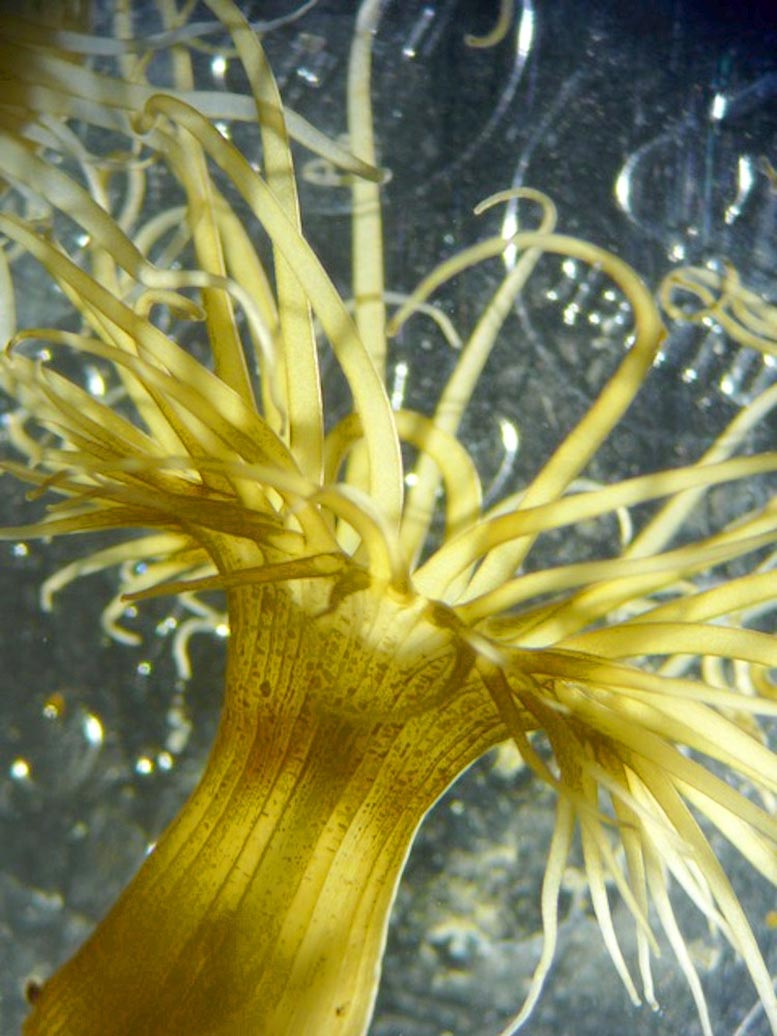
Until now, there has been no experimental evidence that could explain any of the conventional theories. Using the model system Exaiptasia diaphana (Aiptasia) of the sea anemone species, Prof. Guse’s team recently uncovered how immune suppression by the symbionts helps the host cell to recognize suitable microalgae and tolerate them for the long term. The Aiptasia anemone larvae ingest the symbionts from the environment in the same way as coral larvae. Furthermore, their size and transparency make the larvae of this sea anemone perfect for high-resolution imaging and cellular experiments.
Time lapse of a host cell with several potential symbionts. One of these is “spit out” again in the process of vomocytosis as it is not suitable for a symbiotic relationship. Video: Sebastian Rupp
Aiptasia continually ingests various particles from the environment without differentiating between suitable and unsuitable particles or organisms. Incompatible particles are “spit out” again after a certain amount of time. Symbionts avoid this process of vomocytosis, presumably by disrupting the signal pathways of the toll-like receptors (TLRs) of the host cell. These receptors play a critical role in activating the cell’s own immune system and ensure that unwelcome intruders are detected and removed. In most animals, the toll-like receptors are controlled by the MyD88 gene. “We were able to prove that the algae symbionts suppress MyD88 and thus initiate symbiosis. That is how they elude vomocytosis,” explains Prof. Guse.
Vomocytosis May Be an Ancient Immune Strategy
At the same time, the findings of the Heidelberg researchers indicate that vomocytosis involves a mechanism that is more widespread than assumed. Until now, it was believed that the expulsion of harmful intruders was self-initiated to evade the in part highly specialized immune responses of the potential host cell. The study of the Aiptasia model, however, suggests that this process can also be triggered by the host cell. The researchers therefore assume that vomocytosis is an evolutionarily ancient immune mechanism that corals or cnidarians like Aiptasia use to select appropriate symbionts. Prof. Guse: “This suggests that vomocytosis is an important process that led in the first place to the emergence of the intracellular lifestyle of the coral symbionts.”
Reference: “Dinoflagellate symbionts escape vomocytosis by host cell immune suppression” by Marie R. Jacobovitz, Sebastian Rupp, Philipp A. Voss, Ira Maegele, Sebastian G. Gornik and Annika Guse, 29 April 2021, Nature Microbiology.
DOI: 10.1038/s41564-021-00897-w
The results of the study were published in the journal Nature Microbiology. Funding was provided inter alia through the Horizon 2020 program of the European Union and by the German Research Foundation.
Never miss a breakthrough: Join the SciTechDaily newsletter.
Follow us on Google and Google News.