
Southwest Research Institute, supported by NASA’s Habitable Worlds program, is repurposing corrosion modeling software to explore the possibility of life on ice-covered moons like Europa and Enceladus.
The software, enhanced for examining complex chemical and organic interactions under extreme conditions, could predict environments that support microbial life.
Expanding Horizons in Space Exploration
Southwest Research Institute (SwRI) is transforming software originally designed to model electrolytes and predict corrosion into a powerful tool for evaluating whether ice-covered worlds could support microbial life. This innovative effort is backed by NASA’s Habitable Worlds program, which aims to apply insights from Earth’s history and its ecosystems to understand the conditions that foster and sustain habitable environments.
Chemistry modeling software is commonly used to simulate complex chemical systems under varying temperatures and pressures. Dr. Florent Bocher, a Group Leader at SwRI, has utilized this technology extensively to study and define corrosive environments. In 2023, he teamed up with SwRI Senior Research Scientist Dr. Charity Phillips-Lander, who investigates organic compounds in icy-world laboratory simulations as part of another NASA Habitable Worlds project. Together, they began exploring whether this software could also reveal how extreme environments might support microbial life.
Enhancing Tools for Extraterrestrial Habitability Studies
Because the modeling software used for corrosion studies already covers a wide range of parameters and chemistry, Phillips-Lander and Bocher found that it also had the potential to model the environments expected on icy moons in the solar system, and ultimately help predict the conditions of another world that could sustain life. Unlike most environmental modeling software, the chemistry modeling tool accounts for the presence of organics, which are carbon-based compounds that are essential for life.
“The question of habitability is about constraining the environmental factors that make it more likely to be friendly to life versus inhospitable,” Phillips-Lander said. “Most geochemical modeling software doesn’t account for organics at the conditions expected on ocean worlds, so I couldn’t model things that I was seeing in the lab during laboratory investigations of the conditions of ice-covered moons in our solar system, like Europa and Enceladus.”
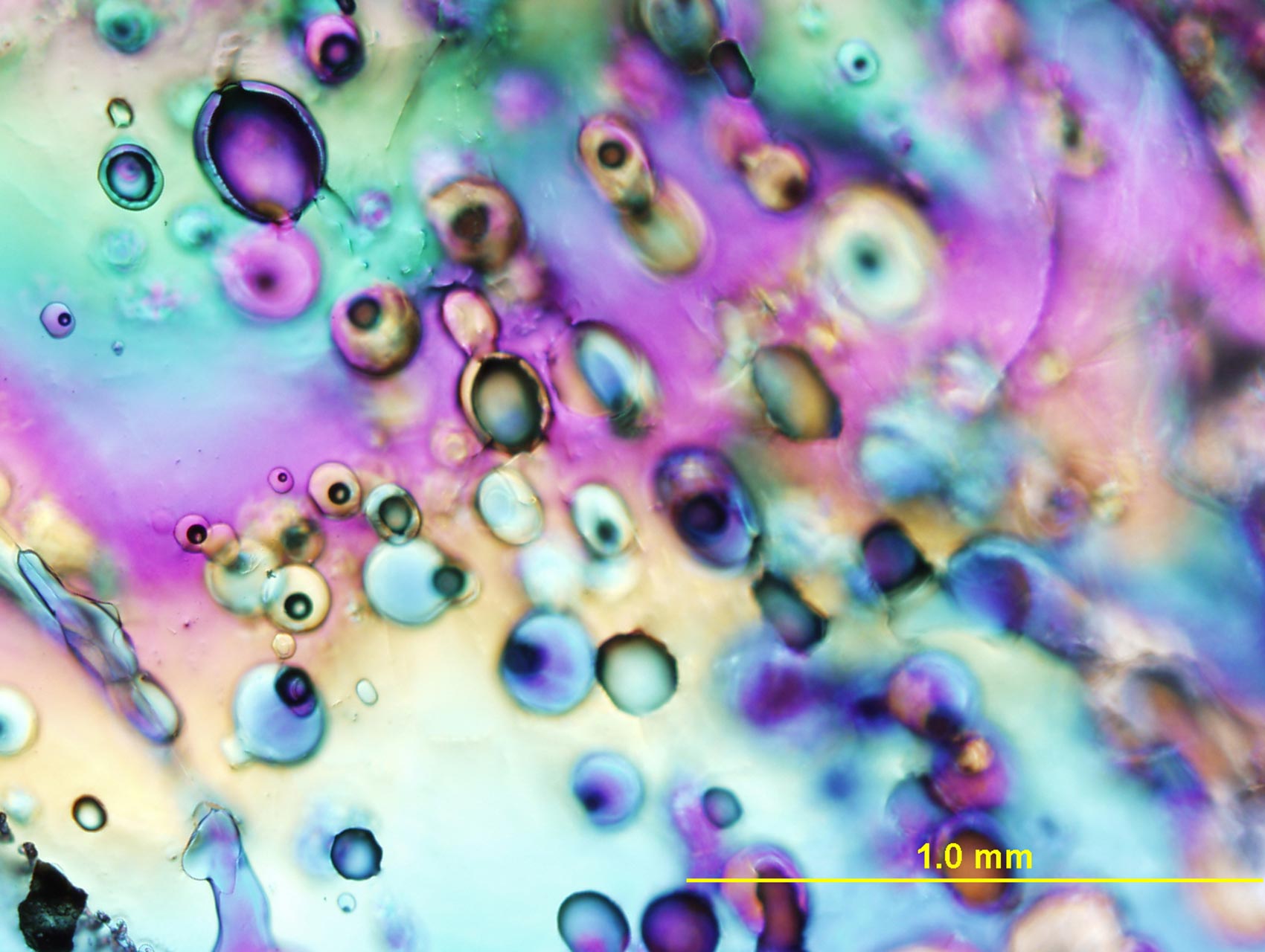
Bocher and Phillips-Lander found that the model they created could predict the presence of pores in organics-doped ice, which is ice mixed with organic molecules to study how it reacts in simulations of extreme conditions on other worlds. Phillips-Lander had observed similar pores in her laboratory work.
Collaboration and Future Prospects
While these preliminary results were promising, Bocher and Phillips-Lander realized that they were pushing the tool beyond its intended use. They began collaborating with SwRI Staff Scientist Dr. Mike Rubal to improve the existing software, and earlier this year SwRI received a three-year, $750,000 grant from NASA’s Habitable Worlds program in support of their work to enhance and broaden the software’s abilities.
“With improvements, this tool will be able to provide a great deal of valuable information about ocean worlds,” Bocher said. “It’s one thing to know what chemical composition to expect, but it’s much more helpful to know what compounds are present, and what chemical phases they’re in.”
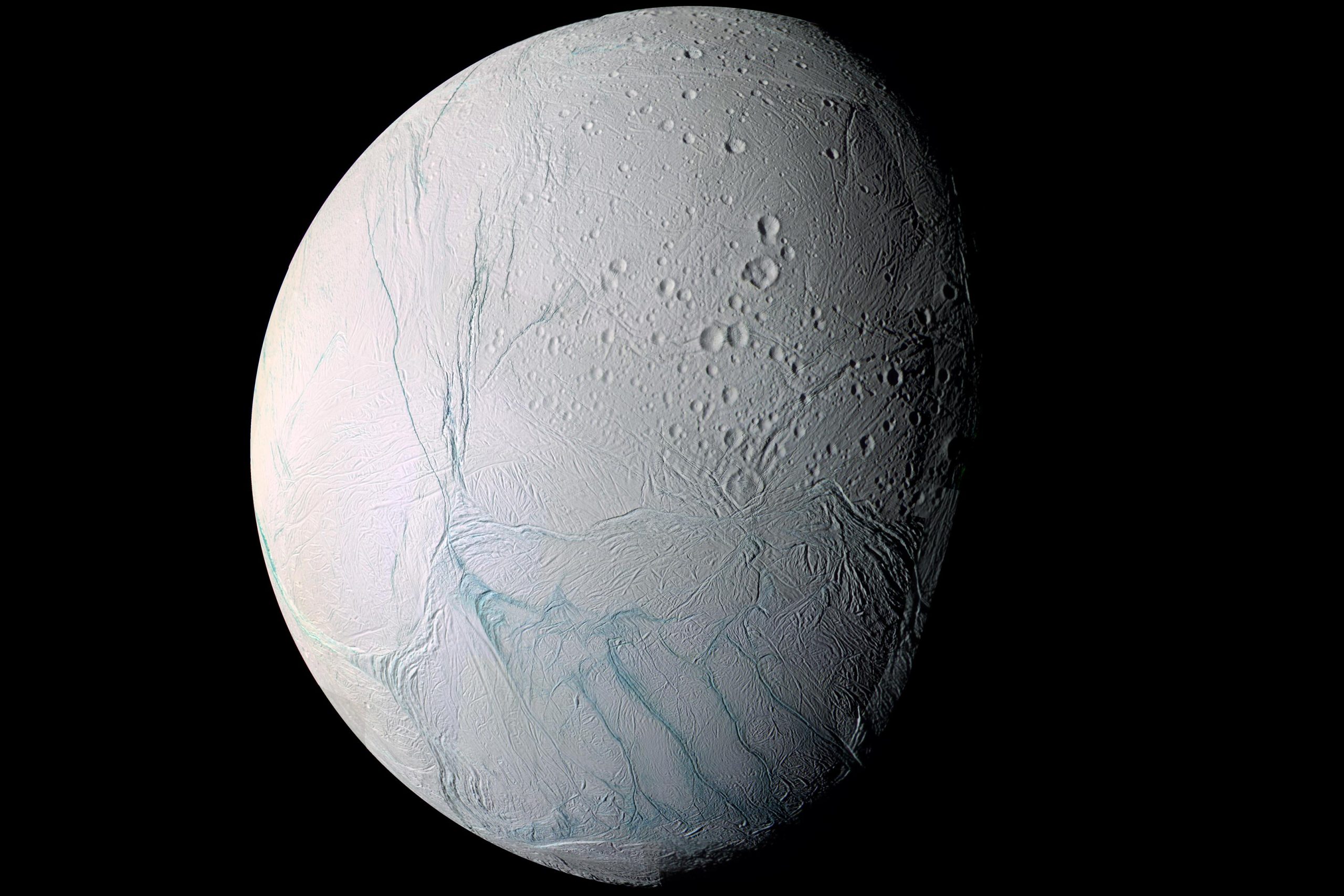
The researchers are now collaborating with a software provider to expand and improve their tools to more accurately model the conditions of other worlds like Enceladus, the ice-covered moon orbiting Saturn, which is thought to contain a subsurface ocean that may harbor microbial life.
“This new project will help us collect that missing data, add it to the modeling software, and then construct those models to provide greater context for laboratory investigations into these icy ocean worlds, and hopefully also what we would see during a future mission,” Phillips-Lander said.
Never miss a breakthrough: Join the SciTechDaily newsletter.
Follow us on Google and Google News.