
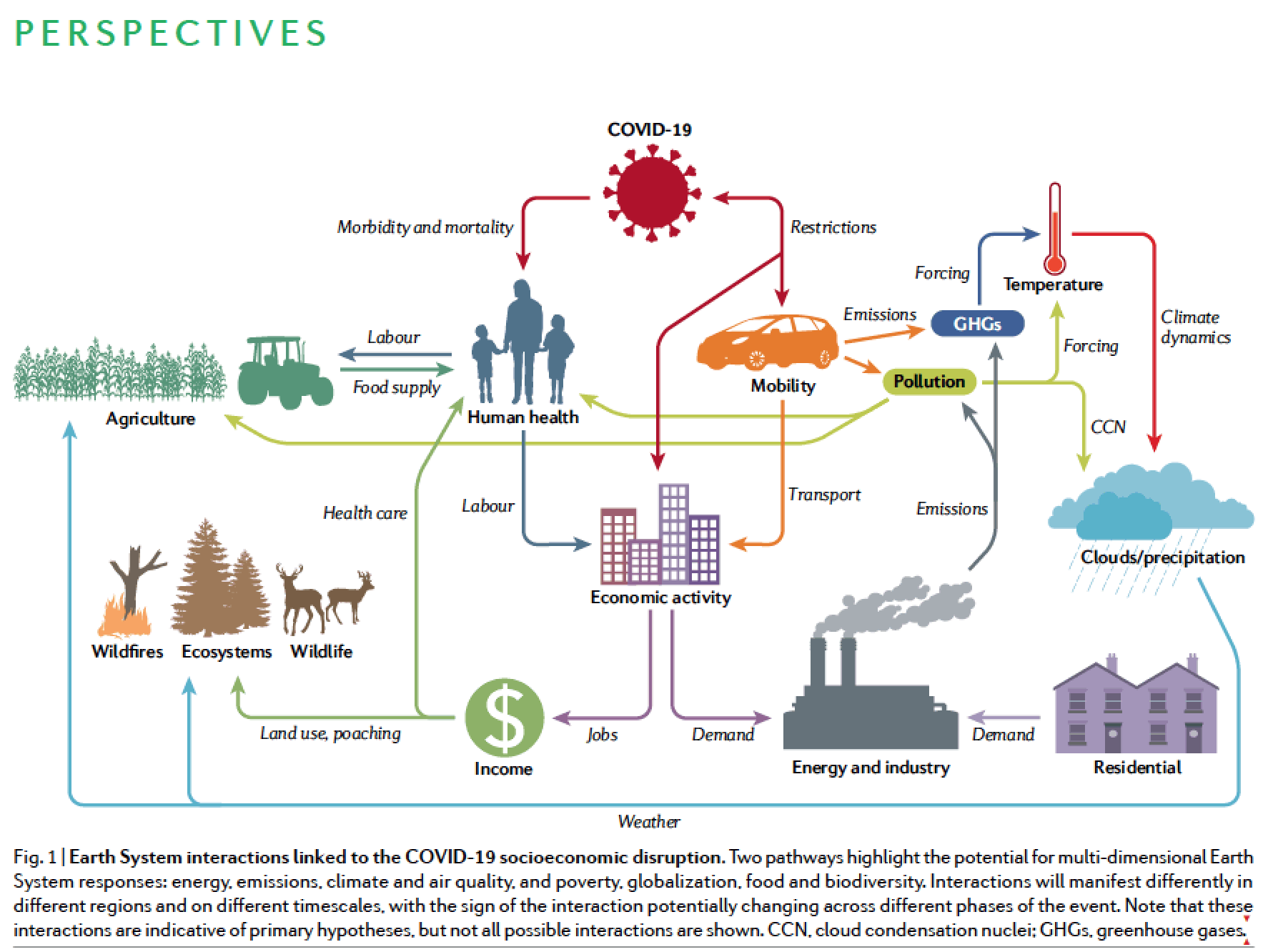
Researchers at Stanford and other institutions hypothesize outcomes of the pandemic’s unprecedented socioeconomic disruption and outline research priorities for advancing our understanding of humans’ impact on the environment.
Like the legendary falling apple that hit Isaac Newton and led to his groundbreaking insight on the nature of gravity, COVID-19 could provide unintended glimpses into how complex Earth systems operate, according to a new Stanford-led paper. The perspective, published on July 29 in the journal Nature Reviews Earth & Environment, hypothesizes outcomes of unprecedented changes in human activity wrought by worldwide sheltering orders, and outlines research priorities for understanding their short and long-term implications. Getting it right could revolutionize how we think about issues as broad as greenhouse gas emissions, regional air quality, and the global economy’s connection to poverty, food security, and deforestation, according to the researchers. It could also help ensure an economically, socially, and environmentally sustainable recovery from the coronavirus pandemic while helping prevent future crises.
“Without distracting from the most important priority – which is clearly the health and well-being of people and communities – the current easing of the human footprint is providing a unique window into the impacts of humans on the environment, including a number of questions that are critical for effective public policy,” said lead author Noah Diffenbaugh, the Kara J Foundation Professor at Stanford’s School of Earth, Energy & Environmental Sciences.
For example, the question of how much electrifying the vehicle fleet will improve air quality has until now relied heavily on theoretical arguments and computer models. The scale of recent emissions reductions, however, provides an opportunity to use atmospheric observations to check just how accurate those models are in simulating the impact of pollution-reduction interventions such as electric vehicle incentives.
Predicting pandemic outcomes
The researchers note that although many of the initial impacts of COVID sheltering, such as clear skies resulting from reduced pollutant emissions, could be perceived as beneficial to the environment, the longer-term impacts – particularly related to the economic recession – are less clear. To understand the impacts across both short and long timescales, they propose focusing on cascading effects along two pathways: (1) energy, emissions, climate and air quality; and (2) poverty, globalization, food, and biodiversity.
Given the complex interactions along these pathways, the researchers emphasize the need for techniques that can bring together multiple lines of evidence to reveal causes and effects. This includes bolstering and expanding coordinated efforts to study the impacts of the pandemic, including safe deployment of environmental sensors that can track changing conditions, computer models that simulate Earth’s response to the sheltering measures, and solutions-oriented research trials that lend insight into human behavior and decision making. The authors also call for a coordinated data repository where many different kinds of data can be made openly available to the public in a uniform format.
“Almost overnight, people across the world had to change the way they live, the way they work – with many facing loss of income – commute, buy food, educate their children and other energy-consuming behaviors,” said Inês Azevedo, an associate professor of energy resources engineering in Stanford’s School of Earth, Energy & Environmental Sciences. “It’s critical for us to better understand how future societal disruptions and catastrophes could affect interactions among energy systems and other systems that serve society.”
Understanding the human response
A key factor in understanding how the pandemic’s effects play out is its influence on human behavior and decision making.
“Human behavior contributes to, but is also affected by, changes in the Earth system, and COVID-19 is creating new challenges for ensuring people and corporations act to protect the planet,” said co-author Margaret Levi, the Sara Miller McCune Director of Stanford’s Center for Advanced Study in the Behavioral Sciences and a professor of political science. “While government was not a central focus in this paper, it clarifies the roles that laws, regulations, and investments play in the safety of the food supply and food workers, emissions controls, and many other aspects of the health of the Earth and its inhabitants.”
Some of the pandemic’s most lasting impacts on climate and air quality could occur via insights it provides into the calculation of policy parameters that measure the value that individuals and society place on different environmental trade-offs. The COVID-19 crisis is making these tradeoffs more explicit, the researchers point out. This is because governments, communities, and individuals are making historic decisions reflecting underlying preferences for current and future consumption, as well as the tradeoff between different types of economic activity and individual and collective risk.
These decisions can help quantify the parameters that are routinely used in environmental policymaking (such as the cost of human lives lost to air pollution or climate change associated with carbon dioxide emissions). As those updated parameters are incorporated into actual policy decisions, they will have lasting effects on the regulations that impact the long-term trajectory of climate and air quality.
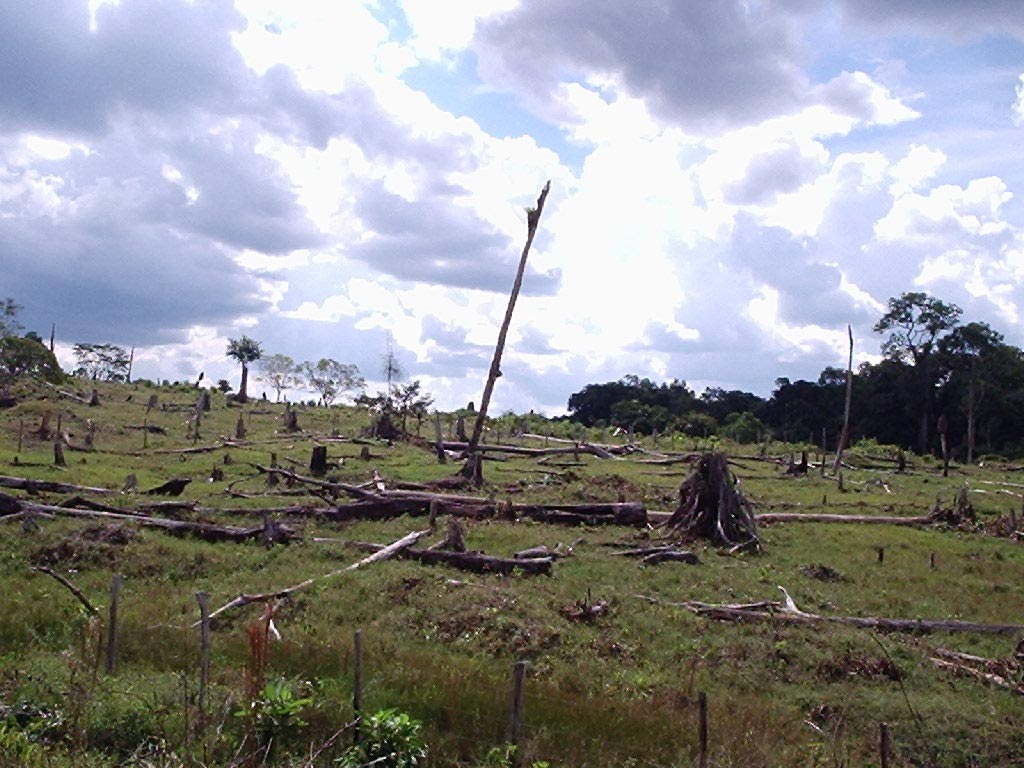
Studying policy interventions designed to prevent socio-environmental damage – such as the role of poverty in driving deforestation – could also help vulnerable people weather poverty shocks from COVID-19 by providing a deeper understanding of how and where poverty and environmental degradation are most tightly linked. The researchers propose using the kinds of solution-oriented research trials that were awarded this year’s Nobel Prize in Economics to study whether interventions such as payments for protection of natural resources are effective in staving off deforestation, over-fishing, and other environmental damages.
“COVID-19 poses some of the biggest challenges we have faced in the last century,” said paper co-author Chris Field, the Perry L. McCarty Director of the Stanford Woods Institute for the Environment and Melvin and Joan Lane Professor for Interdisciplinary Environmental Studies. “With every challenge, there are opportunities for learning, and this paper provides a map for expanding the set of opportunities.”
Reference: “The COVID-19 lockdowns: a window into the Earth System” by Noah S. Diffenbaugh, Christopher B. Field, Eric A. Appel, Ines L. Azevedo, Dennis D. Baldocchi, Marshall Burke, Jennifer A. Burney, Philippe Ciais, Steven J. Davis, Arlene M. Fiore, Sarah M. Fletcher, Thomas W. Hertel, Daniel E. Horton, Solomon M. Hsiang, Robert B. Jackson, Xiaomeng Jin, Margaret Levi, David B. Lobell, Galen A. McKinley, Frances C. Moore, Anastasia Montgomery, Kari C. Nadeau, Diane E. Pataki, James T. Randerson, Markus Reichstein, Jordan L. Schnell, Sonia I. Seneviratne, Deepti Singh, Allison L. Steiner and Gabrielle Wong-Parodi, 29 July 2020, Nature Reviews Earth & Environment.
DOI: 10.1038/s43017-020-0079-1
Diffenbaugh is also the Kimmelman Family senior fellow in the Stanford Woods Institute for the Environment. Levi and Azevedo are also senior fellows at the Stanford Woods Institute. Stanford co-authors include Eric Appel, Marshall Burke, Sarah Fletcher, Rob Jackson, David Lobell, Kari Nadeau, and Gabrielle Wong-Parodi. Additional co-authors are affiliated with the University of California, Berkeley; the University of California, San Diego; the Pierre Simon Laplace Institute; the University of California, Irvine; Columbia University; Purdue University; Northwestern University; the University of California, Davis; the University of Utah; the Max-Planck-Institute for Biogeochemistry; the University of Colorado Boulder; the Swiss Federal Institute of Technology; Washington State University; and the University of Michigan.
Never miss a breakthrough: Join the SciTechDaily newsletter.
Follow us on Google and Google News.