
Close Menu
    Facebook X (Twitter) Instagram
    SciTechDaily
    • Biology
    • Chemistry
    • Earth
    • Health
    • Physics
    • Science
    • Space
    • Technology
    Facebook X (Twitter) Pinterest YouTube RSS
    SciTechDaily
    Home»Health»COVID-19 Disease Severity Linked to N Protein of SARS-CoV-2 Virus
    Health

    COVID-19 Disease Severity Linked to N Protein of SARS-CoV-2 Virus

    By King Abdullah University of Science & Technology (KAUST)April 3, 2022No Comments3 Mins Read
    Facebook Twitter Pinterest Telegram LinkedIn WhatsApp Email Reddit
    Share
    Facebook Twitter LinkedIn Pinterest Telegram Email Reddit
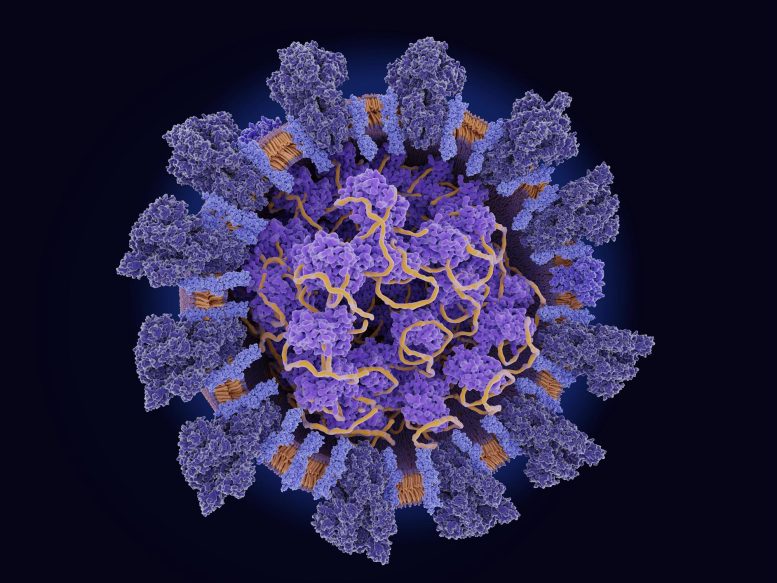
    SARS-CoV-2 Coronavirus Structure
    SARS-CoV-2 coronavirus structure.

    Insight into the function of the nucleocapsid protein could help develop drugs that reduce coronavirus impact.

    A multicenter collaboration tracking the spread and evolution of the SARS-CoV-2 virus in Saudi Arabia has identified mutations in the virus’s N protein associated with increased viral loads in COVID-19 patients. The study provides insight into the function of this nucleocapsid protein, which could help develop drugs that reduce the impact of coronavirus infection.

    “The nucleocapsid (N) protein is the most abundant protein in all coronaviruses, including SARS-CoV-2,” explains KAUST research scientist Muhammad Shuaib. This protein binds to various parts of the viral RNA, affecting how it is packaged within the virus. It also plays roles inside host cells related to viral replication and host immune responses.

    The researchers, working with Arnab Pain, found that two consecutive mutations in the N protein, called R203K and G204R, were associated with increased severity of COVID-19 in patients. Analyses showed that the changes to the protein made it bind more strongly to the viral RNA.
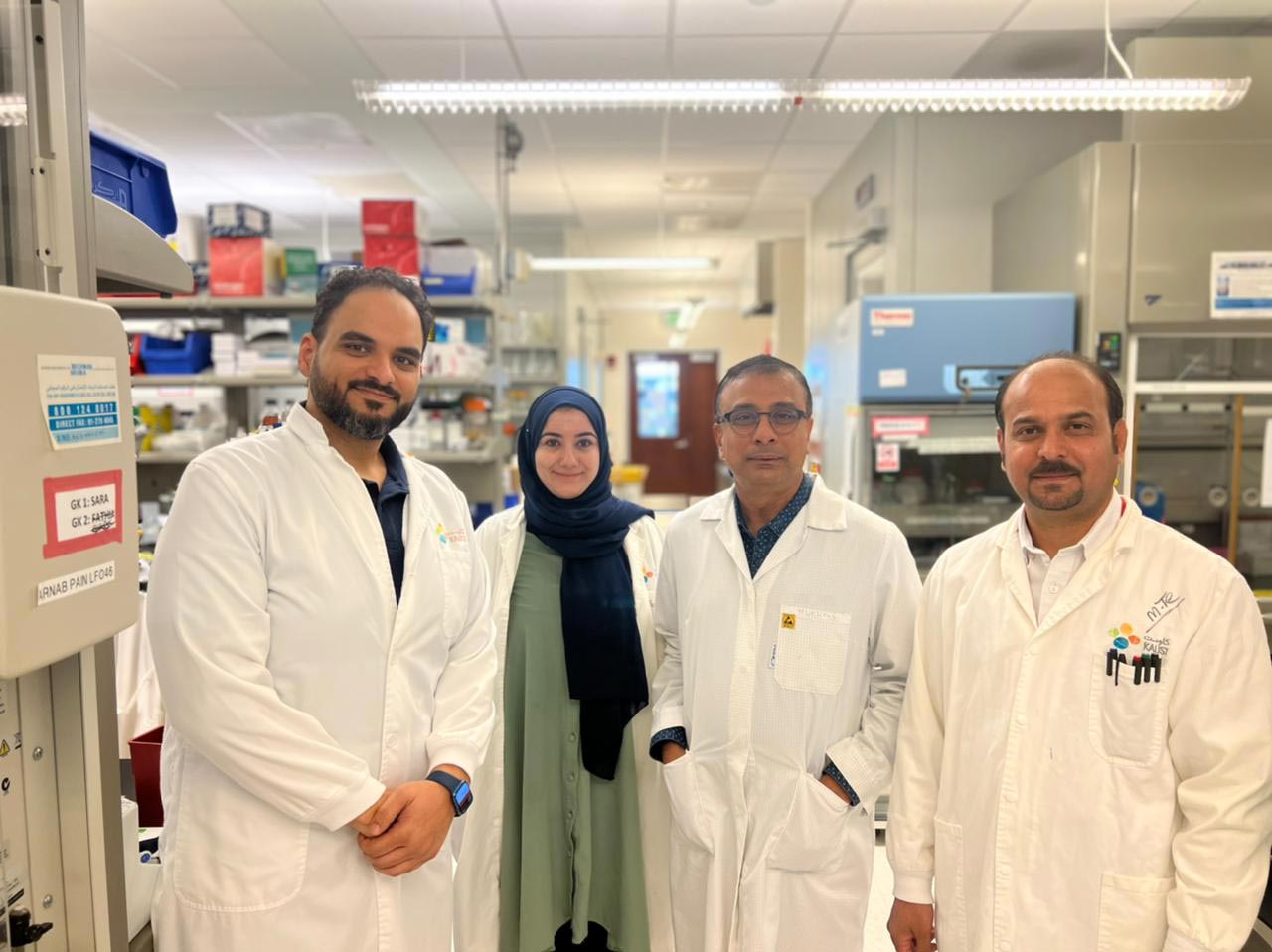
    Disease Severity Linked to N Protein of SARS-CoV-2
    From left: Sharif M. Hala, Sara Mfarrej, Professor Arnab Pain, Muhammad Shuaib and Tobias Mourier (not pictured) studied the N protein of SARS-CoV-2 to further understanding of its role in disease severity. Credit: © 2022 KAUST

    Nucleocapsid (N) Protein Mutations Affect Virus Replication

    Further tests in laboratory cells suggested that the changes in the N protein allow the virus to more efficiently hijack host cell translation machinery to facilitate virus replication. They were also associated with increased expression of genes involved in interferon and chemokine production. This could be behind the life-threatening cytokine storm that happens in some COVID-19 patients, making it very difficult for them to breathe.

    The findings were the result of analyses of viral genome sequences from 892 patient samples taken from various parts of Saudi Arabia between March and August 2020, relatively early in the pandemic. This was followed by comparisons with patient data to understand how mutations affected viral load and virulence.

    “Compared to the spike protein, the N protein is highly conserved in the different coronaviruses, like SARS and MERS; yet attempts to design vaccines against it have not been successful,” says Tobias Mourier, a consultant research scientist working on Pain’s team. “Understanding N protein’s function could help develop drugs that target it and potentially limit disease severity in COVID-19 and other coronavirus infections.”

    The KAUST-led research team, which includes scientists and clinicians from institutions and hospitals all over Saudi Arabia, continues to monitor the SARS-CoV-2 virus nationwide and observe how mutations affect virus-host interactions under various vaccination regimens. “Sequencing virus genomes and reporting genomic changes from regions of the world that are severely underrepresented in current databases is essential for tracking and assessing new variants of concern,” says Pain.

    Reference: “SARS-CoV-2 genomes from Saudi Arabia implicate nucleocapsid mutations in host response and increased viral load” by Tobias Mourier, Muhammad Shuaib, Sharif Hala, Sara Mfarrej, Fadwa Alofi, Raeece Naeem, Afrah Alsomali, David Jorgensen, Amit Kumar Subudhi, Fathia Ben Rached, Qingtian Guan, Rahul P. Salunke, Amanda Ooi, Luke Esau, Olga Douvropoulou, Raushan Nugmanova, Sadhasivam Perumal, Huoming Zhang, Issaac Rajan, Awad Al-Omari, Samer Salih, Abbas Shamsan, Abbas Al Mutair, Jumana Taha, Abdulaziz Alahmadi, Nashwa Khotani, Abdelrahman Alhamss, Ahmed Mahmoud, Khaled Alquthami, Abdullah Dageeg, Asim Khogeer, Anwar M. Hashem, Paula Moraga, Eric Volz, Naif Almontashiri and Arnab Pain, 1 February 2022, Nature Communications.
    DOI: 10.1038/s41467-022-28287-8

    Never miss a breakthrough: Join the SciTechDaily newsletter.
    Follow us on Google and Google News.

    COVID-19 Infectious Diseases KAUST Popular Protein Virology
    Share. Facebook Twitter Pinterest LinkedIn Email Reddit

    Related Articles

    Scientists Develop a New Molecule That Blocks COVID-19 Infection

    Common Molecular Feature of Antibodies That Neutralize SARS-CoV-2 Discovered, Boosting COVID-19 Vaccine Prospects

    Global COVID-19 Cases Now Dominated by New, More Infectious Strain of Virus

    Far-UVC Light Safely Kills 99.9% of Airborne Coronaviruses

    COVID-19 Could Be a Seasonal Illness – Recurring in Periods of Lower Humidity

    Killing COVID-19 Coronavirus With a Handheld UV Light Device

    How COVID-19 Kills: New Study Explains the Mechanisms of the New Coronavirus

    Vitamin D Linked to Low Coronavirus Death Rate

    Infection Researchers Identify How Coronaviruses From Animals Need to Change to Spread to Humans

    Leave A Reply Cancel Reply

    • Facebook
    • Twitter
    • Pinterest
    • YouTube

    Don't Miss a Discovery

    Subscribe for the Latest in Science & Tech!

    Trending News

    Scientists Discover Bizarre 100-Million-Year-Old Insect With Giant Claws

    Scientists Discover “Good” Gut Microbes That Could Protect Against Autism and ADHD

    Scientists Reveal That Eating Almonds Every Day Could Transform Your Gut, Metabolism, and Appetite

    Scientists May Have Solved Two of Fusion Energy’s Biggest Problems at Once

    Scientists Discover Hidden “Switch” That Burns Fat and Could Treat Bone Disease

    After 50 Years of Mystery, Researchers Identify New Human Blood Group

    Beyond Pain Relief: Scientists Discover a Protein That Could Stop Osteoarthritis in Its Tracks

    Scientists Discover Why Alcohol Prevents the Liver From Healing, Even After You Quit

    Follow SciTechDaily
    • Facebook
    • Twitter
    • YouTube
    • Pinterest
    • Newsletter
    • RSS
    SciTech News
    • Biology News
    • Chemistry News
    • Earth News
    • Health News
    • Physics News
    • Science News
    • Space News
    • Technology News
    Recent Posts
    • Archaeologists Discover Prehistoric Mountain Cave Packed With Mysterious Green Mineral
    • This Common Houseplant Is Secretly Using Advanced Geometry
    • Earth’s Upper Atmosphere Is Cooling Fast and Scientists Finally Know Why
    • 32,000 Olympic Pools of Magma Nearly Erupted Beneath Atlantic Island
    • Scientists May Have Found Dark Matter’s Fingerprint in a Black Hole Collision
    Copyright © 1998 - 2026 SciTechDaily. All Rights Reserved.
    • Science News
    • About
    • Contact
    • Editorial Board
    • Privacy Policy
    • Terms of Use

    Type above and press Enter to search. Press Esc to cancel.