

A blood test may detect Crohn’s disease years before it strikes—changing how the condition is predicted and prevented.
Researchers at Sinai Health have identified a blood test that can signal the risk of Crohn’s disease years before symptoms begin. The discovery raises the possibility of earlier diagnosis and, eventually, prevention for a condition that is often detected only after significant intestinal damage has occurred.
How the Blood Test Works
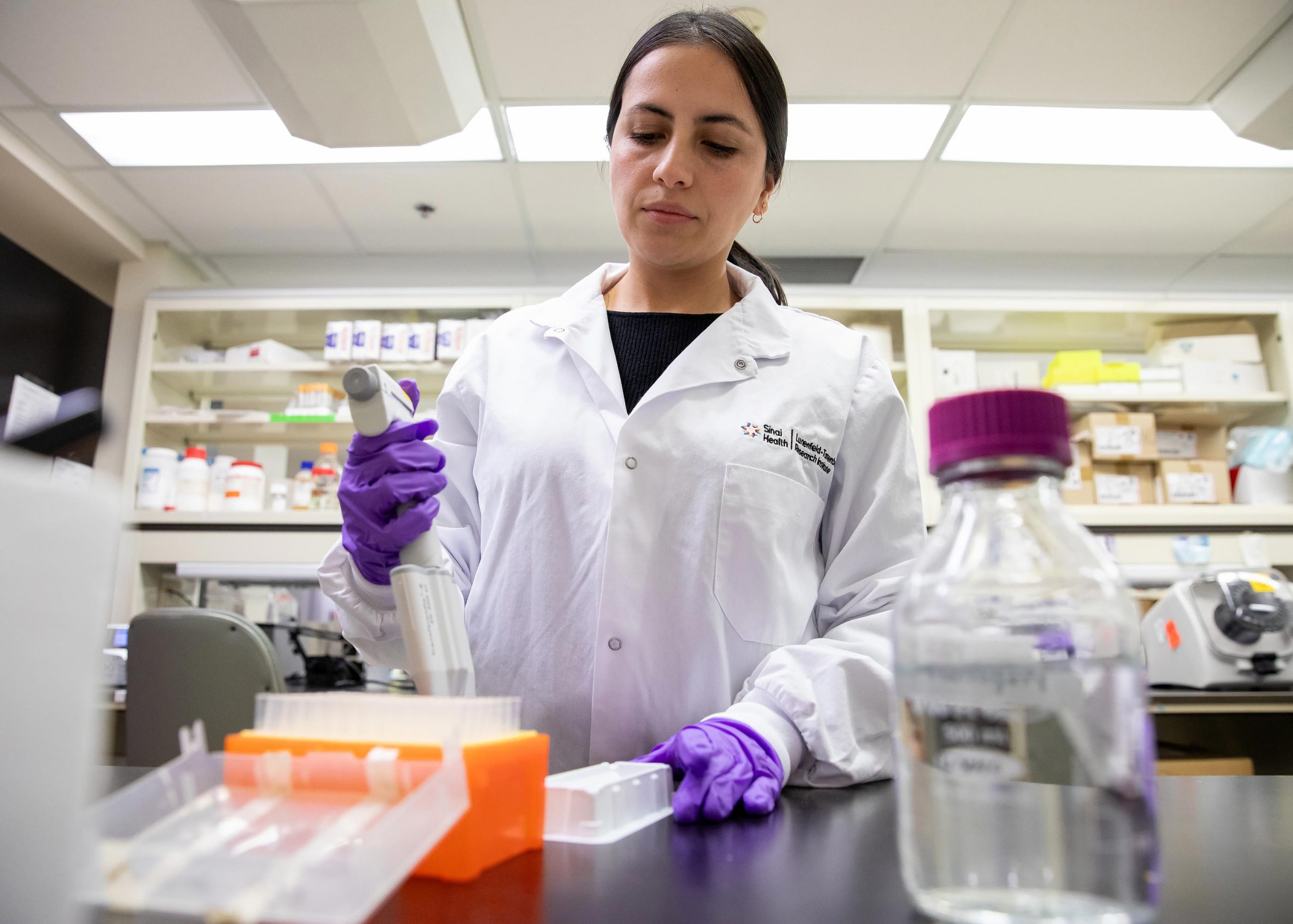
The test looks for an immune response to flagellin, a protein found on certain gut bacteria. According to a research team led by Dr. Ken Croitoru, a clinician scientist at the Lunenfeld-Tanenbaum Research Institute at Sinai Health, this immune response is unusually high in some people long before Crohn’s disease develops. The team included gastrointestinal medical resident Dr. Richard Wu and clinician scientist and staff gastroenterologist Dr. Sun-Ho Lee.
Drs. Croitoru and Lee are also members of Mount Sinai Hospital’s Center for Inflammatory Bowel Disease (IBD), an internationally recognized hub for inflammatory bowel disease research.
The findings were published in Clinical Gastroenterology and Hepatology and point to the interaction between gut bacteria and the immune system as a key early step in the development of Crohn’s disease.
Why Crohn’s Disease Is a Growing Concern
Crohn’s disease is a long-lasting inflammatory disorder of the digestive tract that can cause ongoing digestive problems, pain, and fatigue. These symptoms can seriously affect daily life. Rates of Crohn’s disease in children have doubled since 1995, and the overall number of cases continues to increase. Crohn’s and Colitis Canada, a non-profit organization focused on curing inflammatory bowel disease, estimates that about 470,000 Canadians will be living with IBD by 2035.
Immune Signals Appear Long Before Symptoms
Finding antibodies to flagellin years before symptoms start suggests that this immune reaction may play a role in triggering Crohn’s disease rather than simply appearing after the disease has begun, Dr. Croitoru explained. He believes that learning more about these early changes could lead to better ways to predict, prevent, and treat the condition.
“With all of the advanced biologic therapy we have today, patients’ responses are partial at best. We haven’t cured anybody yet, and we need to do better,” said Dr. Croitoru, who hold Canada Research Chair in Inflammatory Bowel Diseases.
The GEM Project and Early Disease Tracking
This work is part of the Genetic, Environmental and Microbial (GEM) Project, a large international study following more than 5,000 healthy first-degree relatives of people with Crohn’s disease. Led by Dr. Croitoru, the project has been collecting genetic, biological, and environmental information since 2008 to better understand how Crohn’s disease begins. So far, 130 participants have gone on to develop the disease, giving researchers a rare chance to examine its earliest stages.
Earlier research from the team showed that inflammation directed at gut bacteria can appear well before Crohn’s disease is diagnosed. In healthy people, gut bacteria normally live in balance with the body and support digestion. In Crohn’s disease, the immune system seems to react abnormally to bacteria that are usually harmless or helpful.
Building on Previous Discoveries
Researchers at the University of Alabama, led by Dr. Charles Elson, previously developed a test to detect antibodies against flagellin. They found that people with Crohn’s disease often have high levels of antibodies targeting flagellin from Lachnospiraceae bacteria.
Drs. Croitoru and Lee wanted to know whether the same immune response could be found in healthy people who were at higher risk of developing Crohn’s disease.
“We wanted to know: do people who are at risk, who are healthy now, have these antibodies against flagellin?” said Dr. Croitoru. “We looked, we measured, and yes indeed, at least some of them did.”
What the Study Found
The study followed 381 first-degree relatives of people with Crohn’s disease. Over time, 77 participants developed the condition. Among those who did, 28 individuals had elevated antibody levels, which accounted for more than one third of the group. The strongest immune responses were seen in siblings, pointing to the importance of shared environmental factors, as shown in earlier research by Dr. Croitoru.
The researchers also confirmed that this early immune reaction to Lachnospiraceae flagellin was linked to intestinal inflammation and problems with the gut barrier, both hallmarks of Crohn’s disease. On average, people were diagnosed with Crohn’s disease nearly two and a half years after their blood samples were collected.
Looking Ahead to Prevention
“Confirming our previous study immune response against bacterial flagellins show strong associations with future risk of Crohn’s in healthy first-degree relatives,” said Dr. Lee. “We found that this immune response is driven by a conserved domain of the flagellin protein. This raises the potential for designing a flagellin-directed vaccine in selected high-risk individuals for prevention of disease. Further validation and mechanistic studies are underway.”
Reference: “Serum IgG Response to a Conserved Domain of Commensal Flagellins Predicts Future Risk of Crohn’s Disease in First-degree Relatives” by Richard Y. Wu, Mingyue Xue, Qing Zhao, Sean Jeong, Anne M. Griffiths, Levinus A. Dieleman, A. Hillary Steinhart, Guy Aumais, Brian Bressler, Remo Panacionne, Colette Deslandres, David R. Mack, Charles N. Bernstein, John K. Marshall, Dan Turner, Wei Xu, Lennard W. Duck, Charles O. Elson, Williams Turpin, Sun-Ho Lee and Kenneth Croitoru, 12 January 2026, Clinical Gastroenterology and Hepatology.
DOI: 10.1016/j.cgh.2025.12.006
Never miss a breakthrough: Join the SciTechDaily newsletter.
Follow us on Google and Google News.
2 Comments
IBD is caused, nearly completely, by putting things in your body that should not be there.
It is literally your bodys immune response to things that dont belong.
Ultra processed diets and food laced with chemicals and additives.
Go back to a whole food diet, eat plenty of fermented foods, and IBD will subside and go away given enough time.
What is the text talking about?