
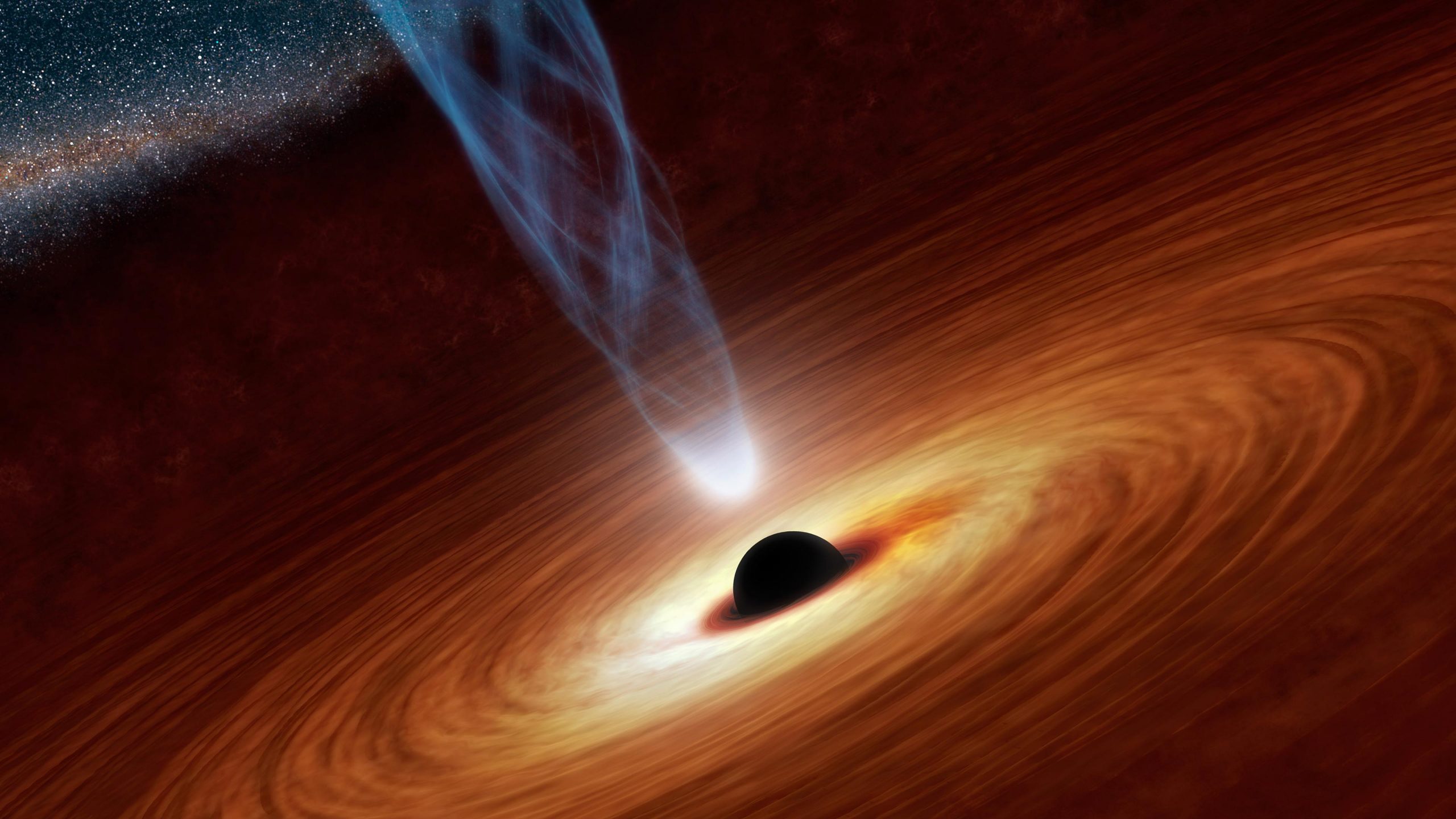
Scientists from the ARC Centre of Excellence in Gravitational Wave Discovery (OzGrav) reveal the eccentricity of binary black holes: the shape of the orbit formed when two black holes fall into a dance as they spiral towards each other and eventually collide. While the most common orbit is thought to be circular, about one in 20 are in egg-shaped eccentric orbits, which can indicate completely different binary life histories.
Since the first detection of gravitational waves (GW) in September 2015, LIGO and its European counterpart Virgo have published the discovery of ten merging black-hole binaries. The latest run has already uncovered more than 30 new detections, with more forecast by April 2020.
OzGrav Ph.D. student (and first author) Isobel Romero-Shaw recently published a study on the origins of GW 190425[1] – an event which was only announced this month (January 2020) by the LIGO/Virgo collaboration.
The GW signals provide a wealth of information about the pre-merger binaries; however, no one has yet deciphered how these black holes pair up in the first place.
New research, published in the journal Monthly Notices of the Royal Astronomical Society[2], reveals an important clue to how these black hole binaries are formed, how long they’ve been “together” and what happens when they finally collide.
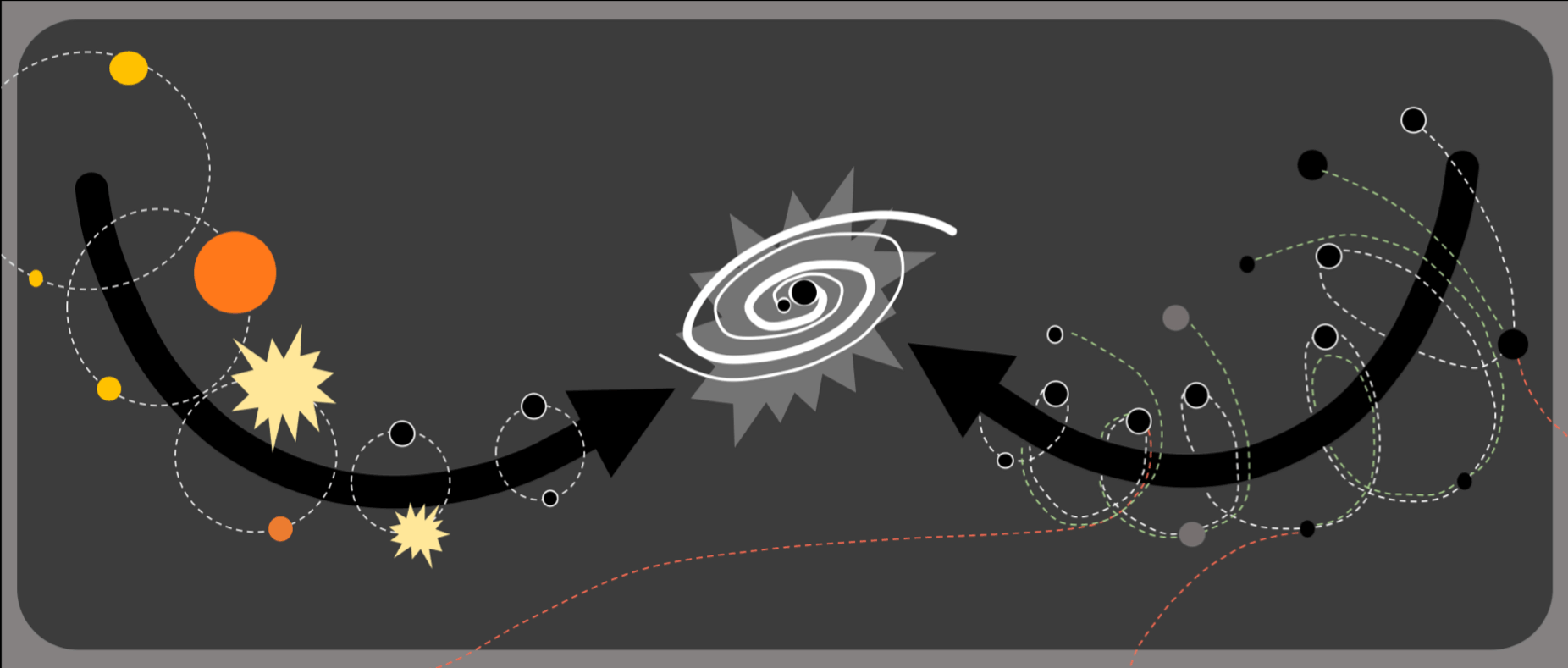
The study, led by Romero-Shaw, OzGrav Chief Investigator Eric Thrane, and Associate Investigator Paul Lasky—all from Monash University—looked at data from the first and second rounds of observation of LIGO and Virgo, in particular, the ten black hole collisions that these two observation runs confirmed. They found that the orbits of all ten of these systems were remarkably circular, which is consistent with the expectation that about one in 20 orbits are not.
The current LIGO/Virgo run has already detected more than 30 additional collision signals. According to Romero-Shaw, the large amount of data coming from the third observing run “will mean we are much more likely to see eccentric collisions of black holes, which will give us a real insight into how these systems form.”
According to Thrane, the more common circular orbits come from black holes who have been together from when they were garden-variety stars before they exploded and became black holes. Thrane explains: “These binaries are like siblings if you like. They grew up together and their orbit is circular.”
Eccentric orbits occur when black holes fall under each other’s gravitational influence by chance as they are zipping around galaxies. “These are more like adults who meet later in life and pair up. Their orbital relationship is more interesting — much like in life,” he added.
Importantly, when these two objects collide, the shape of their orbit means their gravitational-wave signal looks different. These detected explosions can now be used to retrospectively study the objects that collided.
Lasky said that the current LIGO and Virgo observing run is detecting “large numbers of these binaries and by April 2020—when the run finishes—we will have a far greater insight into what these events mean.”
References:
[1] “On the origin of GW190425” by Isobel M Romero-Shaw, Nicholas Farrow, Simon Stevenson, Eric Thrane, Xing-Jiang Zhu, 17 January 2020, Astrophysics > High Energy Astrophysical Phenomena.
arXiv: 2001.06492
DOI: 10.1093/mnrasl/slaa084
[2] “Searching for eccentricity: signatures of dynamical formation in the first gravitational-wave transient catalogue of LIGO and Virgo” by Isobel M Romero-Shaw, Paul D Lasky and Eric Thraneby, 26 October 2019, Monthly Notices of the Royal Astronomical Society.
DOI: 10.1093/mnras/stz2996
Never miss a breakthrough: Join the SciTechDaily newsletter.
Follow us on Google and Google News.
1 Comment
Hello, Since April 2020 what has happened ? Has Their been any changes and development with the findings from April 2020 ? I have always been im love with outer space.