
Close Menu
    Facebook X (Twitter) Instagram
    SciTechDaily
    • Biology
    • Chemistry
    • Earth
    • Health
    • Physics
    • Science
    • Space
    • Technology
    Facebook X (Twitter) Pinterest YouTube RSS
    SciTechDaily
    Home»Physics»Dark Matter Search Project – Using a Time Projection Chamber Nearly a Mile Underground – Carefully Ramps Up Science Work
    Physics

    Dark Matter Search Project – Using a Time Projection Chamber Nearly a Mile Underground – Carefully Ramps Up Science Work

    By Lawrence Berkeley National LaboratoryMay 27, 2020No Comments3 Mins Read
    Facebook Twitter Pinterest Telegram LinkedIn WhatsApp Email Reddit
    Share
    Facebook Twitter LinkedIn Pinterest Telegram Email Reddit
    Photomultiplier Tube Arrays WIMP-Hunting LUX-ZEPLIN
    A photomultiplier tube array that is part of the LUX-ZEPLIN experiment at the Sanford Underground Research Facility in Lead, South Dakota. The photomultiplier tubes are designed to detect signals produced by dark matter particle interactions. Credit: Matt Kapust/SURF

    Sanford Underground Research Facility transitions toward fuller site operations.

    Crews working on the LUX-ZEPLIN (LZ) dark matter search experiment were at the peak of installation activity a mile deep at the Sanford Underground Research Facility (SURF) in South Dakota when the COVID-19 outbreak led SURF officials to limit activities to essential operations. Earlier this month the SURF site began a transition back toward increased operations.

    On May 6, SURF officials moved to allow day-shift operations for science and surface projects, applying additional safety protocols to protect the health of staff, researchers, and others.
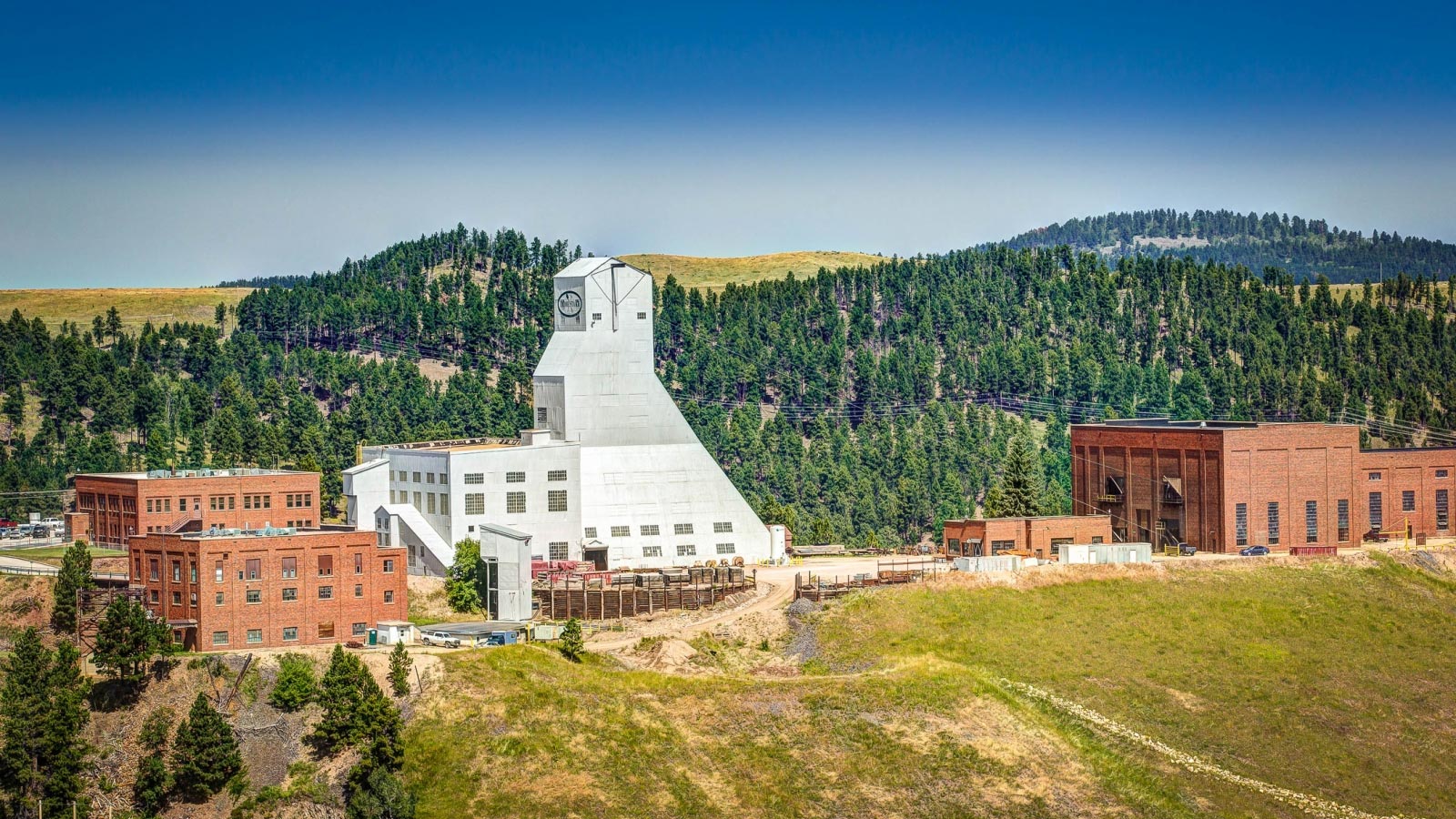
    Sanford Underground Research Facility Surface Buildings
    Surface buildings at the Sanford Underground Research Facility in Lead, South Dakota. Credit: Matthew Kapust/SURF

    “We’ve implemented a number of controls on travel, physical distancing, health checks, and protective equipment to facilitate this transition,” said Mike Headley, SURF executive director.

    Limited work in surface laboratories at SURF has progressed, and this work must follow strict safety measures. Some limited work has also been allowed to continue at a few of the institutions participating in LZ in the U.S. and Europe.
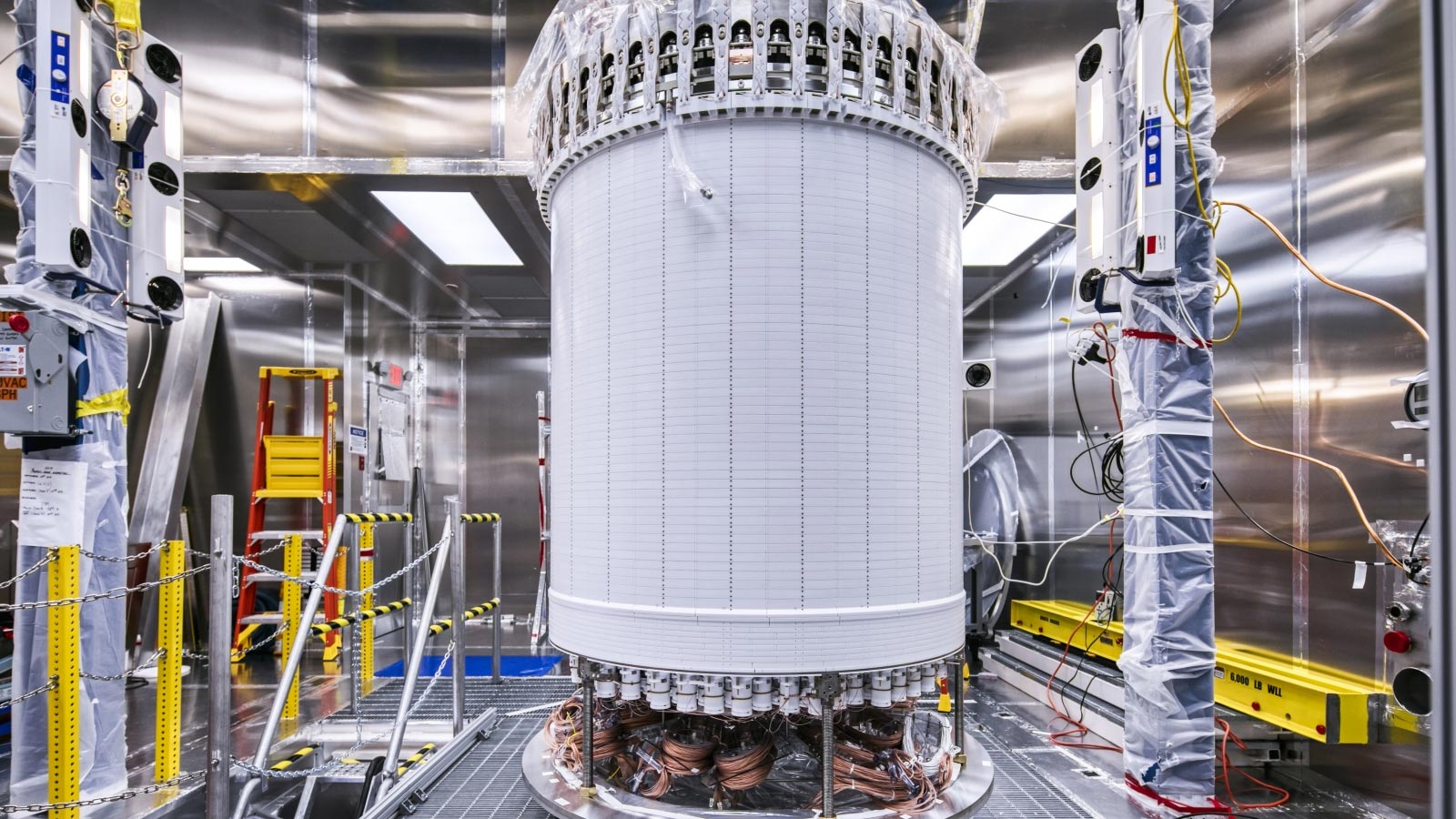
    LUX-ZEPLIN Time Projection Chamber
    The LUX-ZEPLIN cryostat, which houses the experiment’s main detector, is pictured here in a surface lab before its delivery underground. Credit: Matthew Kapust/SURF

    Back in March, participants in the LZ collaboration placed its systems in a state that allows for remote monitoring, and limited underground access had been available for workers to check on equipment once per week.

    Teleconferencing was already the norm in LZ before the appearance of COVID-19, noted Gil Gilchriese, LZ project director and a physicist at Berkeley Lab, and all LZ design and planning work has continued without interruption. Berkeley Lab is the lead laboratory for the LZ project.
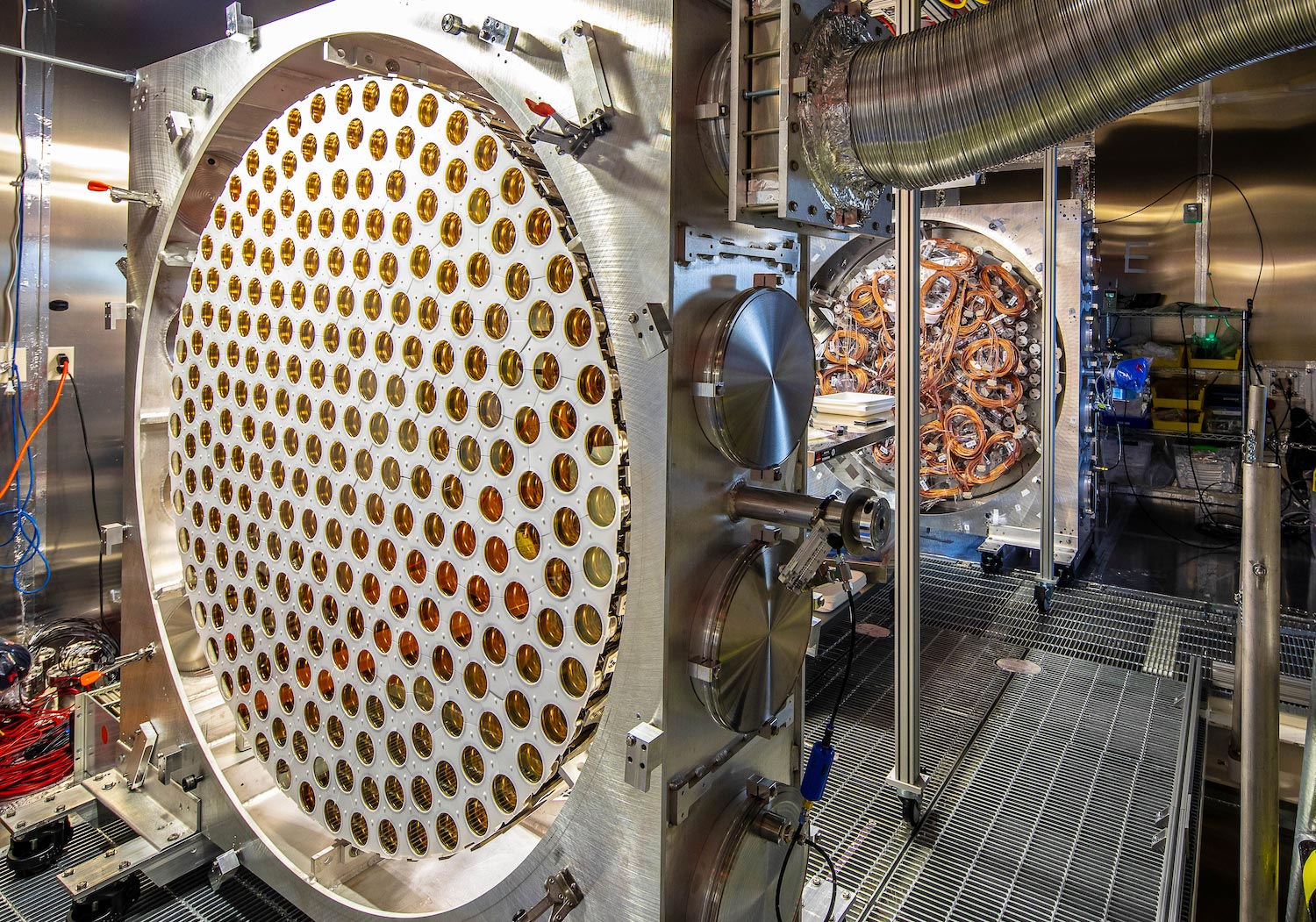
    LZ Photomultiplier Tube Arrays
    Upper (left) and lower photomultiplier tube arrays were prepared for LZ at the Sanford Underground Research Facility in Lead, South Dakota. Credit: Matt Kapust/SURF

    The pause in installation work at SURF, he said, allowed more members of the LZ collaboration to focus on preparations for the software and computing that will rapidly process data once installation is complete and LZ begins its testing period, called commissioning.

    SURF and LZ leadership are now planning to phase in higher levels of project activity at the site while complying with rules designed to ensure personal safety.

    Never miss a breakthrough: Join the SciTechDaily newsletter.
    Follow us on Google and Google News.

    Astrophysics Dark Matter DOE Lawrence Berkeley National Laboratory
    Share. Facebook Twitter Pinterest LinkedIn Email Reddit

    Related Articles

    “Amazingly Lucky” Gravitational Lens Reveals New Insights Into Dark Matter and Dark Energy

    Scientists Propose New Way To Search for Dark Matter

    Success! First Results From World’s Most Sensitive Dark Matter Detector

    Science Made Simple: What Is Dark Matter?

    Physicists May Have Found Dark Matter: X-rays Surrounding “Magnificent 7” May Be Traces of Theorized Particle

    MIT’s ABRACADABRA Instrument: Pulling the Secrets of Dark Matter Out of a Hat

    Dark Matter Search Results From CDMS II

    A Look Inside the Darkside-50 Experiment

    Mathematical Model May Explain What Dark Matter Consists Of

    Leave A Reply Cancel Reply

    • Facebook
    • Twitter
    • Pinterest
    • YouTube

    Don't Miss a Discovery

    Subscribe for the Latest in Science & Tech!

    Trending News

    Millions Take This Joint Supplement but Scientists Found a Concerning Alzheimer’s Link

    Why Evolution Stalled for Millions of Years Before Suddenly Exploding

    New Feathered Dinosaur May Have Solved a 120-Million-Year-Old Fossil Mystery

    Ozempic and Similar Drugs Linked to Dramatic Drop in Addiction Rates

    Ancient Meteorite Reveals a Forgotten Planet That Existed 4.5 Billion Years Ago

    Scientists Reveal What Happened When 12 People Were Trapped Together in Antarctica for 10 Months

    The “Impossible” Earthquake Beneath Utah Was Real After All

    A Major Update Just Hit Cholesterol Guidelines – Here’s What Every Adult Needs To Know

    Follow SciTechDaily
    • Facebook
    • Twitter
    • YouTube
    • Pinterest
    • Newsletter
    • RSS
    SciTech News
    • Biology News
    • Chemistry News
    • Earth News
    • Health News
    • Physics News
    • Science News
    • Space News
    • Technology News
    Recent Posts
    • How Flocking Birds “Defy” One of Physics’ Most Fundamental Laws
    • Your GPS Lies in Cities. Scientists Finally Fixed It
    • Physicists Create a New Kind of Schrödinger’s Cat State From Exotic Quantum Building Blocks
    • One Simple Food Swap Could Cut Carbon Emissions As Much as a Flight Across Europe
    • Scientists Uncover the Hidden Process That Can Turn Magma Into an Explosive Force
    Copyright © 1998 - 2026 SciTechDaily. All Rights Reserved.
    • Science News
    • About
    • Contact
    • Editorial Board
    • Privacy Policy
    • Terms of Use

    Type above and press Enter to search. Press Esc to cancel.