
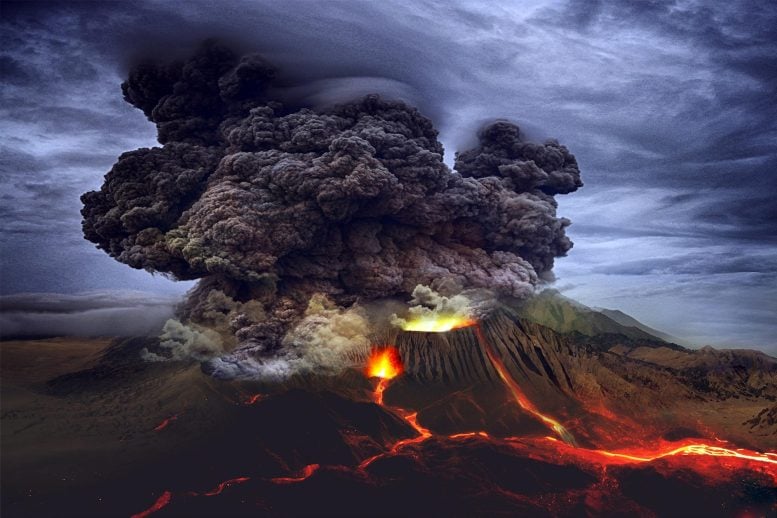
During the Permian extinction, volcanic warming boosted microbes that consumed oxygen and expelled hydrogen sulfide, creating toxic euxinic oceans.
Tiny microbes belching toxic gas helped cause — and prolong — the biggest mass extinction in Earth’s history, a new study suggests.
Generally, scientists believe Siberian volcanos spitting greenhouse gases primarily drove the mass extinction event about 250 million years ago, at the end of the Permian period. The gases caused extreme warming, which in turn led 80% of all marine species, as well as many land species, to go extinct.
Until now, scientists could not explain exactly how the heat caused those deaths. A new UC Riverside-led study in Nature Geoscience shows that the heat accelerated microbes’ metabolisms, creating deadly conditions.
“After oxygen in the ocean was used up to decompose organic material, microbes started to ‘breathe’ sulfate and produced hydrogen sulfide, a gas that smells like rotten eggs and is poisonous to animals,” said UC Riverside Earth system modeler Dominik Hülse.
Runaway Cycle of Decay, Oxygen Loss, and Toxic Gas
As ocean photosynthesizers — the microbes and plants that form the base of the food chain — rotted, other microbes quickly consumed the oxygen and left little of it for larger organisms. In the absence of oxygen, microbes consumed sulfate then expelled toxic, reeking hydrogen sulfide, or H2S, creating an even more extreme condition called euxinia. These conditions were sustained by the release of nutrients during decomposition, promoting the production of more organic material which helped to maintain this stinky, toxic cycle.
“Our research shows the entire ocean wasn’t euxinic. These conditions began in the deeper parts of the water column,” Hülse said. “As temperatures increased, the euxinic zones got larger, more toxic, and moved up the water column into the shelf environment where most marine animals lived, poisoning them.”
The expanding euxinic zones can be detected through chemical signatures in sediment samples.
Modern Parallels: From Ancient Seas to Dominguez Channel
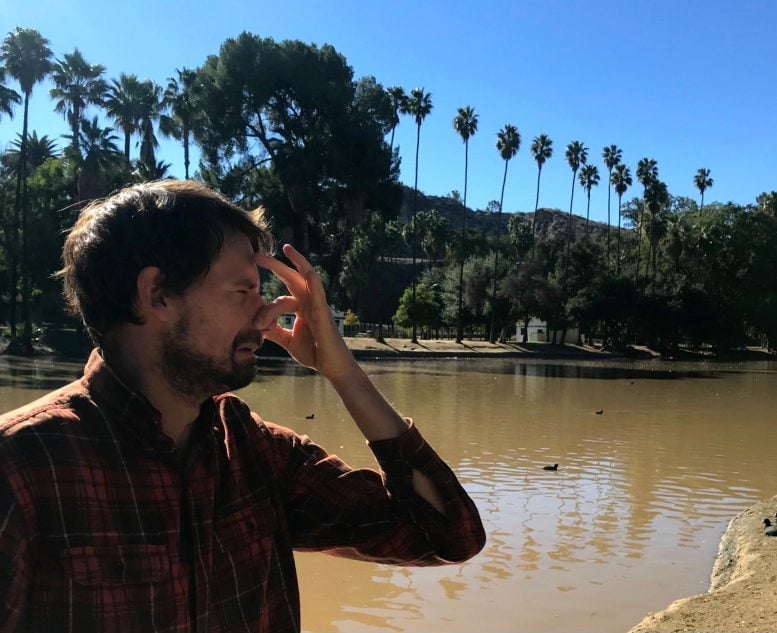
Oxygen depletion is a problem that persists today and is bound to get worse under future climate change. Euxinic waters can be found in places like Los Angeles County’s 16-mile-long Dominguez Channel, into which a September 2021 warehouse fire released ethanol. The ethanol killed vegetation in the channel, which decayed and got consumed by microbes. They then produced hydrogen sulfide at toxic levels. Thousands in breathing range of the reeking river reported vomiting, diarrhea, dizziness, insomnia, headaches, sneezing, and other symptoms.
Lessons from the ancient world may be important for understanding the processes that are challenging our modern oceans and waterways.
“It would be speculative to superimpose the ancient mass extinction event on today’s planet,” Hülse said. “However, the study does show us that the ocean’s response to higher carbon dioxide concentrations in the atmosphere may be underestimated.”
Reference: “End-Permian marine extinction due to temperature-driven nutrient recycling and euxinia” by Dominik Hülse, Kimberly V. Lau, Sebastiaan J. van de Velde, Sandra Arndt, Katja M. Meyer and Andy Ridgwell, 28 October 2021, Nature Geoscience.
DOI: 10.1038/s41561-021-00829-7
Never miss a breakthrough: Join the SciTechDaily newsletter.
Follow us on Google and Google News.
2 Comments
Yet another example of poor research. The author(s) do not mention the extensive coal beds in Siberia! What is shown is an explosive volcano rather than the more likely, relatively quiet vent flows that were accompanied by the intrusions of igneous sills, baking the coal and releasing volatiles such as hydrogen sulfide, sulfur dioxide, benzene, and coal tars.
As the old saying goes, “A single swallow, Spring does not make.” A single modern example of an ethanol spill killing off the local biota is not a good analogue for what we know about the Permian Siberian Traps.
What was the source for the sulfur creating sulfates in Los Angeles? Did the ethanol play a role in providing hydrogen? How does that compare to the sulfur source(s) in the Permian?
I agree kind of a stretch of analogy..but I think the author..like most writers about the climate crisis..wants to attach an seemingly unrelated event to something that makes us worried and seed the notion of impending doom. So I gather that too much co2 turned our ocean into a seething rotten smelling toxic wasteland and we are already seeing signs that we are headed that way..so you better get on board and vote democratic bc Republicans don’t care about the environment! Is that about right?