
Close Menu
    Facebook X (Twitter) Instagram
    SciTechDaily
    • Biology
    • Chemistry
    • Earth
    • Health
    • Physics
    • Science
    • Space
    • Technology
    Facebook X (Twitter) Pinterest YouTube RSS
    SciTechDaily
    Home»Biology»Disease Found in 60 Million Year Old Dinosaur Tail That Still Afflicts Humans Today
    Biology

    Disease Found in 60 Million Year Old Dinosaur Tail That Still Afflicts Humans Today

    By American Friends of Tel Aviv UniversityFebruary 20, 2020No Comments3 Mins Read
    Facebook Twitter Pinterest Telegram LinkedIn WhatsApp Email Reddit
    Share
    Facebook Twitter LinkedIn Pinterest Telegram Email Reddit
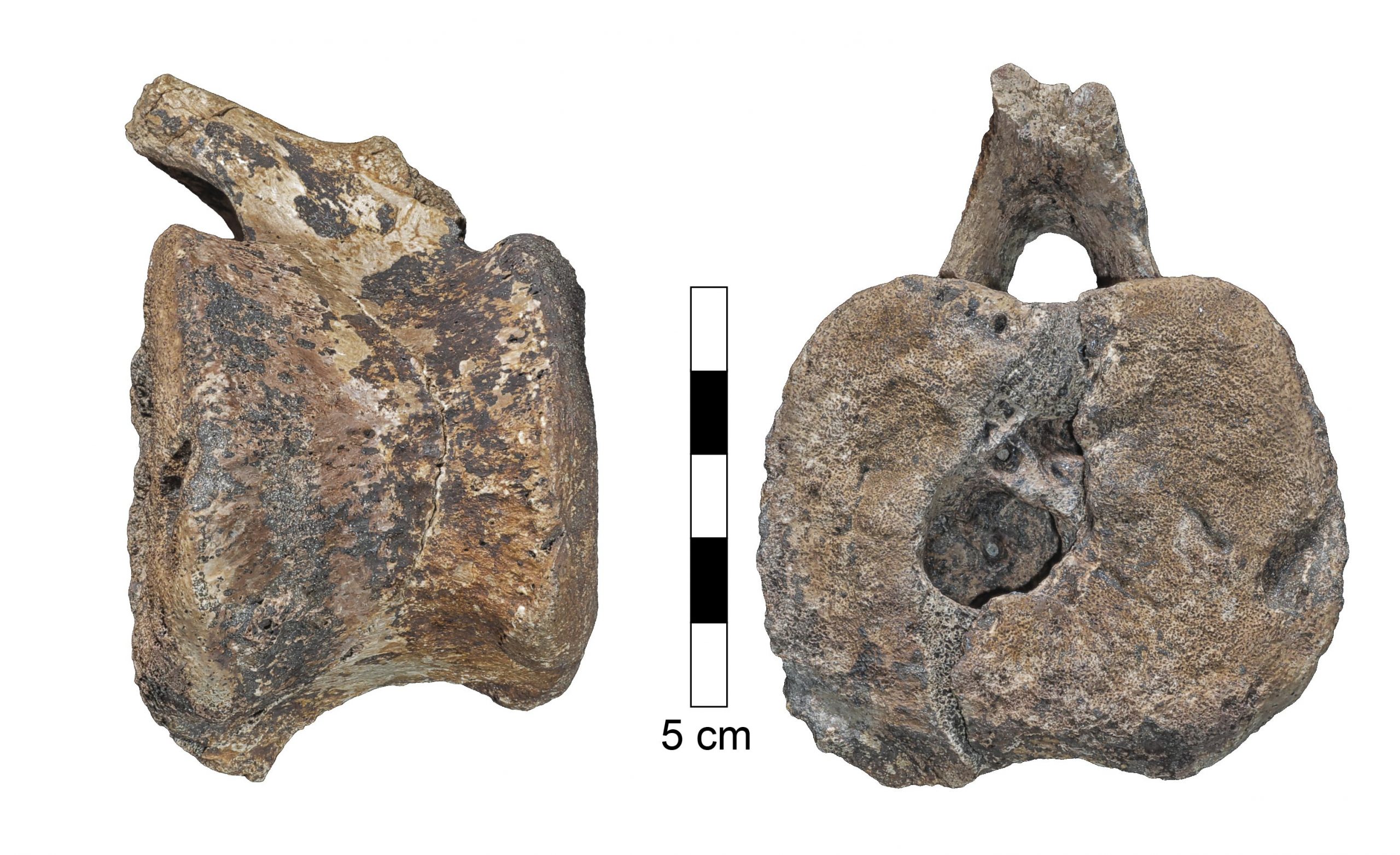
    Hadrosaur Vertebra
    Photograph of the larger hadrosaur vertebra in lateral view (left) and caudal view (right). The space that contained the overgrowth opens to the caudal surface of the vertebra. Credit: Assaf Ehrenreich, Sackler Faculty of Medicine, Tel Aviv University

    The rare disease LCH discovered in the remains of a dinosaur that lived in Canada at least 60 million years ago, Tel Aviv University researchers say.

    The fossilized tail of a young dinosaur that lived on a prairie in southern Alberta, Canada, is home to the remains of a 60-million-year-old tumor.

    Researchers at Tel Aviv University, led by Dr. Hila May of the Department of Anatomy and Anthropology at TAU’s Sackler Faculty of Medicine and Dan David Center for Human Evolution and Biohistory Research, have identified this benign tumor as part of the pathology of LCH (Langerhans cell histiocytosis), a rare and sometimes painful disease that still afflicts humans, particularly children under the age of 10.

    A study on the TAU discovery was published on February 10 in Scientific Reports. Prof. Bruce Rothschild of Indiana University, Prof. Frank Rühli of the University of Zurich and Mr. Darren Tanke of the Royal Museum of Paleontology also contributed to the research.
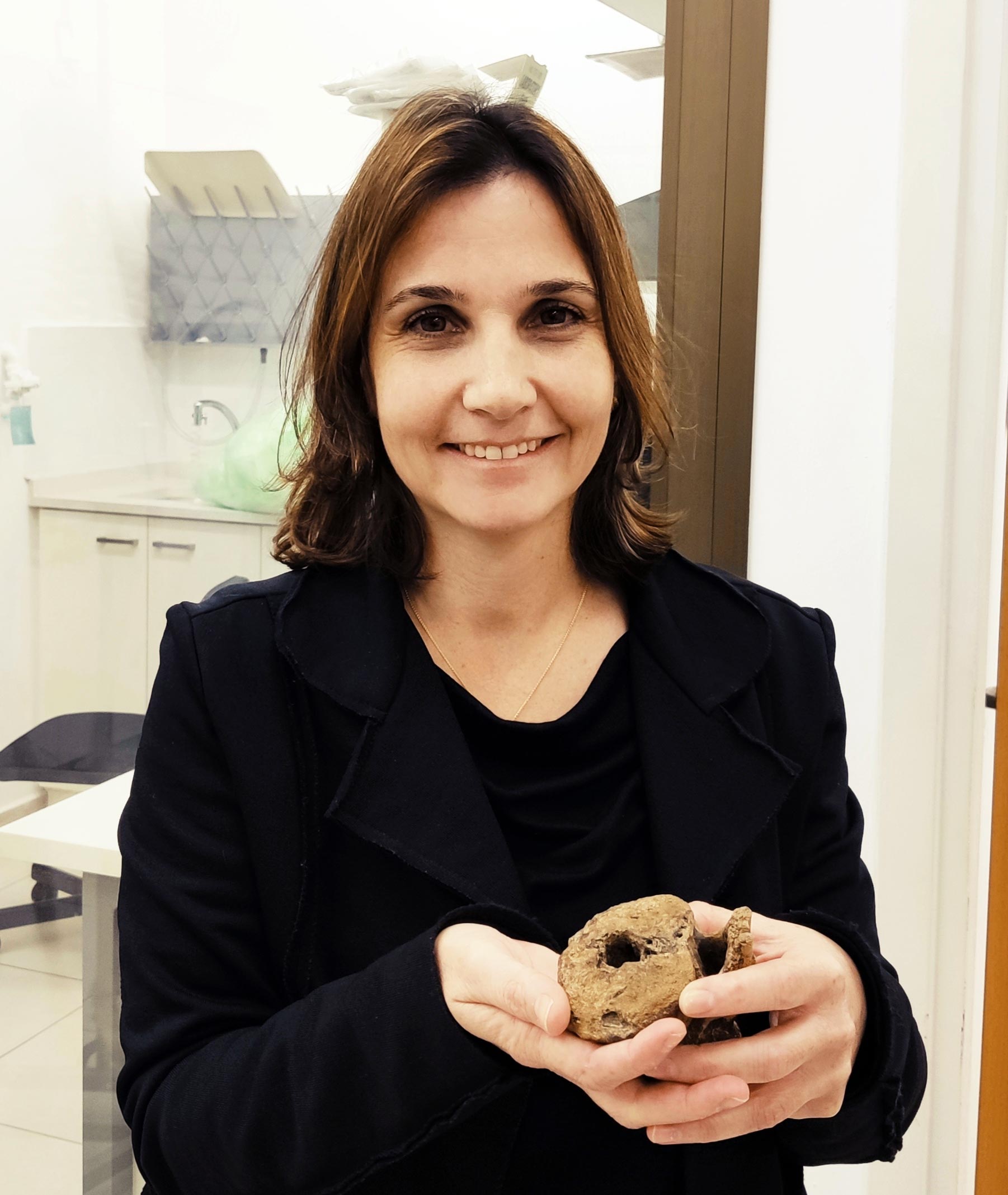
    Dr. Hila May
    Dr. Hila May holds a hadrosaur vertebra. Credit: Tel Aviv University

    “Prof. Rothschild and Tanke spotted an unusual finding in the vertebrae of a tail of a young dinosaur of the grass-eating herbivore species, common in the world 66-80 million years ago,” Dr. May explains. “There were large cavities in two of the vertebrae segments, which were unearthed at the Dinosaur Provincial Park in southern Alberta, Canada.”

    It was the specific shape of the cavities that attracted the attention of researchers.

    “They were extremely similar to the cavities produced by tumors associated with the rare disease LCH that still exists today in humans,” adds Dr. May. “Most of the LCH-related tumors, which can be very painful, suddenly appear in the bones of children aged 2-10 years. Thankfully, these tumors disappear without intervention in many cases.”

    The dinosaur tail vertebrae were sent for on-site advanced micro-CT scanning to the Shmunis Family Anthropology Institute at TAU’s Dan David Center for Human Evolution and Biohistory Research, Sackler Faculty of Medicine, which is located at the Steinhardt Museum of Natural History.

    “The micro-CT produces very high-resolution imaging, up to a few microns,” Dr. May says. “We scanned the dinosaur vertebrae and created a computerized 3D reconstruction of the tumor and the blood vessels that fed it. The micro and macro analyses confirmed that it was, in fact, LCH. This is the first time this disease has been identified in a dinosaur.”

    According to Dr. May, the surprising findings indicate that the disease is not unique to humans, and that it has survived for more than 60 million years.

    “These kinds of studies, which are now possible thanks to innovative technology, make an important and interesting contribution to evolutionary medicine, a relatively new field of research that investigates the development and behavior of diseases over time,” notes Prof. Israel Hershkovitz of TAU’s Department of Anatomy and Anthropology and Dan David Center for Human Evolution and Biohistory Research. “We are trying to understand why certain diseases survive evolution with an eye to deciphering what causes them in order to develop new and effective ways of treating them.”

    Reference: “Suggested Case of Langerhans Cell Histiocytosis in a Cretaceous dinosaur” by Bruce M. Rothschild, Darren Tanke, Frank Rühli, Ariel Pokhojaev and Hila May, 10 February 2020, Scientific Reports.
    DOI: 10.1038/s41598-020-59192-z

    Never miss a breakthrough: Join the SciTechDaily newsletter.
    Follow us on Google and Google News.

    Dinosaurs Disease Popular Tel-Aviv University
    Share. Facebook Twitter Pinterest LinkedIn Email Reddit

    Related Articles

    Bioengineers Develop Deformability Cytometer to Help Diagnose Disease

    3D X-Ray Reveals Fibers That Control Heart Rhythm

    Cost-Effective 3-D RNA Modeling Technique

    Black Band Disease Puts Great Barrier Reef at Risk

    General Anesthesia May Increase the Risk of Alzheimer’s Disease

    Using RNA Import to Repair Mutations in Human Mitochondria

    Researchers Use Bioinformatics and Epigenetics to Aid Cancer Research

    Researchers Use Microfluidic Device to Monitor Sickle Cell Disease

    Scientists Create Stem-Cell-Derived Neurons from Alzheimer’s Disease

    Leave A Reply Cancel Reply

    • Facebook
    • Twitter
    • Pinterest
    • YouTube

    Don't Miss a Discovery

    Subscribe for the Latest in Science & Tech!

    Trending News

    Massive Study Warns Marijuana Use in Teens Is Linked to Serious Mental Illness

    Scientists Discover a Completely Unexpected Way T Cells Kill Cancer

    Scientists Just Found the Solar System’s Original “Planet Factory”

    Study Warns Widely Used Food Preservatives Linked to High Blood Pressure and Heart Disease

    New Treatment Could Reverse Osteoarthritis Within Weeks

    Physicists Have Measured “Negative Time” in Bizarre Quantum Experiment

    The Deadly Tapeworm Spreading Across America Has Reached the Pacific Northwest

    Could Low Vitamin D Be Making Your Pain Worse?

    Follow SciTechDaily
    • Facebook
    • Twitter
    • YouTube
    • Pinterest
    • Newsletter
    • RSS
    SciTech News
    • Biology News
    • Chemistry News
    • Earth News
    • Health News
    • Physics News
    • Science News
    • Space News
    • Technology News
    Recent Posts
    • Scientists Discover Two Strange Dead Stars That Defy Astronomical Expectations
    • Scientists Find a Smarter Way To Measure the Universe Using Exploding Stars
    • Earth May Be Seeding Venus With Life, According to New Research
    • Streetlights Are Trapping Thousands of Isopods in Mysterious “Death Spirals”
    • Scientists Have Discovered These Deadly Parasites Are Secretly Swapping DNA
    Copyright © 1998 - 2026 SciTechDaily. All Rights Reserved.
    • Science News
    • About
    • Contact
    • Editorial Board
    • Privacy Policy
    • Terms of Use

    Type above and press Enter to search. Press Esc to cancel.