
Close Menu
    Facebook X (Twitter) Instagram
    SciTechDaily
    • Biology
    • Chemistry
    • Earth
    • Health
    • Physics
    • Science
    • Space
    • Technology
    Facebook X (Twitter) Pinterest YouTube RSS
    SciTechDaily
    Home»Space»Eberswalde Crater Delta: Ancient River Delta Once Carried Liquid Water Across the Surface of Mars
    Space

    Eberswalde Crater Delta: Ancient River Delta Once Carried Liquid Water Across the Surface of Mars

    By European Space Agency (ESA)February 24, 2021No Comments4 Mins Read
    Facebook Twitter Pinterest Telegram LinkedIn WhatsApp Email Reddit
    Share
    Facebook Twitter LinkedIn Pinterest Telegram Email Reddit
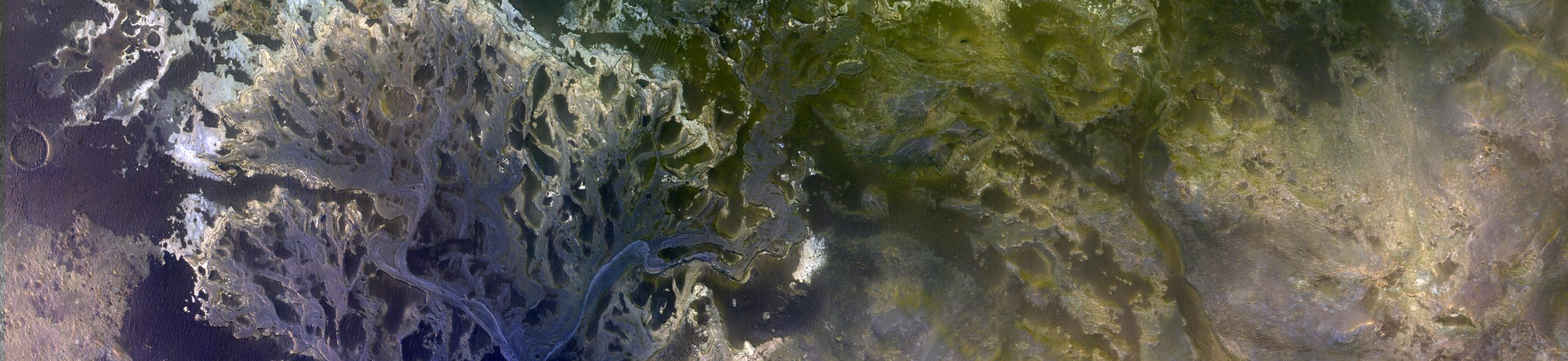
    Eberswalde Crater Delta
    Eberswalde Crater Delta: This intricate structure of an ancient river delta once carried liquid water across the surface of Mars. Credit: ESA/Roscosmos/CaSSIS, CC BY-SA 3.0 IGO

    This intricate structure of an ancient river delta once carried liquid water across the surface of Mars.

    The distinctive form of a delta arises from sediments that are deposited by a river as it enters slower-moving water, like a lake or a sea, for example. The Nile River delta is a classic example on Earth, and uncannily similar features have been spotted on Saturn’s moon Titan and – closer to home – Mars. While liquid water is no longer present on the surface of Mars, features in the left portion of this image provide strong evidence of it having played an important role in the history of the Red Planet. Furthermore, water-ice is still stable on the surface today, and a recent discovery from Mars Express detected a pocket of liquid water below the surface.

    The 100-meter-thick (330-foot-thick) fan-shaped deposit seen in this image is found in Eberswalde crater in the southern hemisphere of Mars (326.33ºE/23.55ºS). The image covers an area of 31 x 7.5 km (18 x 4.7 mi) and was taken on November 16, 2018, by the Colour and Stereo Surface Imaging System (CaSSIS) of the ESA-Roscosmos ExoMars Trace Gas Orbiter.

    While presented in beautiful aqueous blues and greens, the image is false-color. The layered rocks that comprise the delta deposits are indicated in white/yellow to purple/blue. The yellow represents the presence of oxidized iron deposits, indicating that the rocks were altered by the presence of water, while the blues signify less altered materials. This suggests that the influence of liquid water reduced over time, perhaps relating to a change in environmental conditions.

    Eberswalde Crater Delta 3D
    Eberswalde Crater Delta 3D: To best enjoy this image, produced with infrared and visible filters on the Colour and Stereo Surface Imaging System (CaSSIS) of the ESA-Roscosmos ExoMars Trace Gas Orbiter, view through red/green ‘3D’ glasses. To create a stereo view like this, the orbiter’s camera uses a motor to rotate its telescope and take photos from different angles. The two views can be put together to make a three-dimensional view. Credit: ESA/Roscosmos/CaSSIS, CC BY-SA 3.0 IGO

    Erosion Uncovers the Delta’s Inverted Relief

    After the deposition of the delta sediments in the crater’s ancient lake, fresher sediments – some perhaps deposited by wind – accumulated to cover up a major part of the delta and its connecting channels. These secondary sediments were later eroded in the delta, exposing an inverted relief of the structure that is observed today.

    This particular delta was first observed by NASA’s Mars Global Surveyor and has also been imaged by ESA’s Mars Express (below). It sits inside a 65 km (40 mi) wide impact basin called Eberswalde, which is almost completely buried by material ejected from the much larger and younger nearby Holden Crater.
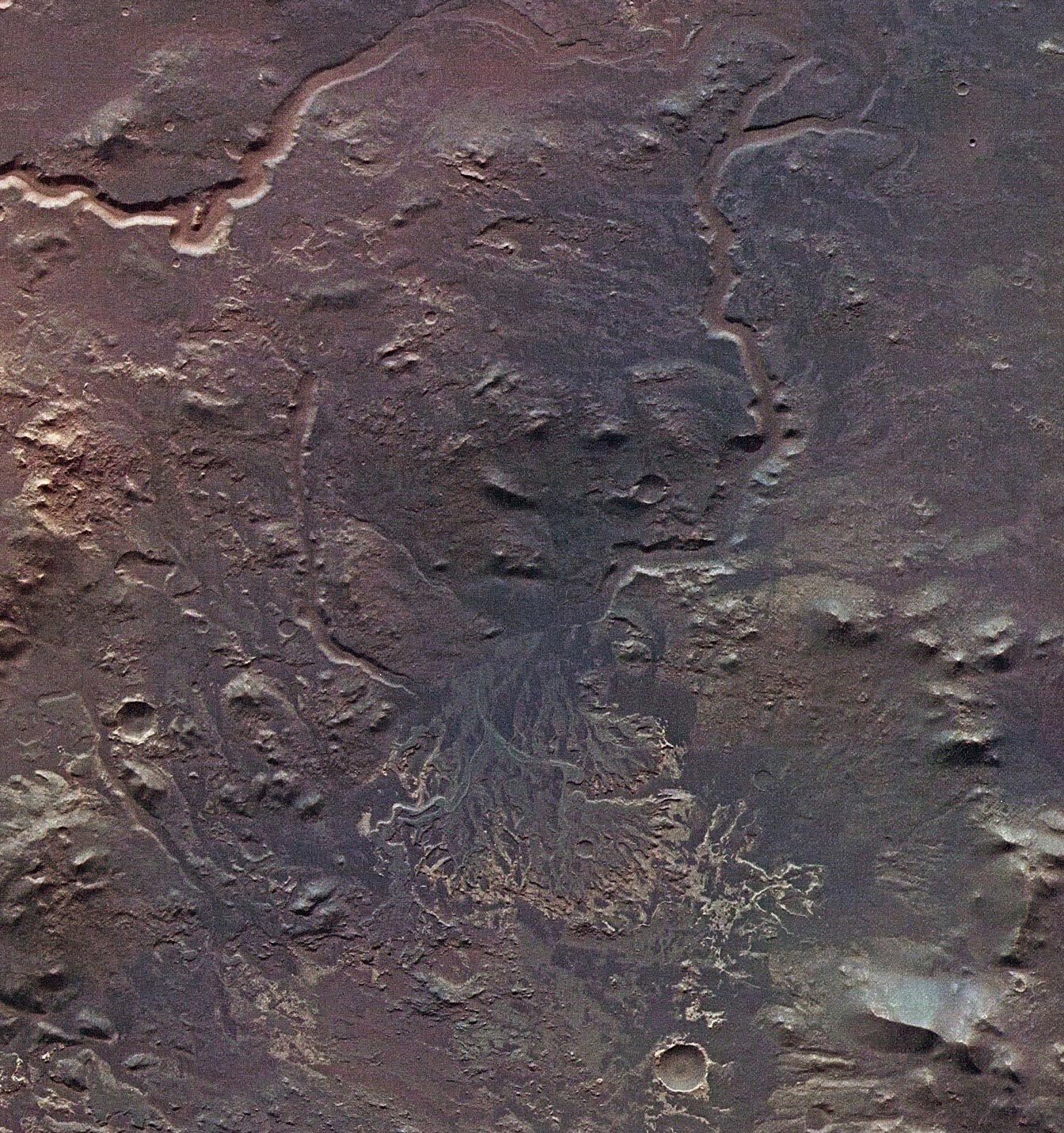
    Delta in Eberswalde Crater
    Delta in Eberswalde crater imaged by ESA’s Mars Express. Credit: ESA/DLR/FU Berlin (G. Neukum)

    Search for Signs of Life

    Another example of a Martian delta can be found in Jezero Crater, which was recently selected as the landing site for the NASA Mars 2020 rover. Meanwhile the ESA-Roscosmos ExoMars rover, also launching in 2020, will target the ancient, once water-rich plains of Oxia Planum. The ExoMars rover will drill down to two meters below the surface to search of clues for past life preserved underground.

    ESA has been exploring Mars for more than 15 years, starting with Mars Express that arrived at the Red Planet at the end of 2003, and which continues to return results today. Meanwhile, the Trace Gas Orbiter will complete its first year of science investigations in April; it is sniffing the atmosphere to seek out the faint traces of gases that might be linked to active biological or geological process, and mapping the distribution of underground water-ice. It is also a data relay, providing essential communications infrastructure for current and future surface assets.

    ESA and NASA are also preparing for the next stage of Mars exploration: returning a sample from the Red Planet. NASA’s 2020 rover is set to collect surface samples in small canisters that could later be retrieved by a second mission, and launched into Mars orbit. A third mission would rendezvous with the samples and return them to Earth, where they could be accessed by teams of scientists across the world.

    Long-term planning is crucial to realize the missions that investigate fundamental science questions, and to ensure the continued development of innovative technology, inspiring new generations of European scientists and engineers.

    Never miss a breakthrough: Join the SciTechDaily newsletter.
    Follow us on Google and Google News.

    European Space Agency ExoMars Mars
    Share. Facebook Twitter Pinterest LinkedIn Email Reddit

    Related Articles

    Incredible New Images From ExoMars Orbiter Captures Spring in Martian Craters

    “Puzzling and Surprising” New Gas Signatures Discovered by ExoMars Orbiter in the Martian Atmosphere

    From Earth to Mars: Rosalind Franklin’s Century of Science

    ExoMars Robotic Explorer: Mars Exploration Revival

    Unique Green Glow Spotted on Mars – First Time Around a Planet Other Than Earth

    Rigorous Sterilization for Planetary Protection

    ExoMars Rover Launch Postponed Until 2022 Due to Coronavirus and Additional Testing

    ESA and Russian Space Mission Steps Up the Search for Life on Mars

    First Images from ExoMars Mission

    Leave A Reply Cancel Reply

    • Facebook
    • Twitter
    • Pinterest
    • YouTube

    Don't Miss a Discovery

    Subscribe for the Latest in Science & Tech!

    Trending News

    Mezcal “Worm” in a Bottle Mystery: DNA Testing Reveals a Surprise

    New Research Reveals That Your Morning Coffee Activates an Ancient Longevity Switch

    This Is What Makes You Irresistible to Mosquitoes

    Shockingly Powerful Giant Octopuses Ruled the Seas 100 Million Years Ago

    Scientists Stunned by New Organic Molecules Found on Mars

    Rewriting Dinosaur Evolution: Scientists Unearth Remarkable 150-Million-Year-Old Stegosaur Skull

    Omega-3 Supplements Linked to Cognitive Decline in Surprising New Study

    First-of-Its-Kind Discovery: Homer’s Iliad Found Embedded in a 1,600-Year-Old Egyptian Mummy

    Follow SciTechDaily
    • Facebook
    • Twitter
    • YouTube
    • Pinterest
    • Newsletter
    • RSS
    SciTech News
    • Biology News
    • Chemistry News
    • Earth News
    • Health News
    • Physics News
    • Science News
    • Space News
    • Technology News
    Recent Posts
    • New Research Challenges Long-Held Beliefs About How the Brain Makes Decisions
    • Breakthrough Technology Reveals New Treatment Targets for Cancer
    • Scientists Discover New Way To Make Drug-Resistant Cancer Treatable Again
    • This Simple Exercise Trick Builds Muscle With Less Effort, Study Finds
    • Middle Age Is Becoming a Breaking Point in America, Study Reveals
    Copyright © 1998 - 2026 SciTechDaily. All Rights Reserved.
    • Science News
    • About
    • Contact
    • Editorial Board
    • Privacy Policy
    • Terms of Use

    Type above and press Enter to search. Press Esc to cancel.