
Close Menu
    Facebook X (Twitter) Instagram
    SciTechDaily
    • Biology
    • Chemistry
    • Earth
    • Health
    • Physics
    • Science
    • Space
    • Technology
    Facebook X (Twitter) Pinterest YouTube RSS
    SciTechDaily
    Home»Space»European Space Agency Advances Vega Rocket Evolution Beyond 2025
    Space

    European Space Agency Advances Vega Rocket Evolution Beyond 2025

    By European Space Agency (ESA)July 29, 2021No Comments3 Mins Read
    Facebook Twitter Pinterest Telegram LinkedIn WhatsApp Email Reddit
    Share
    Facebook Twitter LinkedIn Pinterest Telegram Email Reddit
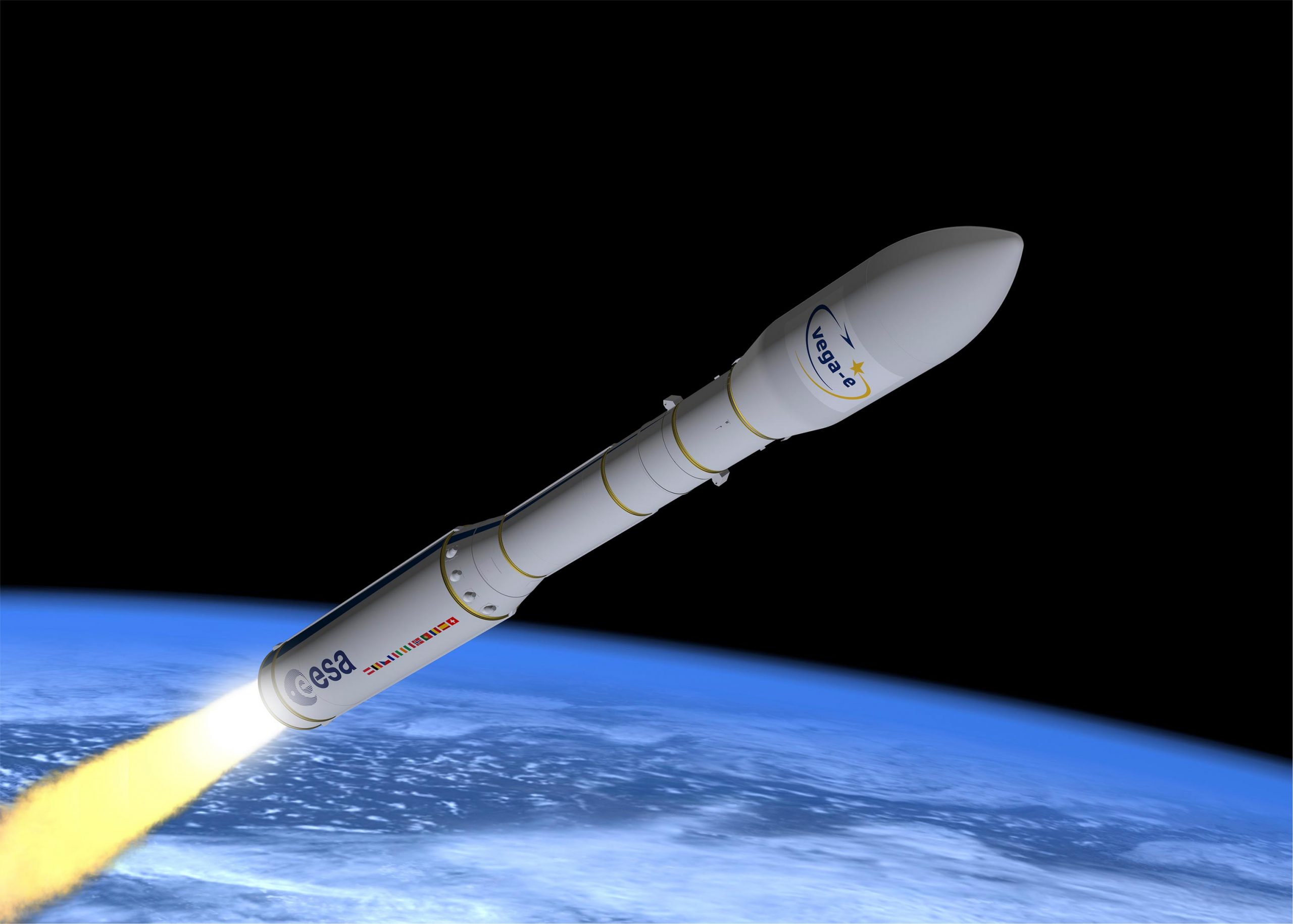
    Vega-E Rocket
    Artist’s view of Vega-E. Credit: ESA-Jacky Huart, 2017

    ESA will further increase the competitiveness and environmental sustainability of Europe’s Vega launch system beyond 2025 through a contract signed with Avio in Italy.

    Vega operates from Europe’s Spaceport in French Guiana to launch light satellites to one or multiple orbits in a single launch. This contract takes Vega a step further and marks the start of a new phase in preparation of a new Vega launch vehicle called Vega-E, which will make extensive use of Vega-C building blocks.

    The objective with Vega-E is to further increase the competitiveness and performance of Vega-C – which is planned to have its first flight in 2022. This will increase its flexibility in terms of payload mass and volume and reduce the launch service cost and globally the cost of launch per kilo offered in the market.

    The key for achieving these objectives is the use of new technologies for a completely new upper stage, featuring a new low-cost liquid-fuelled engine.
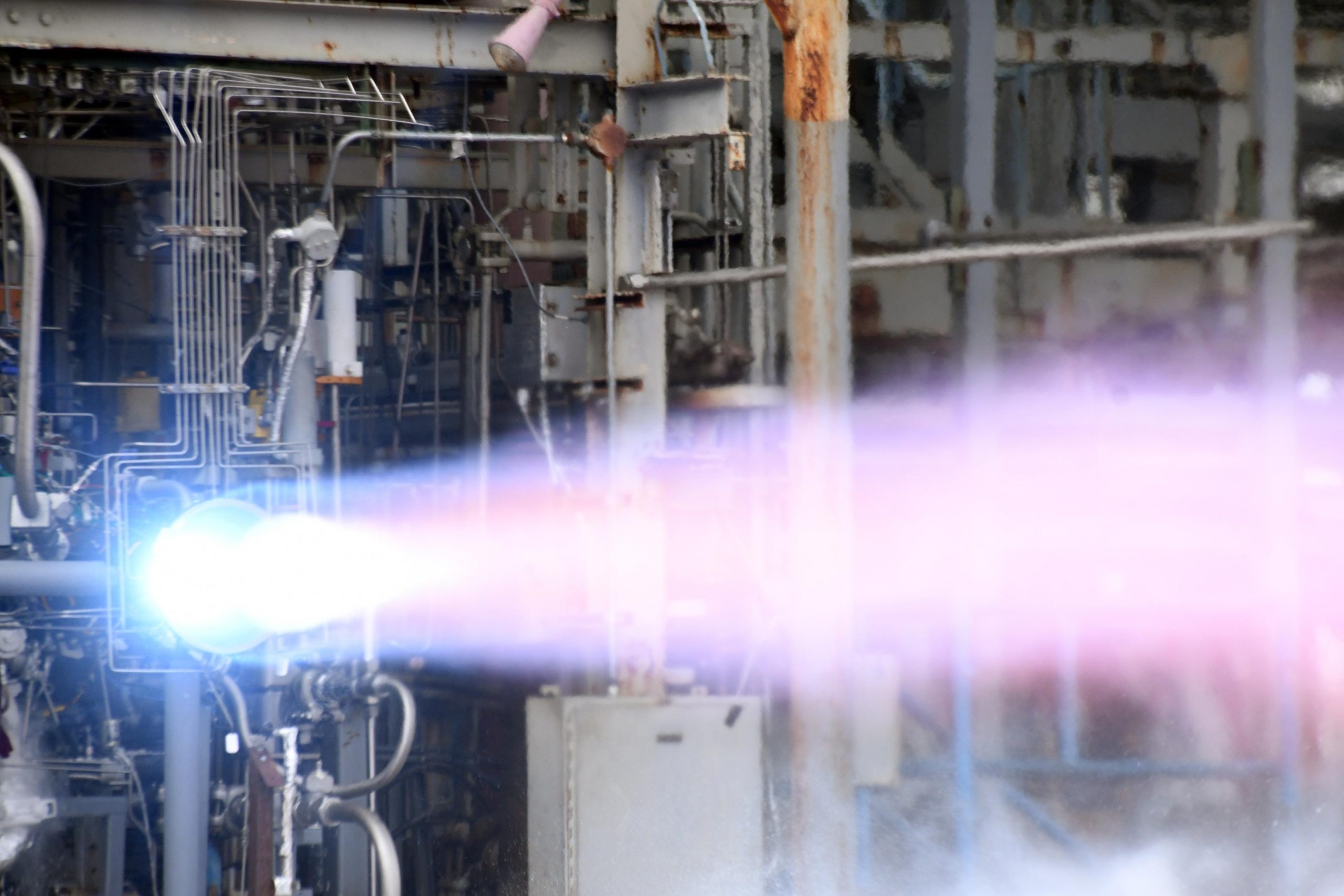
    Hot Firing of M10 Thrust Chamber
    The 3D-printed thrust chamber assembly of the methane-fuelled M10 rocket engine passed its first series of hot firing tests at the NASA Marshall Space Flight Center in the USA during February 2020. The M10 engine will power the upper stage of future Vega evolutions from 2025. Credit: ESA/NASA

    “This contract takes Vega a step further having at its heart the new M10 liquid oxygen–methane cryogenic engine, which will further increase its competitiveness, performance, and sustainability,” said Daniel Neuenschwander, ESA Director of Space Transportation.

    Vega-E will have three stages, unlike Vega-C which has four. Two stages will be derived from Vega-C: the first stage P120C solid rocket motor which provides the thrust at liftoff and the second stage solid rocket Zefiro-40 motor. The new third stage is the liquid oxygen–methane cryogenic upper stage which is the core of Vega-E preparation.

    “Vega-E’s upper stage will replace the third stage Zefiro 9 solid-propellant motor and the fourth stage upper AVUM of the current Vega configuration. This will have a beneficial effect on performance and cost,” explained Renato Lafranconi, Vega programs manager at ESA.

    Vega-E’s upper stage will improve mission flexibility through its new M10 expander cycle engine with multiple reignition capability. The fullscale 3D-printed thrust chamber assembly of the M10 passed its first series of hot firing tests last year which also qualified new efficient manufacturing methods.
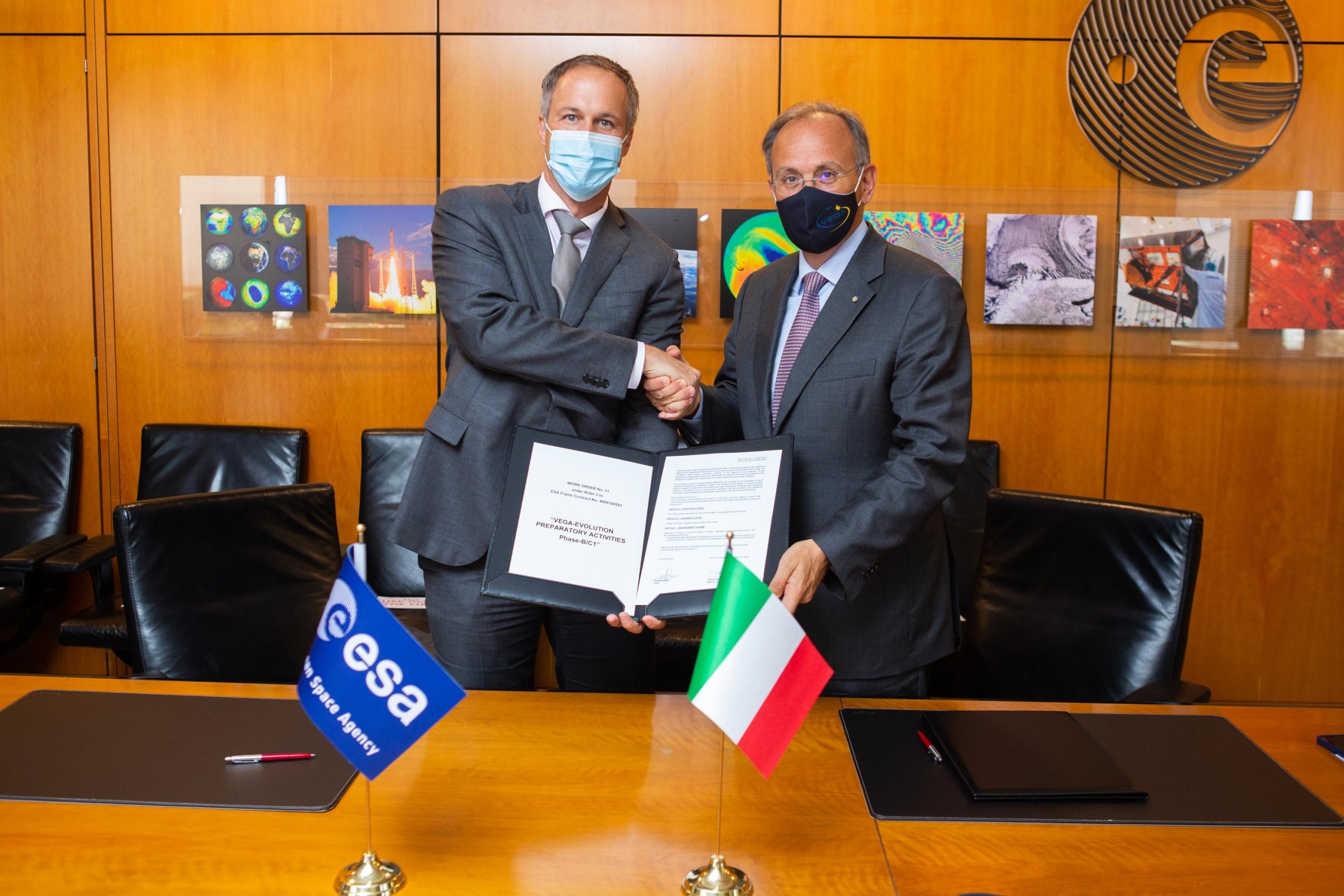
    ESA Signs Contract With Avio for Vega-E
    A contract worth €118.8 m for the preparation of Vega-E was signed at ESA’s establishment in Frascati, Italy, by Daniel Neuenschwander, ESA Director of Space Transportation and Giulio Ranzo, CEO at Avio. This will further increase the competitiveness and environmental sustainability of Europe’s Vega launch system beyond 2025. Credit: ESA–Maria Novella De Luca

    “The reduction of emissions and combustion waste makes the introduction of the M10 engine a further improvement in environmental sustainability which is a driver for the future of Vega,” added Adriana Sirbi, Vega Evolution Preparation Manager at ESA.

    Industries and universities from eleven countries are involved in the preparation of the Vega-E launch system, and will contribute to the success of this European rocket. Prime contractor, Avio, with partners will further define the launcher system and its subsystems as well as the preliminary design of the Vega-E launch pad and the associated infrastructure at Europe’s Spaceport in French Guiana.

    The contract, worth €118.8 m, was signed at ESA’s establishment in Frascati, Italy, by Daniel Neuenschwander, ESA Director of Space Transportation and Giulio Ranzo, CEO at Avio.

    Never miss a breakthrough: Join the SciTechDaily newsletter.
    Follow us on Google and Google News.

    European Space Agency Vega
    Share. Facebook Twitter Pinterest LinkedIn Email Reddit

    Related Articles

    Vega VV17 Rocket Catastrophic Failure: Arianespace and ESA Appoint an Independent Inquiry Commission

    Watch Vega Rideshare Launch Live – Premiere SSMS Mission Will Deploy 53 Satellites

    Vega Launch Set for September 1 – Will Deploy 53 Satellites in Proof-of-Concept Mission

    New Rideshare Service for Light Satellites to Launch on Vega Rocket – Transporting More Than 50 Satellites Into Orbit at Once

    New Planck Mission Images Show Strange Haze and Cold Gas

    ESA’s Vega Rocket Has Launched on Its Maiden Voyage, Carries 9 Satellites

    ESA’s Mars Express MARSIS Radar Explores Martian Oceans

    ESA’s Hershel Space Telescope Captures Incredible Views of Eagle Nebula

    Hubble Reaches New Milestone: 10,000th Scientific Paper Published

    Leave A Reply Cancel Reply

    • Facebook
    • Twitter
    • Pinterest
    • YouTube

    Don't Miss a Discovery

    Subscribe for the Latest in Science & Tech!

    Trending News

    Scientists Call for a Complete Rethink of Alzheimer’s Treatment

    Scientists Identify Molecular Switch That Lets Exercise Reverse Muscle Aging

    Why Your Most Vivid Dreams Might Be the Key to Deep, Restful Sleep

    A Bright Star Hid a Massive Secret for 50 Years: Mystery of Gamma Cassiopeiae Finally Solved

    Scientists Identify Protein That Slows Key Effects of Aging

    Revolutionary Submarine Mysteriously Disappears Without a Trace – Scientists Are Now Preparing for a Bold Return

    Why Drinking More Water Isn’t Enough To Stop Kidney Stones

    New Study Reveals Surprising Effect of Drinking Coffee at Night

    Follow SciTechDaily
    • Facebook
    • Twitter
    • YouTube
    • Pinterest
    • Newsletter
    • RSS
    SciTech News
    • Biology News
    • Chemistry News
    • Earth News
    • Health News
    • Physics News
    • Science News
    • Space News
    • Technology News
    Recent Posts
    • Your BMI Might Be Wrong: Study Finds Millions Are Misclassified
    • More Than Half of U.S. College Students Are Lonely, Major Study Reveals
    • Scientists Reveal Biological Signal Behind Mysterious Alzheimer’s Drug Side Effect
    • A Simple Blood Test Could Predict Dementia Risk 25 Years Early
    • Scientists Uncover Unexpected Behavior Deep Inside Earth’s Mantle
    Copyright © 1998 - 2026 SciTechDaily. All Rights Reserved.
    • Science News
    • About
    • Contact
    • Editorial Board
    • Privacy Policy
    • Terms of Use

    Type above and press Enter to search. Press Esc to cancel.