
Vitamin K Shows Evidence of Brain Benefits in Rats
Study suggests a biological pathway through which vitamin K may help ward off dementia.
In a new study conducted in rats, scientists report evidence that vitamin K could help protect against aging-related cognitive declines associated with Alzheimer’s disease and other forms of dementia.
“Vitamin K2 demonstrated very promising impact in hindering aging-related behavioral, functional, biochemical and histopathological changes in the senile aging brain,” said Mohamed El-Sherbiny, PhD, of AlMaarefa University in Saudi Arabia, the study’s senior author. “Vitamin K2 can be proposed to be a promising approach to attenuate age-related disorders and preserve cognitive functions in aging individuals.”
Abdulrahman Aloufi, a medical student working in El-Sherbiny’s laboratory at AlMaarefa University, will present the findings at the American Association for Anatomy annual meeting during the Experimental Biology (EB) 2022 meeting, held in Philadelphia on April 2-5, 2022.
Dementia and the Potential Role of Vitamin K
Dementia is a form of cognitive impairment that interferes with daily life and is different from normal memory lapses that occur with aging. In the U.S., it is estimated that more than six million people are currently living with Alzheimer’s, one of the most common types of dementia.
Vitamin K is a group of compounds that includes vitamin K1, found in leafy greens and some other vegetables, and vitamin K2, found in meats, cheeses, and eggs. Previous studies have linked vitamin K with processes involved in brain functioning, and some studies have associated vitamin K deficiencies with Alzheimer’s disease and dementia.
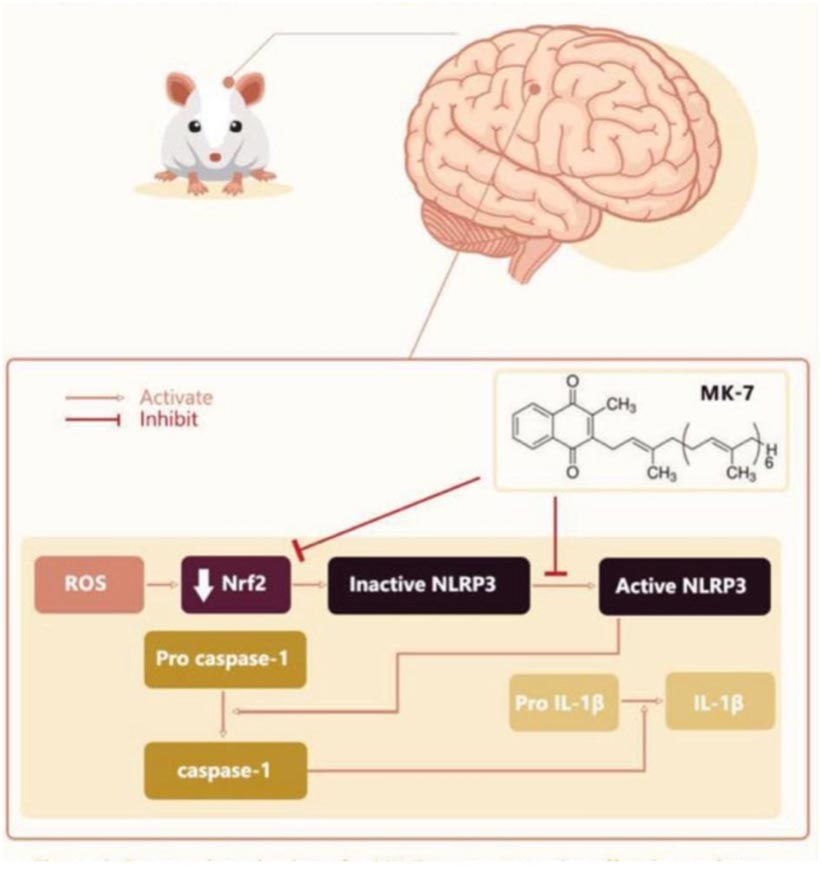
The new study elucidates some of the biological pathways through which vitamin K appears to help preserve cognitive functioning. The researchers investigated the effects of menaquinone-7 (MK-7), a form of vitamin K2, in 3-month-old rats, an age at which rats have reached maturity. One group of rats received supplemental MK-7 for 17 months while the other group did not.
The researchers used validated tests including a maze, swim test, and sociability test to assess the rats’ cognitive functioning and depressive-like and anxiety behavior. These tests revealed that rats that received MK-7 performed better than those that did not. Vitamin K supplementation was associated with reduced evidence of cognitive impairment, depression, and anxiety, along with improved spatial memory and learning ability.
Brain Pathways Affected by Vitamin K Supplementation
At the end of the study, the researchers examined the rats’ brain tissues for insights on the biological pathways involved. The results suggest that vitamin K supplementation affects pathways involving the proteins NLRP3, caspase-1, and Nrf-2, which are involved in inflammation and antioxidant activity. It also appears to promote the expression of tyrosine, an amino acid that helps preserve cognitive functions.
In addition to various forms of vitamin K found naturally in foods, vitamin K supplements are commercially available. However, researchers cautioned that more studies are needed to determine whether the new findings translate from rats to humans and to identify the optimal source and dose of vitamin K to reap potential brain benefits. People taking certain blood thinners and other medications are advised to avoid vitamin K supplements and foods rich in vitamin K.
“Further clinical studies will be required to assess the appropriate dosage for protection against Alzheimer’s, especially in those treated with vitamin K antagonists,” said El-Sherbiny.
Abdulrahman Aloufi will present this research from 11:15 a.m.–12:15 p.m. Tuesday, April 5, in Exhibit/Poster Hall A-B, Pennsylvania Convention Center (Poster Board Number C76) (abstract). Contact the media team for more information or to obtain a free press pass to attend the meeting.
Meeting: Experimental Biology 2022
Never miss a breakthrough: Join the SciTechDaily newsletter.
Follow us on Google and Google News.
2 Comments
Vitamin K2, menaquinone, is not synthesized by eucaryotes. The best food sources are foods fermented with the few microbes that produce menaquinone. Among these foods are natto, kefir, saurkraut, limburger cheese, and the soft cheeses. Animals that harbor bacteria or eat many bacteria accumulate vitamin K2 in the liver. Beef liver and duck liver are excellent sources. Vitamin K2 prevents and reverses atherosclerosis when nutrition is optimal for other vitamins A,C,D3,E,selenium.
If you say so.