
Close Menu
    Facebook X (Twitter) Instagram
    SciTechDaily
    • Biology
    • Chemistry
    • Earth
    • Health
    • Physics
    • Science
    • Space
    • Technology
    Facebook X (Twitter) Pinterest YouTube RSS
    SciTechDaily
    Home»Science»Exceptionally Preserved Brain Discovered Inside Waterlogged Pit
    Science

    Exceptionally Preserved Brain Discovered Inside Waterlogged Pit

    By SciTechDailySeptember 7, 2012No Comments2 Mins Read
    Facebook Twitter Pinterest Telegram LinkedIn WhatsApp Email Reddit
    Share
    Facebook Twitter LinkedIn Pinterest Telegram Email Reddit
    brain-yorkshire-bog
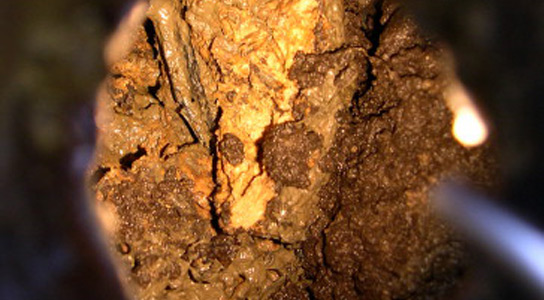
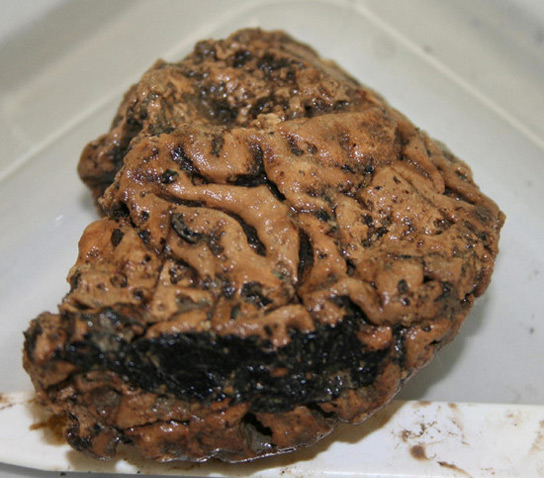
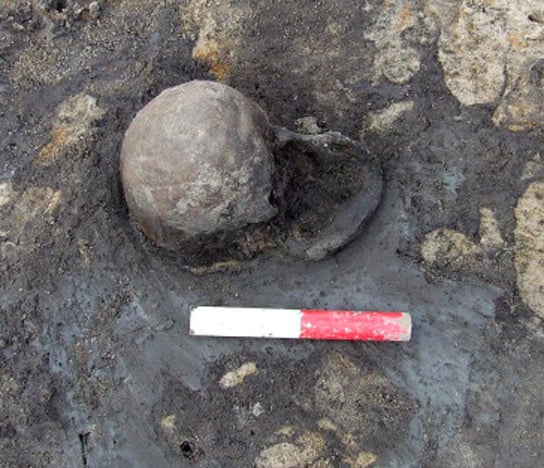
    A 2,684-year-old human skull that included an exceptionally well-preserved human brain was discovered in a waterlogged pit in Yorkshire, UK.

    A 2,684-year-old human skull that included an exceptionally well-preserved human brain was discovered in a waterlogged pit in Yorkshire, UK. The brain is the oldest known intact human brain from Europe and Asia, according to the authors of the study.

    The scientists published their findings in the Journal of Archaeological Science. The authors also believe that it is one of the best-preserved ancient brains in the world. The early Iron Age man belonged to a man in his thirties, states lead author Sonia O’Connor. He was killed by hanging, as was discovered by examining the telltale damage to the neck vertebrae.
    remains-brain-yorkshire

    The head was carefully severed from the neck using a small blade. It was used to cut through the throat and vertebrae, and left fine cuts on the bone. The brain was found in Heslington, Yorkshire, in the UK. O’Connor suspects that the site served as some ceremonial function that persisted from the Bronze Age through early into the Roman period. The site contains pits marked with single stakes. A headless body of a red deer had been deposited into the same channel.
    cranium-iron-age-yorkshire-bog

    In the air, brain tissue will quickly decay into liquid form. The fact that the head was either placed or had fallen into the waterlogged pit that was devoid of oxygen played a vital role in its preservation, since the decapitation would have produced a gaping wound that would have been open to immediate infection from micro-organisms.

    Reference: “Exceptional preservation of a prehistoric human brain from Heslington, Yorkshire, UK” by Sonia O’Connor, Esam Ali, Salim Al-Sabah, Danish Anwar, Ed Bergström, Keri A. Brown, Jo Buckberry, Stephen Buckley, Matthew Collins, John Denton, Konrad M. Dorling, Adam Dowle, Phil Duffey, Howell G. M. Edwards, Elsa Correia Faria, Peter Gardner, Andy Gledhill, Karl Heaton, Carl Heron, Rob Janaway, Brendan J. Keely, David King, Anthony Masinton, Kirsty Penkman, Axel Petzold, Matthew D. Pickering, Martin Rumsby, Holger Schutkowski, Kimberley A. Shackleton, Jerry Thomas, Jane Thomas-Oates, Maria-Raimonda Usai, Andrew S. Wilson and Terry O’Connor, 4 March 2011, Journal of Archaeological Science.
    DOI: 10.1016/j.jas.2011.02.030

    Never miss a breakthrough: Join the SciTechDaily newsletter.
    Follow us on Google and Google News.

    Archaeology Brain Fossils
    Share. Facebook Twitter Pinterest LinkedIn Email Reddit

    Related Articles

    Scientists Discover Fossils of a Giant Extinct Burrowing Bat in New Zealand

    Archaeologists Discover Oldest Known Funereal Fish Hooks

    Newly Discovered Fossils Reveal Man’s Earliest Ancestors

    Wolf-Sized Prehistoric Otter Had a Surprisingly Powerful Bite

    Scientists Reveal a New Species of Dinosaur

    400,000 Year Old Fossil Helps Shed New Light on Human Evolution

    Extinct Animals From the Pleistocene Discovered in Mexico

    Ash Preserved Fossils of Rangeomorphs Discovered in Newfoundland

    27-Foot Long Crocodylus Thorbjarnarsoni Roamed Kenya

    Leave A Reply Cancel Reply

    • Facebook
    • Twitter
    • Pinterest
    • YouTube

    Don't Miss a Discovery

    Subscribe for the Latest in Science & Tech!

    Trending News

    Study Finds a Surprising Link Between Gut Microbes and Aging

    Frequent Cannabis Users Wake Up With More “Stress Hormone”

    Scientists Reveal Hidden DNA Traces in the Shroud of Turin

    Giant Alien World Found Hiding in Plain Sight for 11 Years

    Scientists Link Heavy TV Watching to Brain Changes Decades Later

    Did T. rex Leave These Mysterious Marks on Dinosaur Bones?

    Quantum Computers Could Freeze Like Ordinary PCs

    Scientists Reversed Autism-Like Symptoms in Adult Mice Within Two Hours

    Follow SciTechDaily
    • Facebook
    • Twitter
    • YouTube
    • Pinterest
    • Newsletter
    • RSS
    SciTech News
    • Biology News
    • Chemistry News
    • Earth News
    • Health News
    • Physics News
    • Science News
    • Space News
    • Technology News
    Recent Posts
    • Two-Year Lifestyle Program Boosts Cognition 55% More in Older Adults
    • Speaking More Languages May Slow Brain Aging
    • Experimental Eye Drops Restore Sight in Blind Mice
    • Coffee’s Most Destructive Pest Is Accidentally Helping the Ants That Hunt It
    • Cells Join Forces To Survive Prolonged Mechanical Strain
    Copyright © 1998 - 2026 SciTechDaily. All Rights Reserved.
    • Science News
    • About
    • Contact
    • Editorial Board
    • Privacy Policy
    • Terms of Use

    Type above and press Enter to search. Press Esc to cancel.