
Close Menu
    Facebook X (Twitter) Instagram
    SciTechDaily
    • Biology
    • Chemistry
    • Earth
    • Health
    • Physics
    • Science
    • Space
    • Technology
    Facebook X (Twitter) Pinterest YouTube RSS
    SciTechDaily
    Home»Earth»Exploring Earth From Space: Carrara, Italy [Video]
    Earth

    Exploring Earth From Space: Carrara, Italy [Video]

    By European Space Agency (ESA)March 27, 2022No Comments2 Mins Read
    Facebook Twitter Pinterest Telegram LinkedIn WhatsApp Email Reddit
    Share
    Facebook Twitter LinkedIn Pinterest Telegram Email Reddit
    Carrara Italy
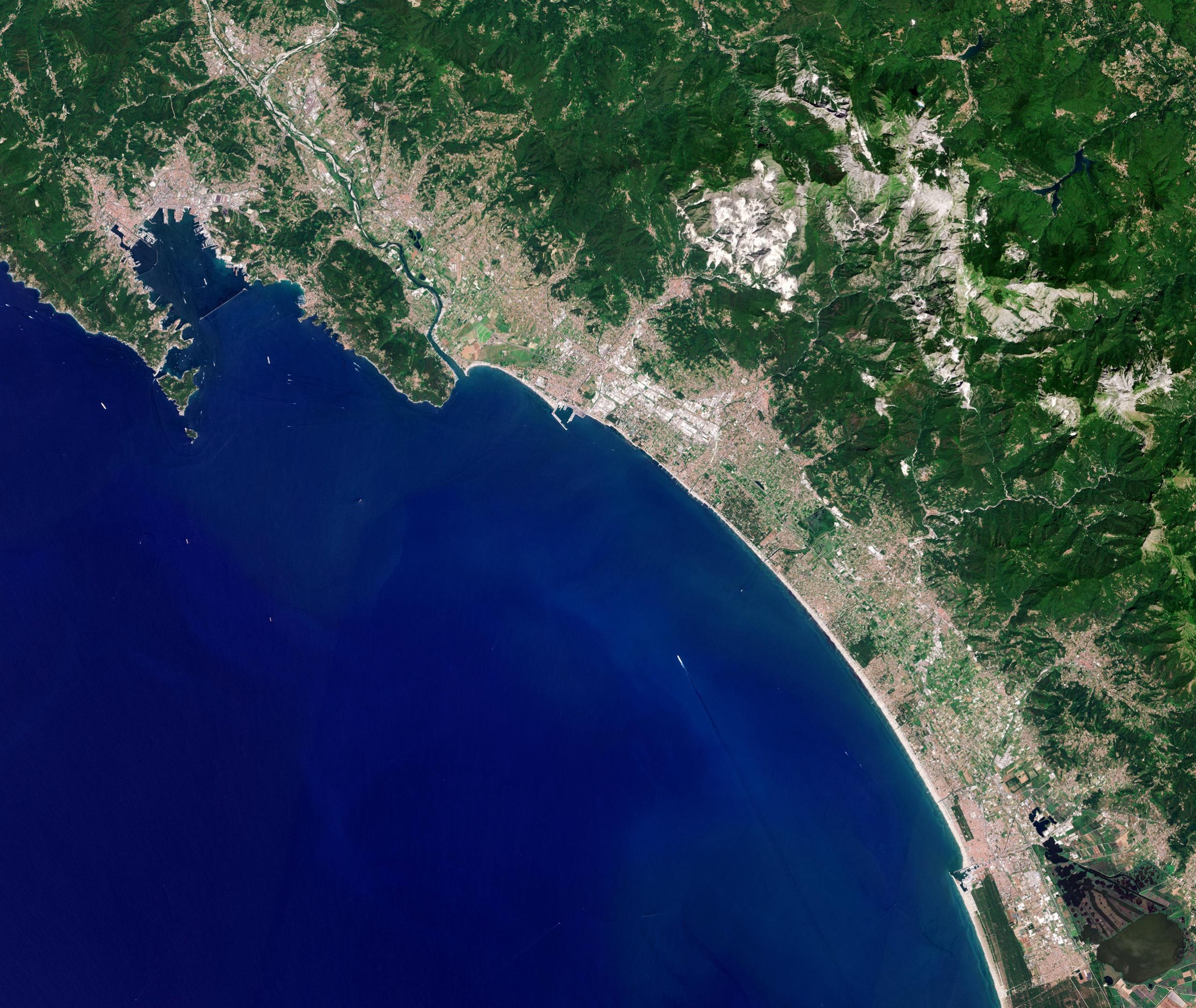
    Sentinel-2 satellite image of Carrara, Italy, a city known especially for its world-famous marble. Credit: Contains modified Copernicus Sentinel data (2021), processed by ESA, CC BY-SA 3.0 IGO

    The Copernicus Sentinel-2 mission takes us over Carrara – an Italian city known especially for its world-famous marble.

    Carrara lies along the Carrione River, in northern Tuscany, around 130 km (80 mi) from Florence. It can be seen just above the center of the image, stretching into the mountains.

    The city is famous for its white or blue-grey marble, called Carrara, taken from nearby quarries in the Apuan Alps, a mountain range that stretches for approximately 55 km (34 mi) and reaching around 2000 m (6,6000 ft) high. What appears as snow cover on the rugged mountains is actually bright white marble, contrasting with Tuscany’s lush green vegetation.

    Carrara marble is one of the most prestigious marbles in the world, with its quarries producing more marble than any other place on Earth. The unique stone was formed by calcite-rich shells left behind by marine organisms when they die. When water bodies evaporate, the deposited remains form limestone, and when buried under multi-tonne layers of rock, the intense heat and pressure cause the limestone to metamorphose into marble.

    The special quality of the Carrara marble has made it a popular resource for many famous sculptures, including Michelangelo’s Pietà, and has been used for some of the most remarkable buildings in Ancient Rome, including the Pantheon and Trajan’s Column.

    Also featured in this summery image from Sentinel-2 are the towns of Forte dei Marmi, Pietrasanta, Lido di Camaiore and Viareggio. Marina di Carrara, southwest of the city, is a beach resort on the Ligurian Sea, with port facilities for transporting and shipping marble. The most popular resorts and beaches nearby are those at Marina di Carrara and Marina di Massa, both of which become very crowded during the summer, especially with Italian holidaymakers. La Spezia, a major naval base and the second largest city in the Liguria region, is visible in the top-left of the image.        

    Copernicus Sentinel-2 is based on a constellation of two identical satellites in the same orbit, 180° apart for optimal coverage and data delivery. Together they cover all Earth’s land surfaces, large islands, inland, and coastal waters every five days at the equator.

    Never miss a breakthrough: Join the SciTechDaily newsletter.
    Follow us on Google and Google News.

    European Space Agency Geography
    Share. Facebook Twitter Pinterest LinkedIn Email Reddit

    Related Articles

    Breathtaking View of Andros, Bahamas From Space [Video]

    Stunning Views of Houston Texas From Copernicus Sentinel-1 Satellite

    Earth From Space: Bolivian Highland Heart [Video]

    Flevoland, Netherlands From Space: One of the Largest Land Reclamation Projects in the World

    Earth From Space: Lake George, Uganda – A Center for Biological Diversity [Video]

    Deforestation in Bolivia Spied From Space Satellite

    Earth From Space: Japanese Archipelago [Video]

    Earth From Space: Faroe Islands [Video]

    Earth From Space: Tromsø, Norway [Video]

    Leave A Reply Cancel Reply

    • Facebook
    • Twitter
    • Pinterest
    • YouTube

    Don't Miss a Discovery

    Subscribe for the Latest in Science & Tech!

    Trending News

    These Toads Are Surviving a Deadly Fungus – Scientists May Finally Know Why

    These Brain Cells May Explain Why We Eventually Have To Sleep

    Tomatoes Contain an Invisible Ingredient With Surprising Effects on Liver Health

    World’s First Heat-Powered Cooling System Turns Waste Heat Into Cold

    Antarctica Gained a Record 695 Billion Tons of Ice in Just Two Years

    Don’t Miss: A Brilliant Venus and Glowing Harvest Moon Light Up the Sky

    New Twist on the Einstein Problem Reveals Unexpected Physics

    JWST Captures Stunning Evidence of How Supermassive Black Holes Feed

    Follow SciTechDaily
    • Facebook
    • Twitter
    • YouTube
    • Pinterest
    • Newsletter
    • RSS
    SciTech News
    • Biology News
    • Chemistry News
    • Earth News
    • Health News
    • Physics News
    • Science News
    • Space News
    • Technology News
    Recent Posts
    • Scientists Bring a Galápagos Plant Back From the Brink of Extinction
    • Scientists Discover a Bacterial Molecule That “Disarms” a Dangerous Fungus
    • Bats May Hold the Secret to Fighting Aging, Cancer, and Infection
    • Scientists Discover a Hidden Defect That Could Explain Why IBD Keeps Coming Back
    • Millions Take Blood Pressure Drugs, but Many May Be Missing Their Heart-Protective Benefits
    Copyright © 1998 - 2026 SciTechDaily. All Rights Reserved.
    • Science News
    • About
    • Contact
    • Editorial Board
    • Privacy Policy
    • Terms of Use

    Type above and press Enter to search. Press Esc to cancel.