
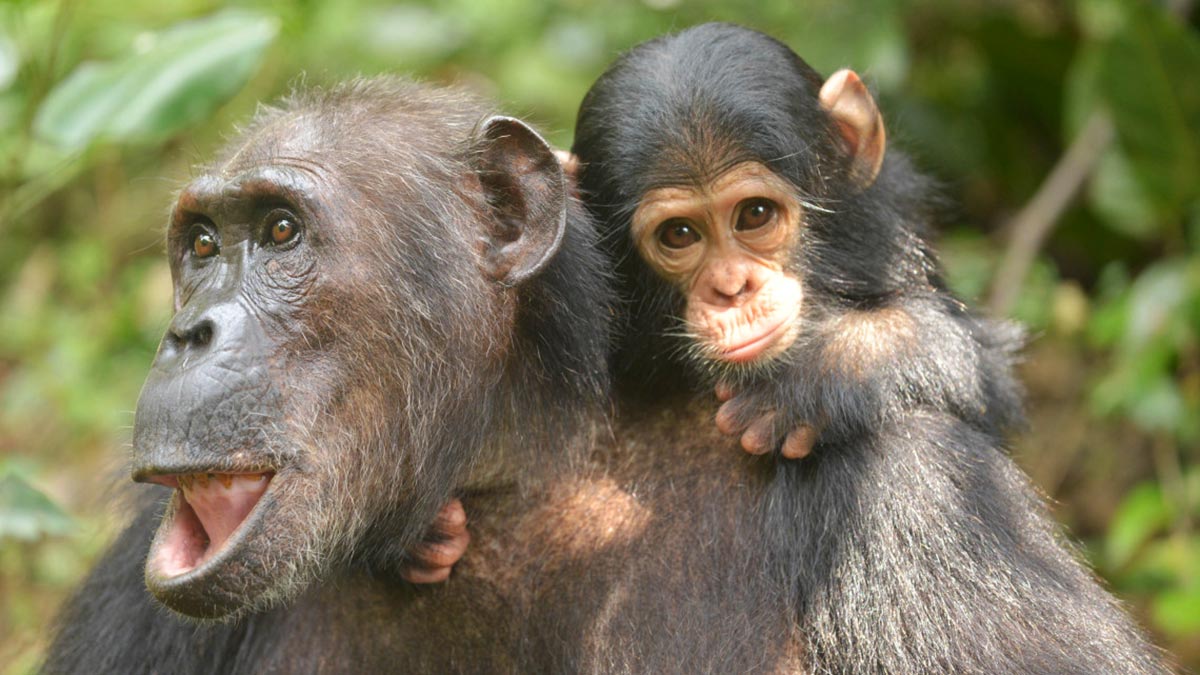
In the dense forests of Gombe, female chimpanzees that build strong friendships—not with family, but with unrelated females—dramatically improve the odds their babies will survive.
A decades-long study revealed that social bonding before birth, especially through grooming and companionship, offers powerful protection against the harsh realities of infant mortality in the wild. Surprisingly, the presence of close kin or even protective males didn’t matter—only the strength of female social ties predicted survival. These enduring relationships may reduce stress, increase food access, and provide subtle defense advantages, hinting at the evolutionary roots of human cooperation.
Social Bonds Critical for Chimp Offspring
In the world of wild chimpanzees, friendship isn’t just a nice bonus — it can mean the difference between life and death for a baby chimp.
A new federally funded study of wild eastern chimpanzees in Gombe National Park reveals that female chimps who are more socially connected before giving birth are significantly more likely to raise surviving infants. The research, published in iScience, suggests that these benefits come not from family ties, but from bonds with unrelated females.
Unlike many animals, female chimpanzees typically leave their birth group when they reach maturity and join new communities where they have no close kin. That makes this discovery even more remarkable. Despite being far from family, females who formed strong friendships still had much higher odds of raising healthy young.
Integration Boosts Infant Survival Rates
“In species where females live in groups with their sisters and mothers, it’s less surprising that female sociality is beneficial,” said Joseph Feldblum, assistant research professor of evolutionary anthropology at Duke and lead author on the study. “But female chimps don’t usually have that. They are also less gregarious than males, so the fact that forming strong social connections still matters is striking.”
To test the connection between friendships and offspring survival, researchers analyzed more than three decades of behavioral data from 37 mothers and their 110 offspring. They focused on association and grooming — how often females spent time near each other or engaged in social grooming behavior — in the year before birth, to avoid including social behavior from the post-birth period, during which it would be difficult to establish the causal relationship between infant loss and social behavior.

Females who were more socially connected had a considerably better chance of raising their babies through to their first year, the period of highest infant mortality. A female with a sociality score twice the community average had a 95% chance her infant would survive the first year. One who was halfway below average saw that chance drop to 75%. The effect persisted through age five, which is roughly the age of weaning.
Friendship, Not Family, Drives Benefit
The research team then tested whether having close female kin in the group — like a sister or mother — accounted for the survival benefit. The answer was “no.” They also tested if the key was having bonds with males, who could potentially offer protection. The answer was also “no.” What mattered the most was having social connections with other females, regardless of kinship.
“That tells us it’s not just about being born into a supportive family,” said Feldblum. “These are primarily social relationships with non-kin.”
The authors noted that the mechanism of the survival benefit remains unresolved, although there are several possibilities. Social females might receive less harassment from other females, more help defending food patches or protecting their young, or their offspring could be less likely to be killed by another group member. Social connections might also have helped these females stay in better condition — maybe better fed and less stressed — through pregnancy, giving their offspring a better chance from the get-go.
Lasting Alliances Hint at Human Evolution
And it’s not just about the year before birth. Social females stayed social after their babies were born — a sign of stable relationships, not short-term alliances. “Our results don’t prove causation, but they point to the value of being surrounded by others who support you, or at least tolerate you,” said Feldblum.
“We humans are remarkably collaborative and cooperative. We cooperate at scales that are pretty much unique in the animal kingdom,” he said. “Human females who don’t have access to kin — for example, because they moved to a new city or village — are still able to form strong bonds that can benefit them. Studying these social dynamics in chimpanzees can help us understand how we evolved to be the social, cooperative species we are today.”
Reference: “Socially integrated female chimpanzees have lower offspring mortality” by Joseph T. Feldblum, Kara K. Walker, Margaret A. Stanton, Elizabeth V. Lonsdorf, Deus C. Mjungu, Carson M. Murray and Anne E. Pusey, 9 June 2025, iScience.
DOI: 10.1016/j.isci.2025.112863
Never miss a breakthrough: Join the SciTechDaily newsletter.
Follow us on Google and Google News.