
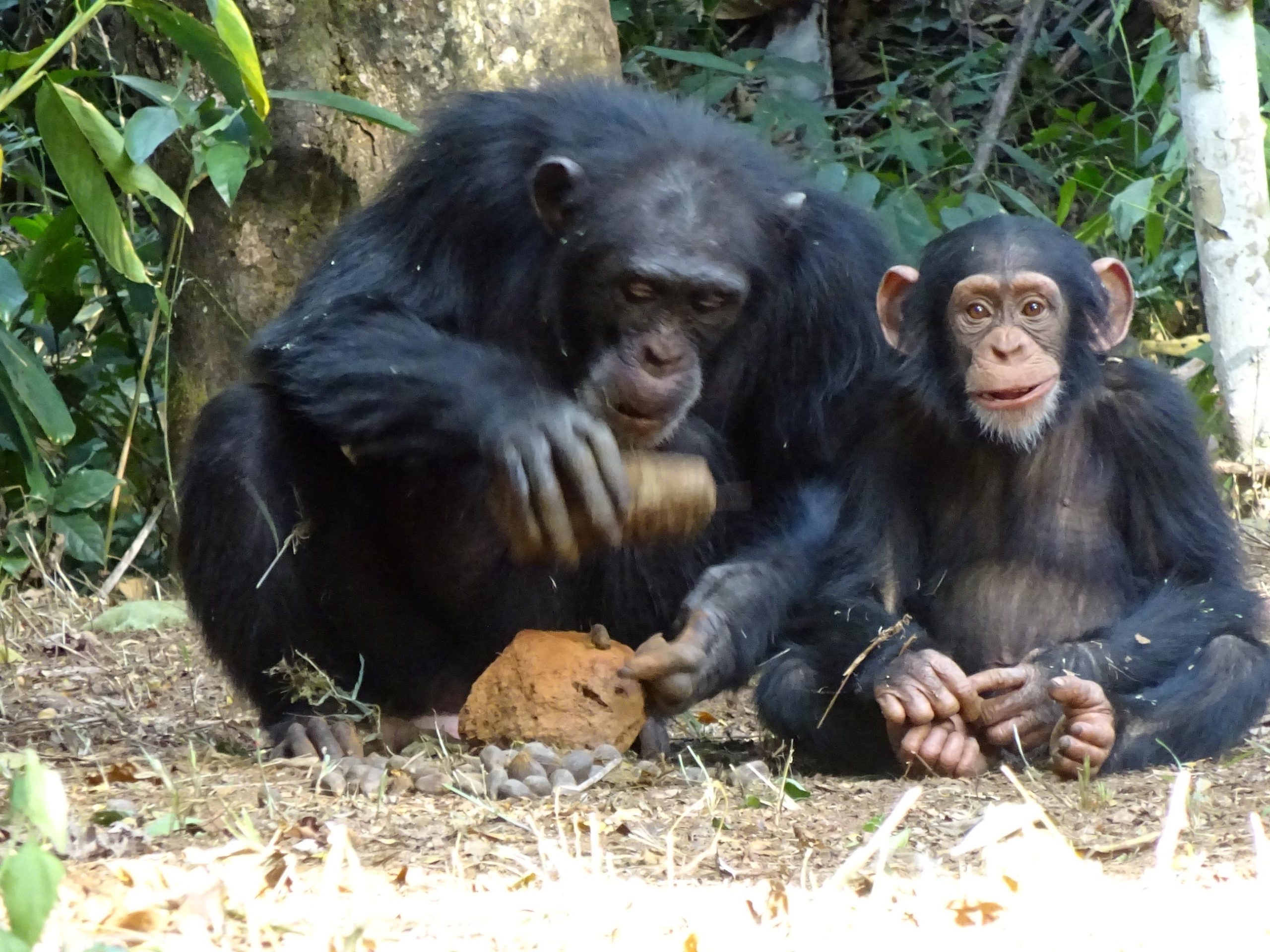
Research indicates that the complex behaviors used in human language and tool making, such as organizing actions into sequences, may have evolved in our common ancestors with chimpanzees.
This study analyzed sequences of tool use in wild chimpanzees, revealing that they organize actions similarly to humans, suggesting these capabilities were inherited from a shared ancestor.
Evolutionary Origins of Human-Like Behaviors
A new study, set to be published today (December 5, 2024) in the journal PeerJ, suggests that the core abilities driving human language and technological innovation may have evolved before humans and apes split from a common ancestor millions of years ago.
Unlike most animals, humans perform highly complex behaviors, such as speaking or creating tools, which rely on organizing actions into structured sequences. These sequences involve breaking tasks into manageable chunks and recognizing connections between actions that may be far apart in the process.
Complexity in Chimpanzee Tool Use
For example, even relatively simple human behaviors like making a cup of tea or coffee require carrying out a series of individual actions in the right order (e.g. boiling the kettle before pouring the water out). We break such tasks down into solvable chunks (e.g. boil the kettle, get the milk and teabag, etc), composed of individual actions (e.g. ‘grasp’, ‘pull’, ‘twist’, ‘pour’). Importantly, we can separate related actions by other chunks of behavior (e.g. you might have to stop and clean up some spilled milk before you continue). It was unknown whether the ability to flexibly organize behaviors in this way is unique to humans, or also present in other primates.
In this new study, the researchers investigated the actions of wild chimpanzees – our closest relatives – whilst using tools, and whether these appeared to be organized into sequences with similar properties (rather than a series of simple, reflex-like responses). The research was led by the University of Oxford with an international collaboration across the UK, US, Germany, Switzerland, and Japan.
Analyzing Chimpanzee Behavior Sequences
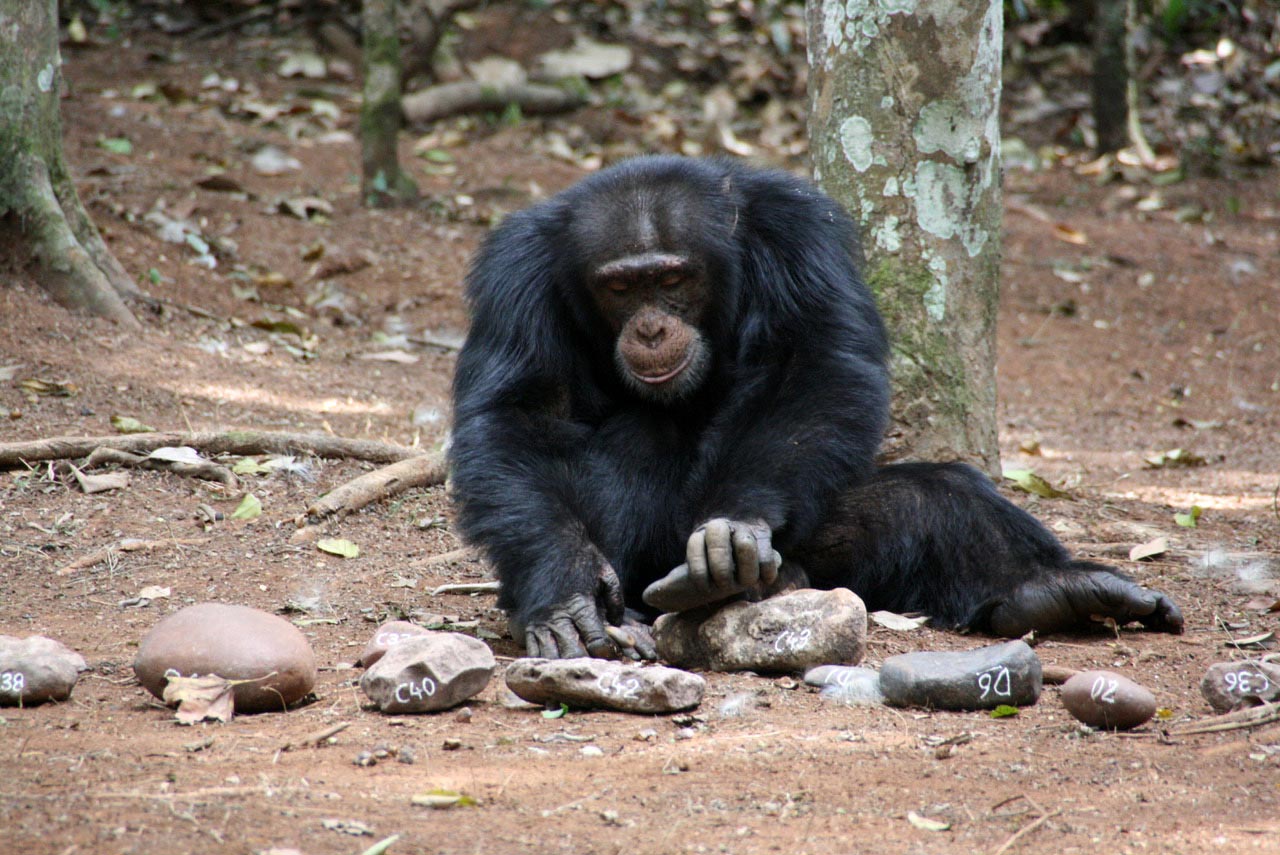
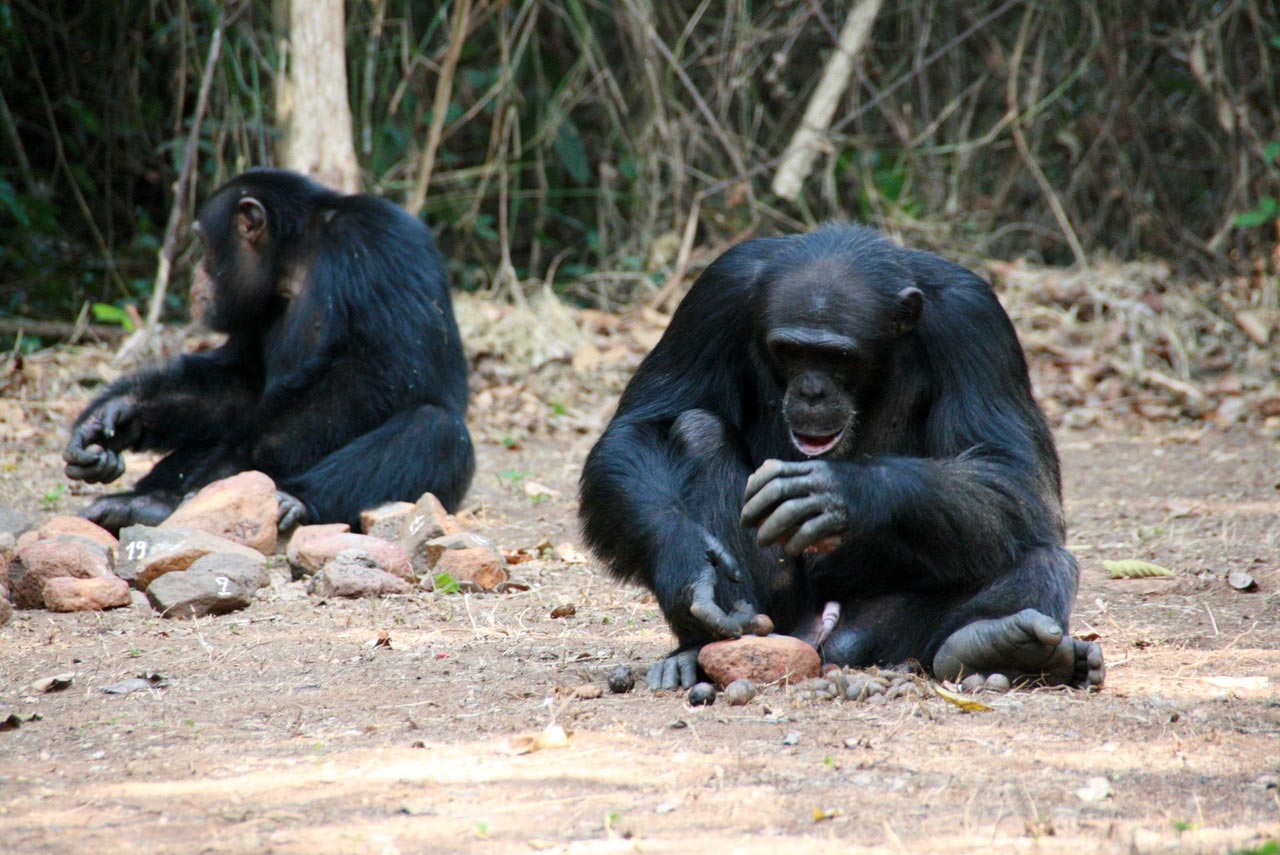
The study used data from a decades-long database of video footage depicting wild chimpanzees in the Bossou forest, Guinea, where chimps were recorded cracking hard-shelled nuts using a hammer and anvil stones. This is one of the most complex documented naturally-occurring tool use behaviors of any animal in the wild. The researchers recorded the sequences of actions chimps performed (e.g. grasp nut, pass through hands, place on anvil, etc.) – totaling around 8,260 actions for over 300 nuts.
Using state-of-the-art statistical models, they found that relationships emerged between chimpanzees’ sequential actions which matched those found in human behaviors. Half of adult chimpanzees appeared to associate actions that were much further along the sequence than expected if actions were simply being linked together one by one.
This provides further evidence that chimpanzees plan action sequences, and then adjust their performance on the fly.
Implications for Evolutionary Biology and Conservation
Understanding how these relationships emerge during action organization will be the next key goal of this research, but these could involve behaviors such as chimpanzees pausing sequences to readjust tools before continuing, or bringing several nuts over to stone tools that are then cracked in one long sequence. This would be further evidence of human-like technical flexibility.
Additionally, the results suggest that the majority of chimpanzees organize actions similarly to humans, through the production of repeatable ‘chunks’. However, this result did not hold for every chimpanzee, and this variation between individuals may suggest that these strategies for organizing behaviors may not be universal in the way they are for humans.
Lead researcher Dr. Elliot Howard-Spink (formerly Department of Biology, University of Oxford, now Max Planck Institute of Animal Behavior) said: “The ability to flexibly organize individual actions into tool use sequences has likely been key to humans’ global success. Our results suggest that the fundamental aspects of human sequential behaviors may have evolved prior to the last common ancestor of humans and chimpanzees, and then may have been further elaborated on during subsequent hominin evolution.”
Co-senior researcher Professor Thibaud Gruber (University of Geneva) said: “There has been a renewed interest in the co-evolution of language and stone tool use in human evolution, and our study contributes to this debate. While the connection between our results and early hominin stone tool use can be made more readily, how this connects with the evolution of other complex behaviors, like language, remains an exciting avenue of future research.”
Co-senior researcher Professor Dora Biro (University of Rochester) said: “There is increasing recognition that preserving cultural behaviors in wild animals – such as stone-tool use in West African chimpanzees – should be incorporated into conservation efforts. Wild chimpanzees and their cultures are critically endangered, yet our work highlights how much we can yet learn from our closest relative about our own evolutionary history.”
As many great apes perform dextrous and technical foraging behaviors, it is likely that the capacity for these complex sequences is shared across ape species. More research is needed to validate this theory, and is a key goal for the team moving forward.
The researchers also plan to investigate how actions are grouped into higher-order chunks by chimpanzees during tool use. This research will aim to clarify the rules that chimpanzees follow when generating their tool-use behaviors. They will also investigate how these structures emerge during development and are shaped across adult lives.
Reference: “Nonadjacent dependencies and sequential structure of chimpanzee action during a natural tool-use task” by Elliot Howard-Spink, Misato Hayashi, Tetsuro Matsuzawa, Daniel Schofield, Thibaud Gruber and Dora Biro, 5 December 2024, PeerJ.
DOI: 10.7717/peerj.18484
Never miss a breakthrough: Join the SciTechDaily newsletter.
Follow us on Google and Google News.
2 Comments
You are COMPLETELY MISSING THE DIFFERENCE……humans can imagine and believe in fictions (religion, the US dollar, and a host of other fictions) and conduct ourselves in accordance with those fictions. Other animals deal with the here and now but cannot IMAGINE another way to proceed, unless they stumble on it.
Have you taken into account how groups of beavers cut down trees to build dens, and birds gather sticks, reeds and even string to build their nests?