
New data show that the first single-celled organisms with a nucleus originated more than a billion years later than biogeochemical evidence had previously indicated.
Contaminated samples have evidently created some confusion in the timetable of life. On the basis of ultra-clean analyses, an international team, including scientists from the Max Planck Institute for Biogeochemistry, has disproved supposed evidence that eukaryotes originated 2.5 to 2.8 billion years ago. In contrast to prokaryotes such as bacteria, eukaryotes have a nucleus. Some researchers thought they had discovered molecular remnants of living organisms in rock samples up to 2.8 billion years old. However, as the current study shows, these molecular traces were introduced by contamination. The oldest evidence for the existence of eukaryotes is now provided by microfossils that are ca. 1.5 billion years old.
Amoeba are more closely related to humans than to bacteria, at least in the tree of life. Like mammals, they belong to the realm of the eukaryotes, while bacteria are prokaryotes. The first eukaryotes are thus indeed the primeval ancestors of all higher life forms including humans. To this extent, evolution made a big leap toward complex life forms when eukaryotic cells appeared. The so-called symbiogenesis, which caused two or more single-celled bacteria to merge into a new organism with a nucleus and organelles, was the essential prerequisite that allowed most living creatures that surround us today to evolve.
To understand how higher life forms developed, evolutionary biologists want to know when and under what conditions the first eukaryotes entered the scene. An international team, in which researchers from Christian Hallmann’s Group at the Max Planck Institute for Biogeochemistry were involved, is now supplying crucial arguments to the scientific debate surrounding these questions.
A gap between fossils and chemical traces
The oldest microfossils that are widely acknowledged as the remains of eukaryotes were found in ca. 1.5 billion-year-old rocks in northern Australia. Researchers have analyzed these fossils morphologically in micropaleontological studies and identified them as the remains of microalgae. In alternative attempts to trace the origin of higher life forms, scientists analyzed certain lipid molecules (steroids) contained in the cell walls of eukaryotic organisms. Not only can they serve as highly specific markers for certain groups of organisms, they can also survive in sediments for extremely long periods of time given the right conditions. “By analyzing such molecules, so-called biomarkers, we can reconstruct early life on Earth on a molecular level”, says Christian Hallmann, Leader of the Max Planck Research Group ‘Organic Paleobiogeochemistry’.
Since 2012 Hallmann’s team has been working on increasing our understanding of how environmental conditions developed and the diversity of life appeared in the period from when the Earth was created until animal life first appeared (i.e. during the Precambrian). “Our understanding of this period, which is of great evolutionary interest, is benefiting enormously from this molecular approach”, Hallmann explains. The paleontologist and his staff have now analyzed rock samples up to 2.7 billion years old for traces of molecules.
Steroid molecules can be preserved as steranes in old sediments, in other words, the petrified beds of prehistoric seas and lakes. During the last 15 years an increasing number of scientists had repeatedly identified such molecular traces in samples of sediments from 2.5 to 2.8 billion years old, they concluded that eukaryotic algae already existed in this period, i.e. during the Late Archean. Thus, a gap of more than a billion years appeared between the earliest deposits of these biomarkers and the oldest fossilized microalgae.
Ultra-clean sampling aimed at clarifying the question of contamination
In addition, the discovery of a large variety of steroids pointed to a seemingly-modern pattern representing various algae species. “At first there was speculation that it might suggest that algae had split into different species at a very early date”, says Christian Hallmann. “But suspicion mounted that the samples in these studies might have become contaminated in spite of extensive precautionary measures.” The problem was that the Archean sample material either had not been taken under special conditions or had been stored for several years under conditions that were not ideal. “The question of contamination gradually split our fellow scientists into two conflicting camps”, Hallmann continues.
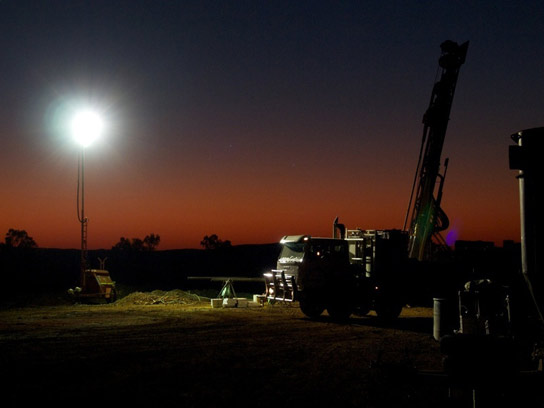
Working with Katherine French from the Massachusetts Institute of Technology (MIT), Hallmann therefore developed a method for taking ultra-clean samples from the oldest rocks that had been classified as containing steroids. Together with Roger Buick from the University of Washington, the scientists drilled and collected rock samples over the course of several weeks in the remote Australian outback during the “Agouron Institute Drilling Projects (AIDP)” in 2012, and in the process took unprecedented precautionary measures to prevent contamination.
Not even a picogram of eukaryotic steroids
French, Hallmann, and other colleagues split open these drill cores and analyzed them in several independent laboratories – with astonishingly uniform results. “My biggest fear was having to discover in the laboratory that the samples had become contaminated despite our excessive endeavors”, Hallmann continues. “Then the whole effort would have been useless.” However, the samples were extremely clean – so clean in fact that the highly sensitive mass spectrometers in the various labs were unable to detect even picogram quantities of indigenous eukaryotic steroids. The suspicion that earlier samples might have been contaminated was confirmed.
At the same time, the researchers found relatively large amounts of so-called diamondoids and polyaromatic hydrocarbons in the rock. Hallmann calls this the ‘exhaust signature’ as these molecules also occur in the exhaust gases of combustion engines and they point to organic material that has been modified at high temperatures. “The entire organic material in these samples was modified by pressure and temperature during the course of billions of years, and no biomarker molecules could have survived. We are thus unable to draw any conclusions on the original biological signature of the material”, says Hallmann.
At any rate, the steroid molecules, which were supposedly 2.7 billion years old, can no longer serve as evidence that eukaryotes originated much earlier than indicated by the fossil record. The microfossils, which are about 1.5 billion years old, must therefore currently be deemed the oldest evidence of eukaryotic life on Earth – an insight that is expected to have major consequences, not only in the geosciences.
Biomarkers remain an important tool in Precambrian paleontology
French and Hallmann’s results not only help to clarify when eukaryotes originated, they also aid in the solution of a further puzzle: since all eukaryotes require oxygen, the development of oxygen-producing (oxygenic) photosynthesis must have preceded the evolutionary transition to the eukaryotes. The consequences of this biochemical innovation, known as the “great oxidation event”, changed the entire planet as the atmosphere became gradually enriched with oxygen. This event is clearly dated to between 2.5 and 2.4 billion years ago. Until now, it had been hard to explain how the eukaryotes could have originated several 100 million years earlier given that they were inherently dependent on access to molecular oxygen.
“Using a well-designed technique and a large-scale international collaborative process, we were able to answer one of the major questions in molecular geobiology”, says Hallmann. In spite of these new insights, biomarkers in old rocks remain an important tool for paleontological investigations of the Precambrian, not least because sedimentary steroids and other biomarkers can be much more specific than microfossils. In contrast to the studied Archean rocks, late-Precambrian sedimentary basins on Earth contain a wide variety of rocks whose organic material is relatively well preserved and can be examined for biomarkers. “With the gained knowledge that eukaryotes appeared later, we can now work on the true early evolution of algae in a new context and with greatly enhanced prospects of achieving success”.
Reference: “Reappraisal of hydrocarbon biomarkers in Archean rocks” by Katherine L. French, Christian Hallmann, Janet M. Hope, Petra L. Schoon, J. Alex Zumberge, Yosuke Hoshino, Carl A. Peters, Simon C. George, Gordon D. Love, Jochen J. Brocks, Roger Buick and Roger E. Summons, 12 May 2015, PNAS.
DOI: 10.1073/pnas.1419563112
Never miss a breakthrough: Join the SciTechDaily newsletter.
Follow us on Google and Google News.
3 Comments
Not enough time for Darwinian evolution to do its magic and create us. Divine intervention is required along the way.
1 thousand 500 million years not long enough? Don’t be silly.
Your statement is not true. However, there is hope. I suggest improving your understanding of evolution by getting an education. When you’re educated, you’ll find the subject easier to understand and you’ll be able to make sense of the timelines used in biology and geology.