
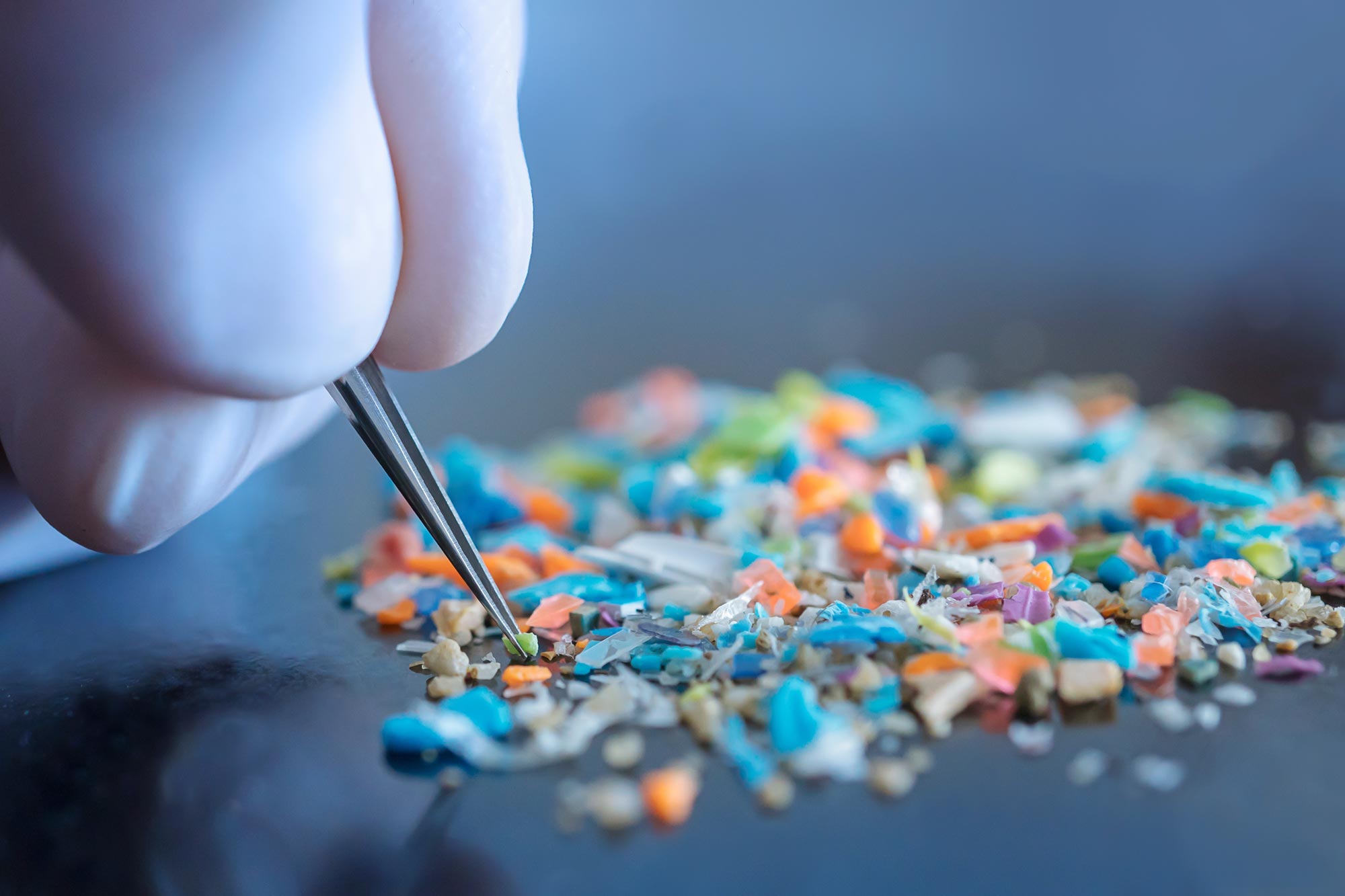
Scientists in Germany have found that microscopic plastic particles make up a measurable share of urban air pollution, with tire wear emerging as the dominant source.
Airborne plastic pollution is attracting more scientific attention, but much remains unknown about where these particles are found and how they affect health. New chemical analyses from Leipzig now offer the first detailed data from Germany, showing that plastic makes up about 4 percent of particulate matter. Around two-thirds of that plastic comes from tire abrasion.
When extrapolated, the results suggest that people in a city such as Leipzig inhale about 2.1 micrograms of plastic each day from the air, a level associated with a 9 percent higher risk of death from cardiovascular disease and a 13 percent higher risk of death from lung cancer.
Researchers from the Leibniz Institute for Tropospheric Research (TROPOS) and Carl von Ossietzky University Oldenburg report in the journal Communications Earth & Environment that their findings underscore the urgent need for global efforts to address plastic pollution, as well as more regional research into air quality and its health impacts. The study was carried out as part of the Leibniz Association-funded “AirPlast” project.
Airborne plastic remains undermeasured
Scientists have become increasingly interested in airborne plastic particles in recent years because they have been found even in remote places, including polar regions and high mountains. These particles may interfere with ecological processes and may also affect human health. Possible sources include tire wear, brake wear, textile fibers, dust, and urban surfaces. Plastic that enters oceans in large amounts through rivers can also return to the atmosphere as microplastics and nanoplastics through sea spray.
Nanoplastics are defined as all plastic particles smaller than 1 micrometer, while microplastics are defined as all particles between one micrometer and one millimeter. Even though plastic pollution is clearly increasing, the risks from breathing in plastic particles remain poorly understood.
What is already known is that inhaled nanoplastics can reach the lungs and trigger oxidative stress or inflammatory responses that contribute to respiratory disease. These particles can also carry heavy metals, polycyclic aromatic hydrocarbons (PAHs), and other substances on their surfaces, which can make them more toxic.
This limited understanding of microplastics and nanoplastics is one reason neither the World Health Organization (WHO) nor the European Union currently has recommendations or limits for plastic particles in air. Plastic pollution in the ocean is now part of talks over a UN plastics agreement, but airborne plastic particles have received little attention in political debate.
Plastic is difficult to identify
Research on airborne plastic has accelerated only during the past decade. One challenge is that “plastic” is not a single material, but a broad category of substances with different chemical properties. For that reason, scientists rely on several analytical methods that complement one another.
Spectroscopic techniques can reveal particle structure and surface characteristics, while mass based methods can measure total quantities. Very small particles, especially nanoplastics, are especially hard to analyze and identify clearly in complex environmental samples. Standard optical methods have limited ability to detect particles reliably at the nanometer scale, and determining the exact polymer type is still difficult at these sizes.
To address these challenges, pyrolysis gas chromatography-mass spectrometry (Py-GC-MS) has become an important method. In this approach, samples are rapidly heated to break them into smaller fragments (pyrolysis), then separated by gas chromatography and identified by mass spectrometry. Because no standards currently exist for detecting different polymers, the team had to create its own methods.
The researchers selected 11 common types, including TWPs (Tire wear particles), such as PE (polyethylene), PP (polypropylene), PVC (polyvinyl chloride), PET (polyethylene terephthalate), PS (polystyrene), PMMA (polymethyl methacrylate/plexiglass), PC (polycarbonate), PA6 (polyamide 6), MDI-PUR (Polyurethane). They determined each material’s analytical “fingerprint” using commercially available raw polymers and compared those fingerprints with air samples from Leipzig.
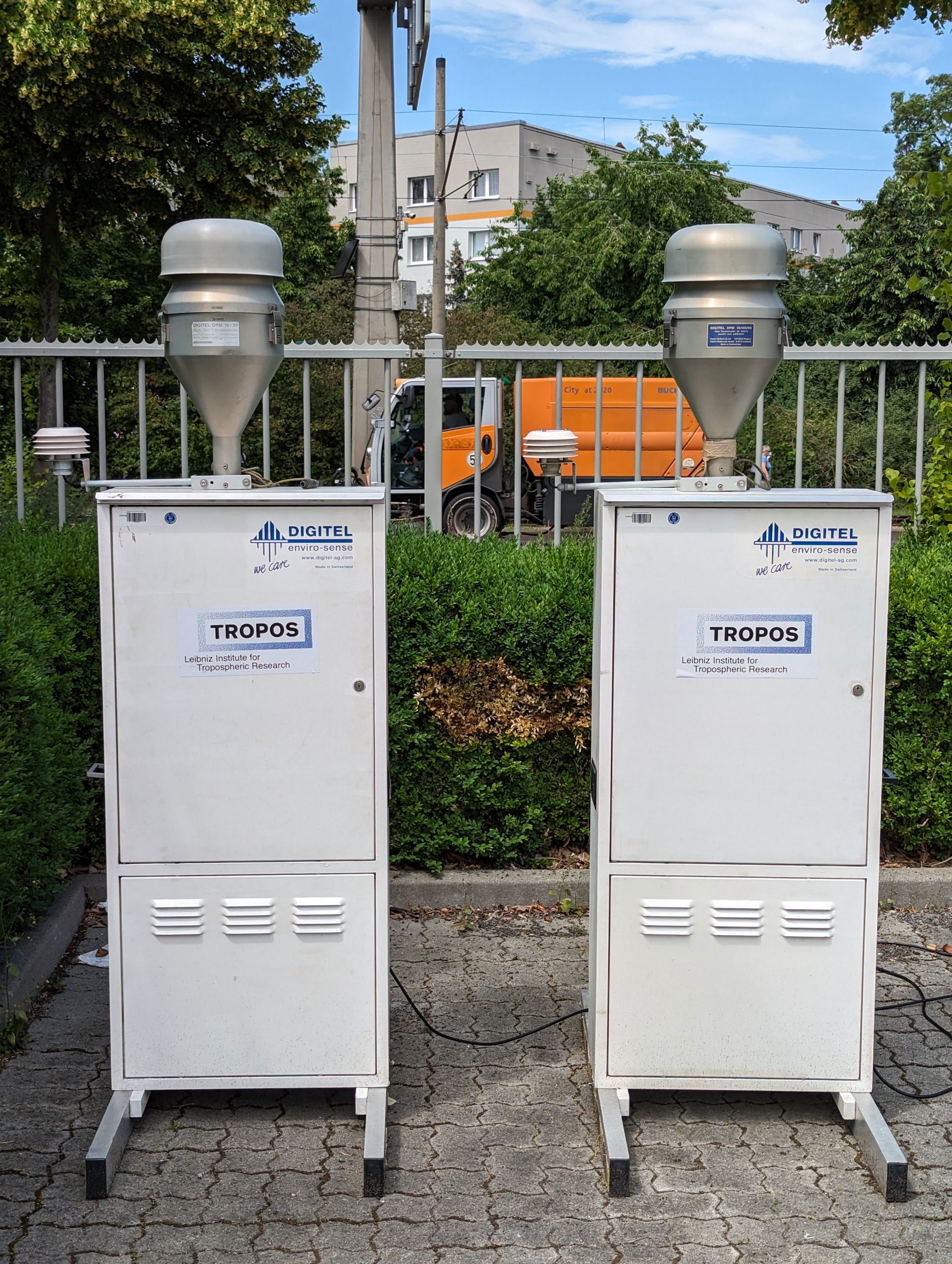
Particulate matter (PM) samples of PM10 (smaller than 10 micrometers) and PM2.5 (smaller than 2.5 micrometers) were collected with two high-volume samplers, like those used at air monitoring stations under European standards. Each sampler drew 500 liters of air per minute through a filter system, with the filter replaced every 24 hours. The filters were then analyzed in the laboratory using pyrolysis gas chromatography and mass spectroscopy. Measurements were collected over two weeks (1 to 14 September 2022) in the Science Park on Torgauer Strasse, an arterial road in Leipzig and therefore a pollution hotspot.
“This gave us a focused and detailed overview of the composition of micro-nano plastics in areas with heavy traffic. This setup offered the advantage of being able to record the peak values of urban exposure with a fine size resolution of particulate matter and generate high-quality baseline data for assessing health risks,” explains Ankush Kaushik, a doctoral student at TROPOS who took and analyzed the samples. “To our knowledge, this study represents the first polymer-resolved, size-segregated quantification of airborne micro- and nano-plastics in Germany that integrates analytical measurements with exposure and health risk assessment.”
Tire wear dominated samples
The newly published study offers an early look at microplastic pollution in the air people breathe in a city such as Leipzig. However, it remains unclear how much the concentrations change across different places and times. From the researchers’ perspective, future work should include more locations, including urban and rural background sites, and longer sampling periods. Kaushik’s team next plans to assess samples from an entire year to determine whether seasonal patterns exist.
In the Leibniz project “AirPlast,” researchers developed analytical methods to detect and measure synthetic polymers in aerosol samples. They also used modeling approaches to trace possible sources and transport in the atmosphere. The project involved researchers from the Leibniz Institutes for Tropospheric Research (TROPOS) and Polymer Research (ipf), along with the Helmholtz Centre for Environmental Research (UFZ), the Technical University of Berlin, and the Carl von Ossietzky University of Oldenburg.
Other research groups had previously detected micro and nano plastic particles in urban air in Graz (Austria), Kyoto (Japan), and Shanghai (China). The Leipzig study is the first of its kind in Germany and gives important information about the makeup and origins of these fine dust particles. Tire abrasion particles accounted for about 65% of total plastics, followed by polyvinyl chloride, polyethylene, and polyethylene terephthalate. These polymers showed strong correlations with carbon-containing aerosol markers, suggesting shared emissions and atmospheric mixing.
Low mass, measurable risk
Fine dust has long been recognized as a health risk. According to the WHO, mass concentration is a key measure for evaluating air pollution, estimating health effects, and shaping legislation. To roughly estimate the risk from breathing plastic particles in Leipzig, the research team first measured the mass of plastic particles in air and then calculated how much adults would inhale based on lung volume.
According to the findings, people who spent about 24 hours a day on Torgauer Strasse would inhale around 2.1 micrograms of plastic particulate matter daily, equal to 0.7 milligrams per year. Other estimates of human microplastic inhalation have been made for megacities in China and India, but the results vary widely. That variation shows why all relevant plastic types need to be measured and why standardized measurements are necessary.
Because of their small size, nano plastic particles can travel deeper into the respiratory tract, which may increase the potential for long-term illness. To examine possible health effects, the Leipzig study used existing epidemiological models to estimate relative risk from environmental exposure. These projections found a potential mortality risk increase of 5–9% for cardiopulmonary diseases (RR: 1.08) and 8–13% for lung cancer (RR: 1.12).
“This is higher than the risk of fine particulate matter PM2.5 in general in Europe. Our observations suggest that micro-nano plastics, despite their low mass, may pose health risks over time. The increased risk of mortality from lung cancer and cardiovascular disease could be caused by a possible polymer-specific toxicity of plastic particulate matter,” explains Kaushik.
Air quality rules lag behind
Reducing air pollution from plastic particulate matter is important for limiting human exposure (UN Sustainable Development Goal (UN SDG3: Good Health and Well-being)), bringing air quality management into urban planning (UN SDG 11: Sustainable Cities and Communities), and reducing atmospheric impacts (UN SDG 13: Climate Action).
“With around two-thirds of microplastics coming from tire abrasion, this shows that action is needed and that the fine dust problem cannot be solved by switching to electric mobility alone. To protect health, it would be important to also take tire abrasion into account when regulating air quality and to set limits for microplastics in the air,” demands Prof. Hartmut Herrmann from TROPOS, who led the study.
Findings such as the Leipzig study increasingly suggest that inhaled plastic particles, especially nanoplastics, may have health effects. However, this research area is still young. More long-term studies are needed to confirm the toxicity of individual plastic types, define safe limits, and create regulatory standards. Until then, the Leipzig results show why micro and nanoplastic particles should be monitored as emerging air pollutants and why health risk assessment methods need further refinement.
Reference: “Composition, interactions and resulting inhalation risk of micro- and nano-plastics in urban air” by Ankush Kaushik, Anju Elizbath Peter, Manuela van Pinxteren, Barbara M. Scholz-Böttcher and Hartmut Herrmann, 31 November 2025, Communications Earth & Environment.
DOI: 10.1038/s43247-025-02980-0
This research was funded by the Leibniz Association (Berlin, Germany) under the Leibniz Collaborative Excellence Programme, project ‘AirPlast’ (Grant: K389/2021).
Never miss a breakthrough: Join the SciTechDaily newsletter.
Follow us on Google and Google News.
2 Comments
Does the rubber from tires count as plastic? Also, if there’s that much microplastics, has there been any analysis of nanoplastics pollution?
Future filtering will become necessary in concentrated urban spaces, suggesting domed city architecture. We humans have contaminated our environment with ever finely ground plastic material, distributed throughout the planetary atmospherics and oceanic depth. The effect upon our physical evolution has not been recognized or evaluated. It is an experiment upon ourselves, made without our consent, but with our thoughtless participation.