
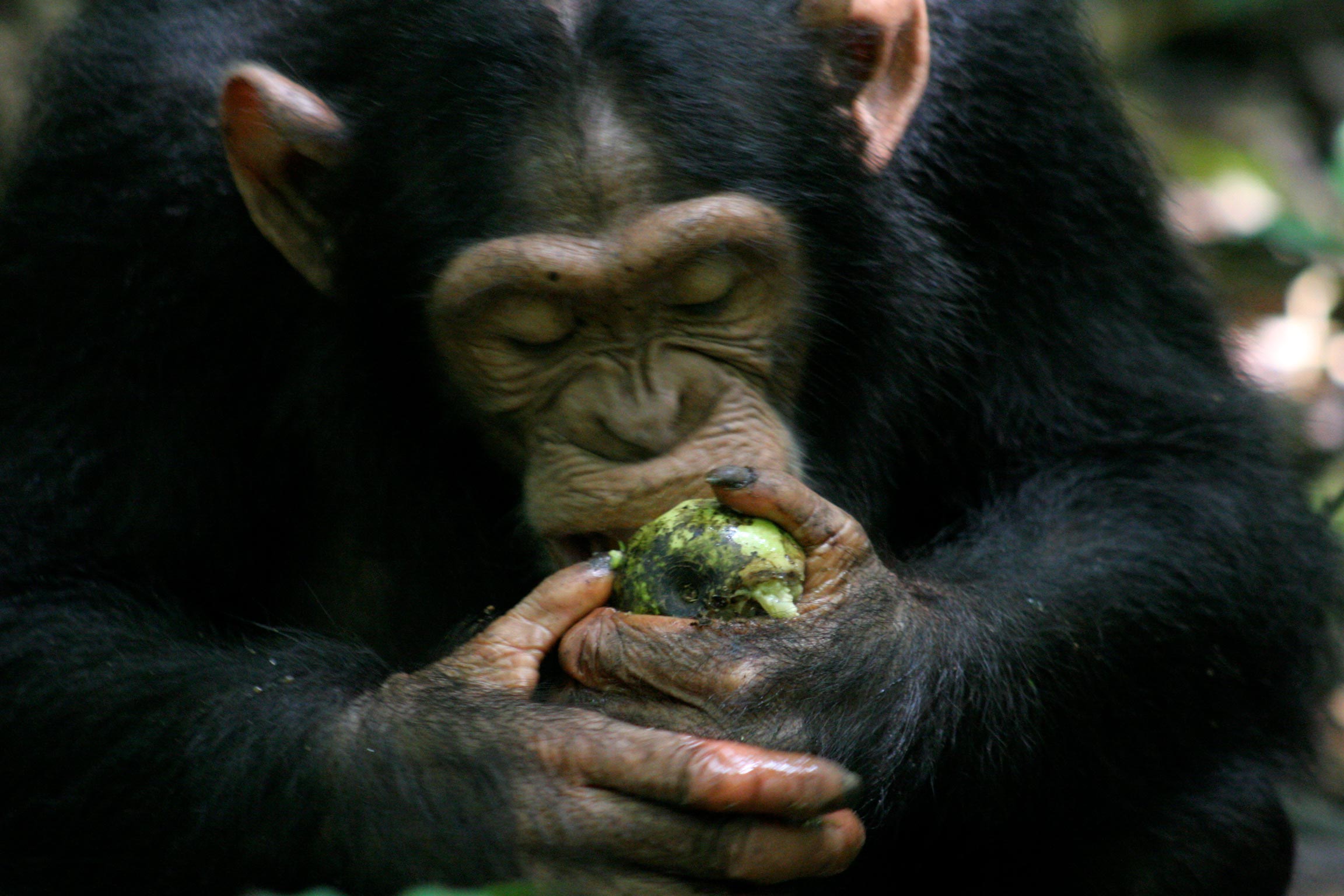
Long before humans brewed their first beer, our primate ancestors may have been getting buzzed on fallen, fermented fruit.
Scientists have coined the term “scrumping” to describe this overlooked behavior, when apes forage for ripe or rotting fruit on the forest floor. This habit could have triggered a genetic shift that allowed early humans to metabolize alcohol far more efficiently than other primates.
Fermented Fruit and the Roots of Alcohol Metabolism
To figure out whether the genes that help humans enjoy a glass of wine or a weekend beer might trace back to apes eating fermented fruit, scientists say the behavior needs a clear name.
A new study from researchers at Dartmouth and the University of St Andrews in Scotland introduces the term “scrumping.” The term describes the tendency of apes to seek out ripe fruit that has fallen to the ground. According to the paper, published in BioScience, this ground-level snacking may be more than just foraging, it could hold important clues about human evolution.
Nathaniel Dominy, an anthropology professor at Dartmouth and one of the study’s lead authors, explains that this behavior has largely gone unnoticed in evolutionary research because scientists haven’t distinguished between fruit eaten in trees and fruit collected from the ground. “We never bothered to differentiate fruits in trees from fruits on the ground,” says Dominy. Co-author Luke Fannin, a postdoctoral researcher at Dartmouth, also contributed to the work.
A Genetic Link to Alcohol Tolerance
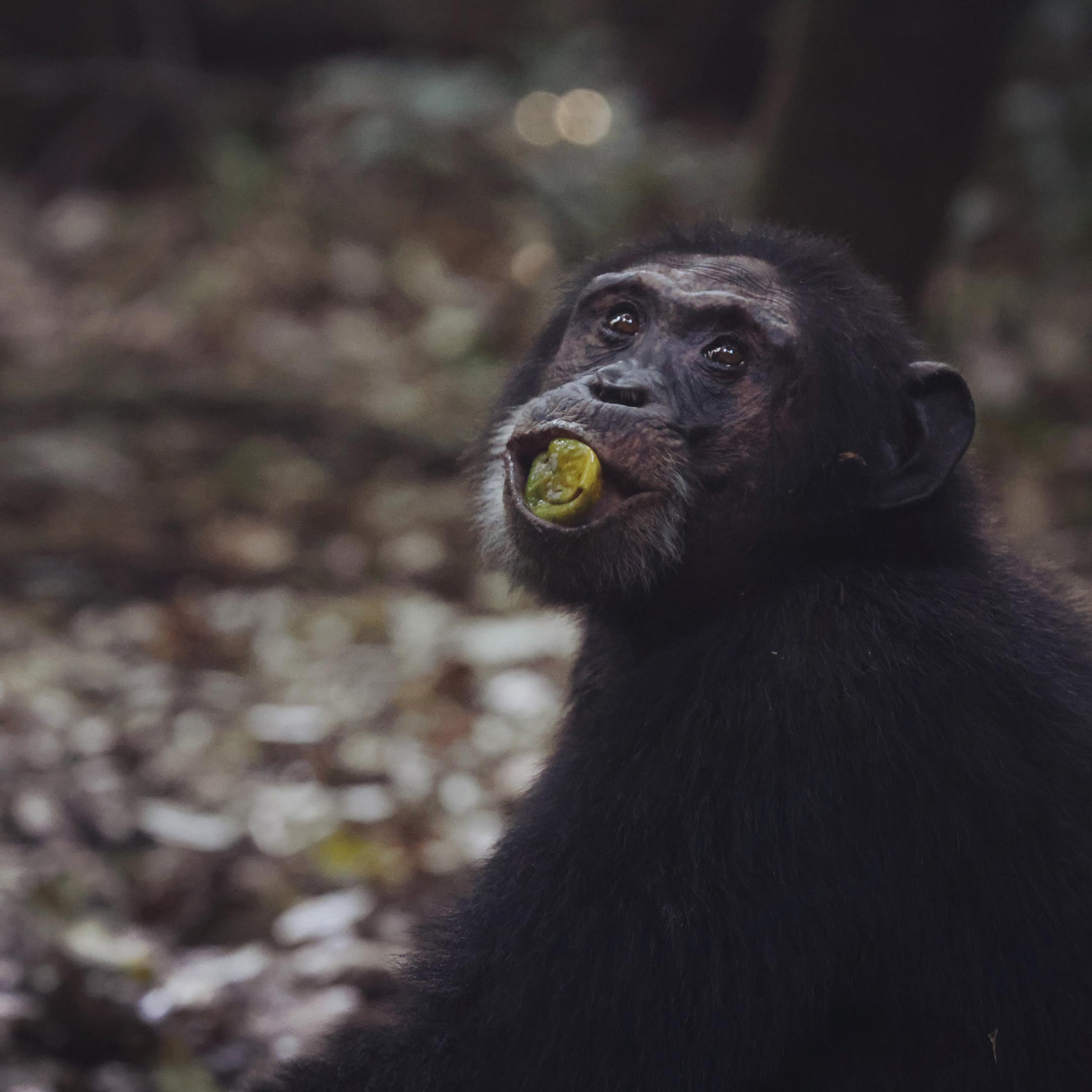
Dominy notes that without a term like scrumping, the behavior just appears to be typical fruit eating. But according to a 2015 genetics study, consuming fermented fruit may have sparked a key mutation in a shared ancestor of humans and African apes. This mutation boosted their ability to process alcohol by as much as 40 times.
“It’s a fascinating idea, but nobody studying these ape species, or Asian apes, had the data to test it. It just wasn’t on our radar,” Dominy says. “It’s not that primatologists have never seen scrumping—they observe it pretty regularly. But the absence of a word for it has disguised its importance. We’re hoping to fill an important void in scientific discourse.”
Origins and Etymology of “Scrumping”
Scrumping, the researchers write, describes the act of gathering—or sometimes stealing— windfallen apples and other fruits. The word is the English form of the medieval German word “schrimpen,” a noun meaning “shriveled” or “shrunken” used to describe overripe or fermented fruit. In England today, scrumpy refers to a cloudy apple cider with an alcohol by volume content that ranges from 6 to 9%.
The researchers set out to better determine how common their new behavior classification is among great apes. They examined dietary reports of orangutans, chimpanzees, and mountain and western gorillas observed in the wild.
Feeding events were cross-referenced with how high off the ground the animal was when it ate, as well as the height at which the fruit grows. If an ape at ground level was recorded eating a fruit known to grow in the middle or upper levels of the forest canopy, it was counted as scrumping.
African Apes Are Regular Scrumpers
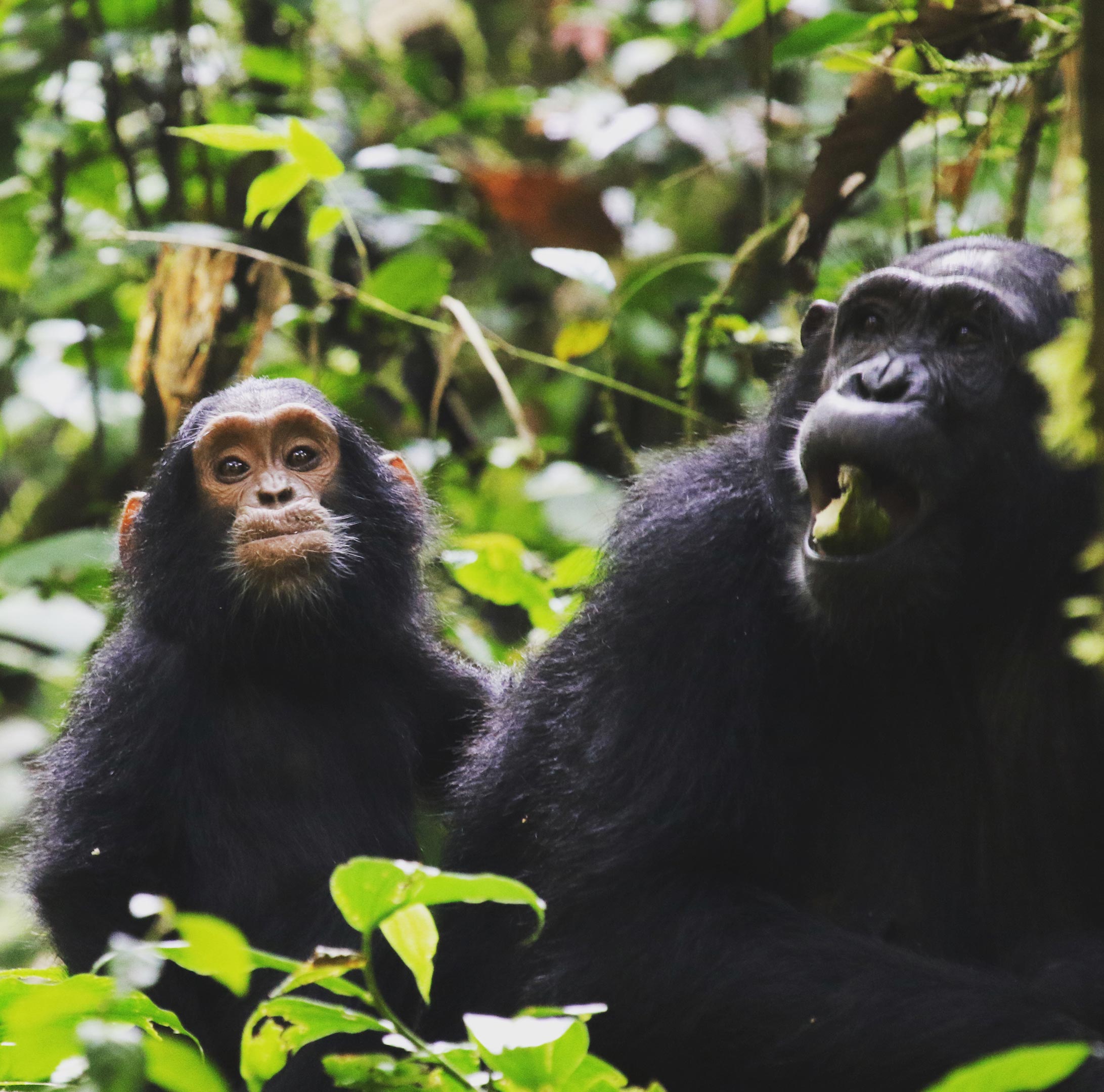
The researchers found that African apes “scrump” on a regular basis, but orangutans do not. These results corroborate the 2015 gene-sequencing study, which found the primary enzyme for metabolizing ethanol is relatively inefficient in orangutans and other non-human primates.
The authors of the BioScience paper propose that metabolizing ethanol may let African apes safely eat the ripe, fermented fruit they find on the ground. This adaptation could free them from competing with monkeys for unripe fruit in trees. It also could spare large apes the risk of climbing and possibly falling out of trees, which a 2023 study by Dominy and Fannin reports is so incredibly dangerous that it influenced human physiology.
Alcohol Consumption in Chimpanzee Diets
Given that chimpanzees consume about 10 pounds of fruit each day, the team’s analysis suggests these animals ingest a non-trivial amount of alcohol, Dominy says. That level of intake suggests that chronic low-level exposure to ethanol may be a significant component of chimpanzee life, and a major force of human evolution.
The next step is measuring levels of fermentation in fruits in the trees versus fruits on the ground to better estimate alcohol consumption in chimpanzees, Dominy says.
Alcohol Metabolism and the Dawn of Agriculture
“Scrumping by the last common ancestor of gorillas, chimpanzees, and humans about 10 million years ago could explain why humans are so astoundingly good at digesting alcohol,” Dominy says. “We evolved to metabolize alcohol long before we ever figured out how to make it, and making it was one of the major drivers of the Neolithic Revolution that turned us from hunter-gatherers into farmers and changed the world.”
The Social Side of Scrumping
Humans might also have retained social aspects that apes bring to scrumping, says Catherine Hobaiter, a professor of psychology and neuroscience at St Andrews and co-corresponding author of the study.
“A fundamental feature of our relationship with alcohol is our tendency to drink together, whether a pint with friends or a large social feast,” Hobaiter says. “The next step is to investigate how shared feeding on fermented fruits might also influence social relationships in other apes.”
The word scrumping will catch on if other scientists see its descriptive value, Dominy says. The paper in BioScience notes other words invented to capture new concepts, such as “symbiosis”—coined in 1877—and the now ubiquitous “meme,” introduced by evolutionary biologist Richard Dawkins in 1976.
“These are great examples of words that we never knew we needed, until we did. If the term is useful, then it will catch on,” Dominy says. “That’s natural selection at work!”
Reference: “Fermented fruits: scrumping, sharing, and the origin of feasting” by Nathaniel J Dominy, Luke D Fannin, Erin R Vogel, Martha M Robbins and Catherine Hobaiter, 31 July 2025, BioScience.
DOI: 10.1093/biosci/biaf102
Never miss a breakthrough: Join the SciTechDaily newsletter.
Follow us on Google and Google News.
4 Comments
Enlightened and I feel Exhilarated.😊👍🏼
This is nothing new. Elephants also love to get buzzed. And, they’re not always happy drunks. They get pissed off with the farmers. The apes get into fisticuffs and start raging on each other.
The origins of football hooliganism, that fruit didn’t fall far from the trees.
Sorry, but scientists did NOT coin the word “scrumping”; they merely re-applied it to a newly observed phenomenon.
“Scrumping” was ( and probably still is) a term that we used 70 years ago to describe the practice of sneaking into gardens to steal apples, either from the tree or on the ground. It may be confined to the Sheffield, UK area or be more widespread. The activity was, however, de rigour when we kids passed a garden with apple trees.
Scrump
verb – dialect, to steal (apples) from an orchard or garden.
Can be traced back to at least 1886 and is in wide use in the UK.