
Close Menu
    Facebook X (Twitter) Instagram
    SciTechDaily
    • Biology
    • Chemistry
    • Earth
    • Health
    • Physics
    • Science
    • Space
    • Technology
    Facebook X (Twitter) Pinterest YouTube RSS
    SciTechDaily
    Home»Biology»Decoding Lifespan: Cornell Study Links Motherly Care to Extended Human Life
    Biology

    Decoding Lifespan: Cornell Study Links Motherly Care to Extended Human Life

    By Cornell UniversityJune 25, 20241 Comment3 Mins Read
    Facebook Twitter Pinterest Telegram LinkedIn WhatsApp Email Reddit
    Share
    Facebook Twitter LinkedIn Pinterest Telegram Email Reddit
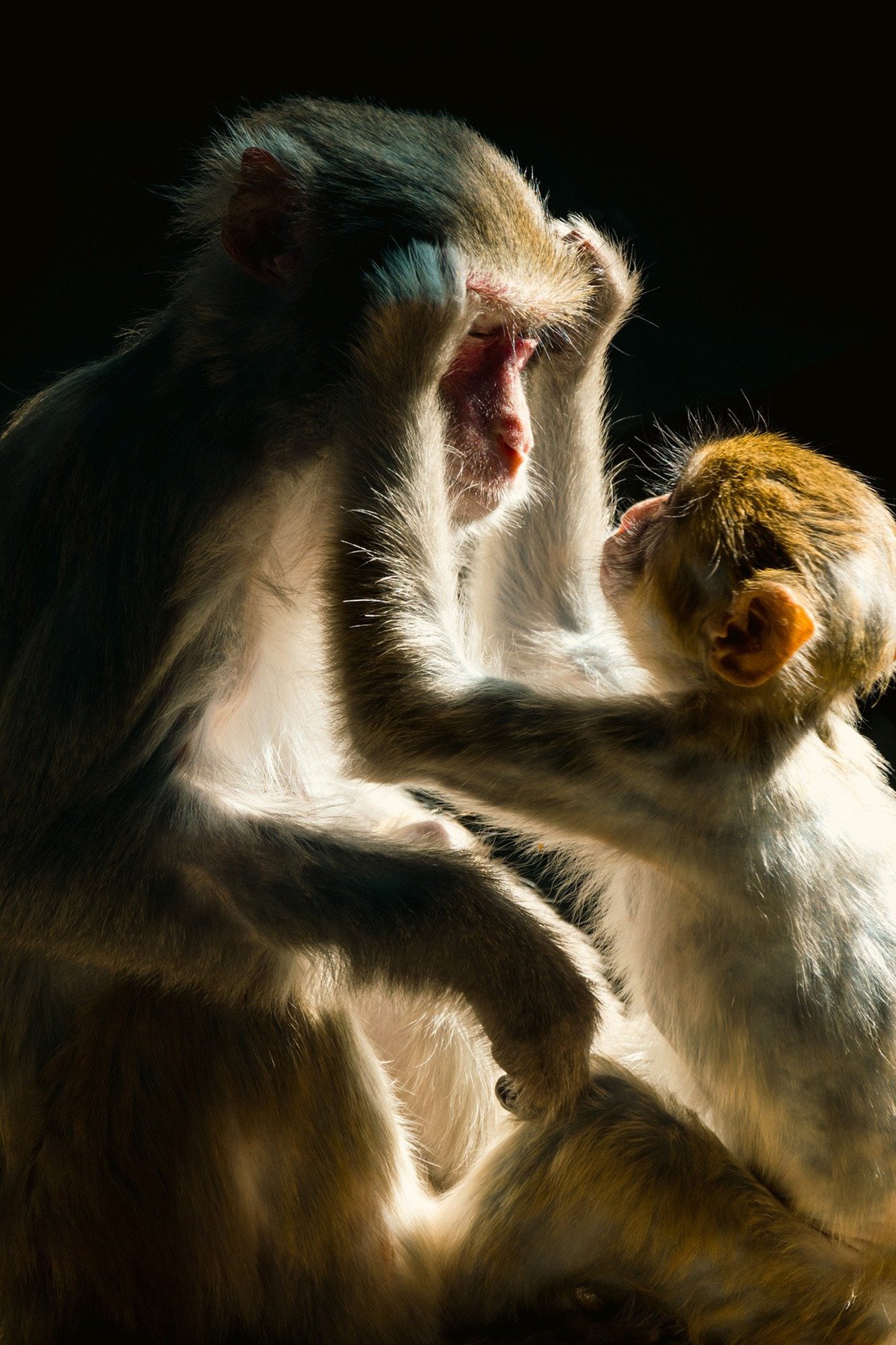
    Monkey Maternal Love
    A Cornell University study explores the role of maternal care in the evolution of long lifespans in humans and other mammals. Research by Matthew Zipple indicates that species where offspring rely on prolonged maternal care tend to live longer and reproduce less frequently. This pattern extends beyond primates to other mammals and supports theories linking longer lifespans to enhanced maternal and grandmother support, providing insights into phenomena such as menopause and intergenerational health.

    Research from Cornell University suggests that prolonged maternal care contributes to longer lifespans and slower reproductive rates in humans and other mammals, supporting theories that explain extended maternal roles and menopause.

    The relationship between mother and child may offer clues to the mystery of why humans live longer than expected for their size – and shed new light on what it means to be human – according to a new Cornell University study.

    “It’s one of the really mysterious things about humans, the fact that we live these super long lives as compared to so many other mammals,” said Matthew Zipple, a Klarman Postdoctoral Fellow in neurobiology and behavior at Cornell University. “What we’re putting forward is that a part of the explanation for our long lifespan is this other foundational aspect of our lives, which is the relationship between the mother and her child.”

    The paper was recently published in the journal Proceedings of the National Academy of Science (PNAS).

    In their models, Zipple and co-authors found consistently that in species where offspring survival depends on the longer-term presence of the mother, the species tends to evolve longer lives and a slower life pace, which is characterized by how long an animal lives and how often it reproduces.

    Broader Implications

    “As we see these links between maternal survival and offspring fitness grow stronger, we see the evolution of animals having longer lives and reproducing less often – the same pattern we see in humans,” Zipple said. “And what’s nice about this model is that it’s general to mammals overall because we know these links exist in other species outside of primates, like hyenas, whales, and elephants.”

    The work builds off the Mother and Grandmother hypothesis, based on observations in 18th- and 19th-century human populations, that offspring are more likely to survive if their mothers and grandmothers are in their lives. This theory has been used primarily as an explanation for menopause in humans, Zipple said – as ceasing reproduction decreases the risk of death and allows older females to focus on grand-offspring care.

    Zipple’s models are both broader and more specific, incorporating more of the ways that a mother’s presence or absence in her offspring’s life impacts its fitness. The team makes predictions, based on results from Zipple’s doctoral research on baboons and other primates, about how offspring fare if a mother dies after weaning but before the offspring’s sexual maturation, which Zipple found leads to short-term and long-term, even intergenerational, negative effects on primate offspring and grand-offspring.

    Reference: “Maternal care leads to the evolution of long, slow lives” by Matthew N. Zipple, H. Kern Reeve and Orca Jimmy Peniston, 14 June 2024, Proceedings of the National Academy of Sciences.
    DOI: 10.1073/pnas.2403491121

    Never miss a breakthrough: Join the SciTechDaily newsletter.
    Follow us on Google and Google News.

    Cornell University Evolution Evolutionary Biology Mammals Monkey Popular Primates
    Share. Facebook Twitter Pinterest LinkedIn Email Reddit

    Related Articles

    Why Bats Can’t Walk: The Evolutionary Lock That Keeps Them Flying

    Does Fruit Really Fuel Brain Growth? New Study Challenges Old Ideas

    The Genetic Blueprint of Flight: New Research Reveals How Mammals Evolved To Glide

    “Downclimbing” – The Hidden Evolutionary Force Behind Human Anatomy

    New Research Unlocks Hidden Secrets of Primate Evolution

    Scientists Discover Surprising Similarities in Stone Tools of Early Humans and Monkeys

    Human Y-Chromosome Has Enough Genes to Stay for Millions of Years

    World’s Smallest Primate Issues High-Frequency Calls Like Bats

    Study Measures Mammalian Growth, Taking 24 Million Years to Go from Mouse to Elephant

    1 Comment

    1. Sahebzamanzaminian90 و 09332197646 on June 27, 2024 3:39 am

      Today is Thursday but in America it is Friday night and I am with my family at midnight and he is better. Our son-in-law, who is older than all of my sister’s husbands, Iraj Sultanpour, whom I explained earlier, completed a pilot course in America and is now about 72 years old, he is old and has diabetes and can hardly walk. I have to help him. I asked you, the administrator of this interesting website, to send me an invitation, but no one answered our phone number. Why?

      Reply
    Leave A Reply Cancel Reply

    • Facebook
    • Twitter
    • Pinterest
    • YouTube

    Don't Miss a Discovery

    Subscribe for the Latest in Science & Tech!

    Trending News

    Artificial Sweeteners May Harm Future Generations, Study Suggests

    Splashdown! NASA Artemis II Returns From Record-Breaking Moon Mission

    What If Consciousness Exists Beyond Your Brain

    Scientists Finally Crack the 100-Million-Year Evolutionary Mystery of Squid and Cuttlefish

    Beyond “Safe Levels”: Study Challenges What We Know About Pesticides and Cancer

    Researchers Have Found a Dietary Compound That Increases Longevity

    Scientists Baffled by Bizarre “Living Fossil” From 275 Million Years Ago

    Your IQ at 23 Could Predict Your Wealth at 27, Study Finds

    Follow SciTechDaily
    • Facebook
    • Twitter
    • YouTube
    • Pinterest
    • Newsletter
    • RSS
    SciTech News
    • Biology News
    • Chemistry News
    • Earth News
    • Health News
    • Physics News
    • Science News
    • Space News
    • Technology News
    Recent Posts
    • 20x Difference: Study Reveals True Source of Airborne Microplastics
    • Scientists Uncover Hidden Force Powering Yellowstone’s Supervolcano
    • This Metal Melts in Your Hand – and Scientists Just Discovered Something Strange
    • Why Losing Too Much Fat Can Be Just As Dangerous as Obesity
    • Beef vs. Chicken: Surprising Results From New Prediabetes Study
    Copyright © 1998 - 2026 SciTechDaily. All Rights Reserved.
    • Science News
    • About
    • Contact
    • Editorial Board
    • Privacy Policy
    • Terms of Use

    Type above and press Enter to search. Press Esc to cancel.