
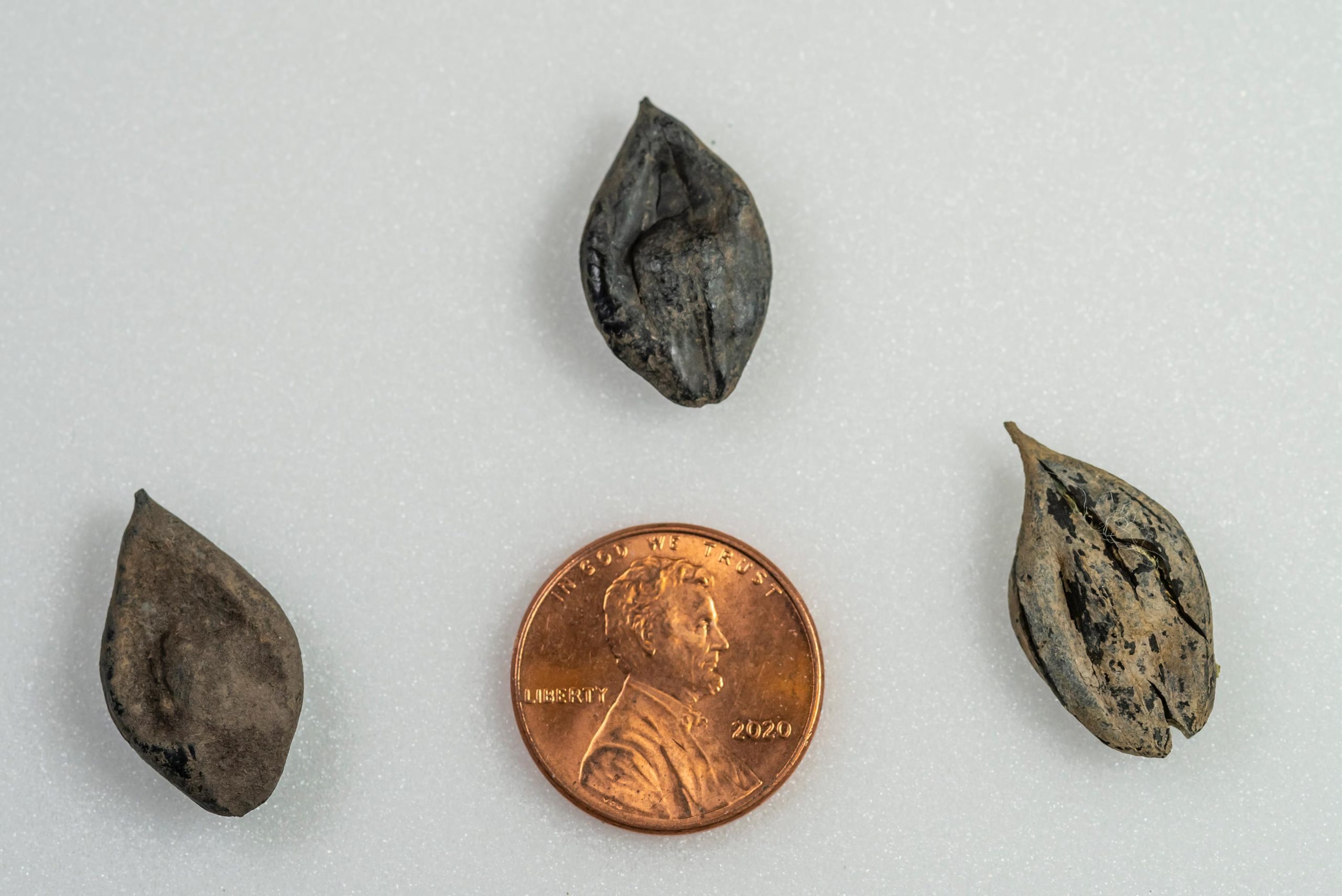
The discovery of extinct walnuts in the Arctic suggests a warmer historical climate with dense forests, extending our knowledge of walnut evolution and geographic spread.
Scientists have discovered three new species of extinct walnuts on an island above the Arctic Circle. The fossils were discovered further north than any known walnut species, living or extinct, and represent some of the oldest-known records of this group.
A Frozen Desert with a Lush Past
Today, the Canadian island of Axel Heiberg is a frozen desert devoid of nearly all life. But 45 million years ago, it supported a lush rainforest on the shores of the Arctic Ocean. Since then, the forest has been buried first beneath layers of sediment, then accumulated ice, leaving it frozen in time.

Remarkable Preservation of Fossil Forest
“When you walk into the site, the first thing you notice are these big stumps, a meter or more in diameter, and they’re still rooted in the soil that they grew in. It’s completely out of place. The closest living trees are 3,000 kilometers away,” said study co-author James Basinger, professor emeritus of geological sciences at the University of Saskatchewan.
The stumps are so conspicuous, they can be spotted from the air. In 1985, staff from the Geological Survey of Canada discovered the Axel Heiberg fossil forest while conducting a survey of the area from a helicopter. A year later, paleobotanists returned to the site and found fossils unlike anything they’d seen before.

“There aren’t really that many places around where you can go to see fossils that are preserved that well,” said Steven Manchester, lead author of the study and curator of paleobotany at the Florida Museum of Natural History.
In most cases, fossilization is characterized by organic matter being replaced with minerals over time. In other cases, organic matter is heated and compressed into coal or burned in forest fires and preserved as charcoal. But this isn’t the case with the Axel Heiberg fossils. The wood, leaves, cones, nuts, and fruit are seemingly unchanged. This unique form of preservation is referred to as mummification, and it only takes place under a very specific and rare set of circumstances.
“Things can be broken down by bacteria and fungi, they can be rumbled along in a riverbed and destroyed; there are lots of ways of losing the material before it becomes fossilized,” Basinger said. But the ancient forests on Axel Heiberg were buried rapidly under swamp and lake sediments. As the global climate cooled, these processes were slowed.
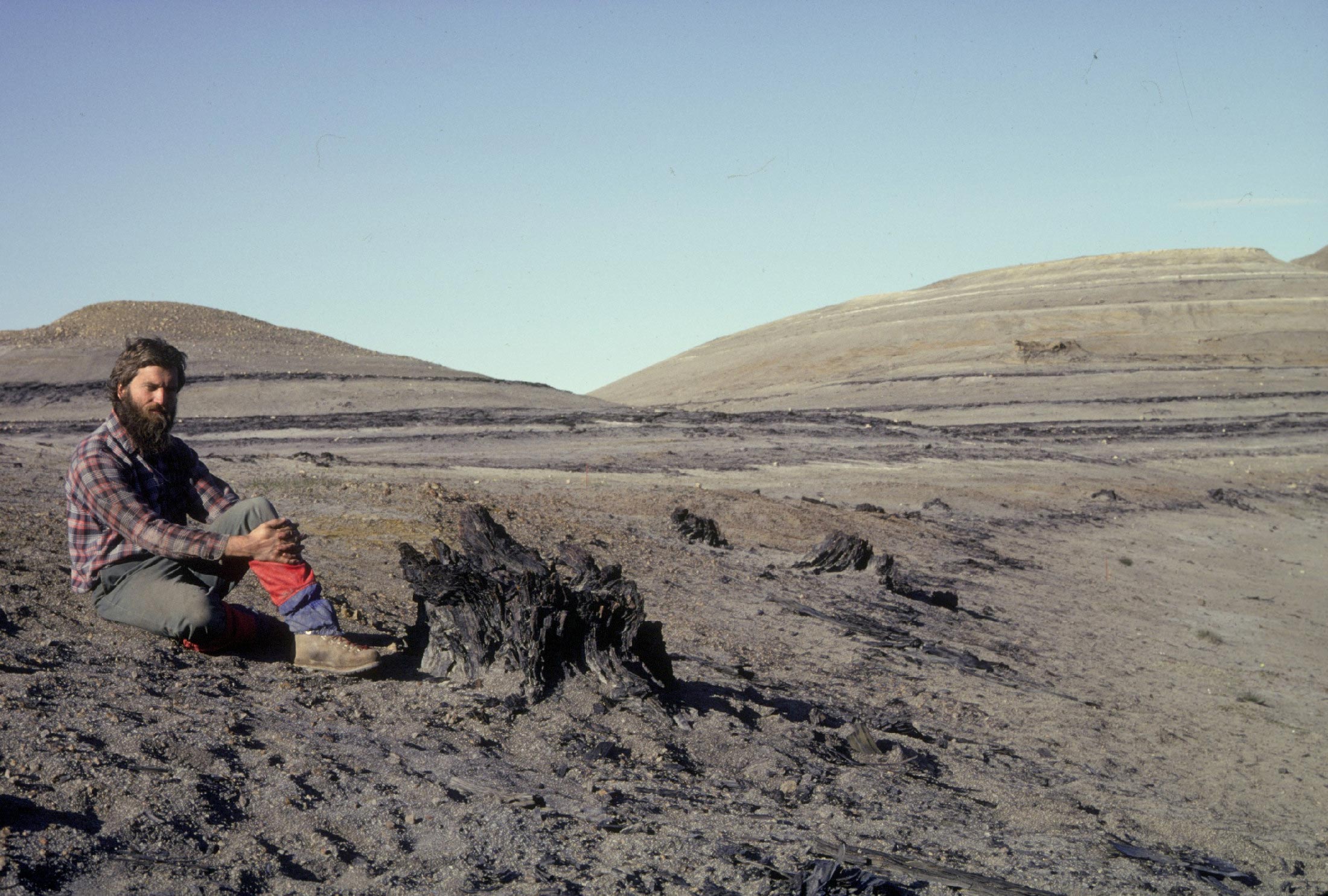
Basinger was among the first researchers to study the forest. The Arctic’s barren surfaces and strong winds made it remarkably easy to collect specimens. “You can see a few fossils on the surface and pick what you can. But you go back next year, when there’s been a little erosion, and there’s a few more on the surface. Over a number of years, you can actually get a large collection,” he said.
The walnuts had been eroded from the soil and were sitting on the surface. “In one case, the walnuts are concentrated at one spot, possibly cached there by animals,” Basinger said. Some of the fossil nuts also have gnawed holes, indicating they were a food source for local animals.
Over fifteen years, Basinger and his colleagues retrieved over a thousand nut and seed fossils and returned them to Saskatchewan to be studied.

Unveiling Earth’s Ancient Climate
If you looked back 45 million years ago to the middle Eocene, the Earth’s poles would be unrecognizable. At the time, Antarctica and the Arctic Circle were warm and blanketed with forests, in stark contrast to the freezing deserts that we associate with the region today.
Due to their high latitude, polar regions had relatively short growing seasons, but they made up for it with exceptionally long summer days, receiving up to twenty hours of sunlight. Inversely, the winters were characterized by near-total darkness, yet temperatures seldom reached freezing.

Paleontology and geology records indicate there was more CO2 in Earth’s atmosphere at the time, which resulted in temperatures that were much higher than they are now. This global greenhouse, in turn, created warm ocean circulations that kept the Arctic Ocean free of ice.
“The far north supported redwood-style forests,” Basinger said. There were cypress swamps and upland forests, where statuesque trees grew up to 40 meters in height. The canopy included dozens of trees, such as redwoods, cedars, hickories, pines, spruces, hemlocks, larches, birches, ginkgos, and, of course, walnuts.

New Insights from Ancient Nuts
As an expert in the evolutionary history of the walnut family, Manchester helped bring the decades-long project to completion. He performed CT scans on walnuts from the island and described three previously unknown species.
“The CT scans allow us to show details of the internal structure of these nuts that were once really hard to get,” Manchester said. Before CT scanners, traditional methods for studying fossils involved tediously dissecting and slicing the specimens in various orientations, destroying them in the process.
After scanning several of the most completely preserved fossils, Manchester compared them to walnuts from both modern and extinct walnut species. National repositories, like iDigBio, allow researchers to easily locate museum specimens stored anywhere in the United States. The fossils didn’t match anything that had yet been discovered and were thus found to represent three new species in the genus Juglans.
Based solely on genetic data from living species, researchers once thought the walnut family originated somewhere in Asia. More recently, however, fossil data indicates they instead first appeared in the warm, moist environments of North America or Europe. As the family diversified, some species adapted to cooler conditions, which allowed them to extend their range into higher latitudes.
The fossils from this study add a clearer picture of how walnuts evolved during periods of intensely shifting climates and where our modern species came from.
Reference: “Arctic Walnuts! Nuts of Juglans (Juglandaceae) from the Middle Eocene of Axel Heiberg Island, Northern Canada” by Steven R. Manchester, Robin Wilson, Yusheng (Chris) Liu and James F. Basinger, 27 June 2024, International Journal of Plant Sciences.
DOI: 10.1086/730541
Never miss a breakthrough: Join the SciTechDaily newsletter.
Follow us on Google and Google News.
13 Comments
Amazing, walnut remains older than the event they were created in! Man says 45M years old. What if man is wrong? After all, these nuts did not exist until God planted them in Eden before he created man. How did they survive the world wide flood? The whole earth was covered thousands of feet deep in flood rapid deposed sediments. And these survived?
@SamuelBess really hoping what you just said is satire.
The worldwide flood explains how they were exquisitely preserved, and also explains the catastrophic weather events, though many refuse to acknowledge it.
No one has remarked yet how these discoveries cut against the current “Climate Hysteria”. If the Planet`s climate was so radically different 45 Million Years ago and turned into the climate conditions we think are “Normal” now–How do we not see that Climate is a dynamic process that is ever changing. It does not indicate the eventual destruction of life on earth. The 3 Walnut species that died during the change in the climate during the last 45 Million Years has lead to numerous new species of Walnuts alive today. Man’s climate records of the last 200 years represents only a few seconds in the Earth’s geological time.
My thoughts exactly, except the part about “how do we.” I, personally, have known the climate to be a dynamic process all of my life and I am 38. I have watched most people lose their minds trying to support the idea that humans have disrupted a utopic climate that was never changing until we came along. I have watched them be baited into consent for anything that makes them feel like they are on “the right side of history,” so taking a stand against the evil climate change deniers. I have myself been accused of being a climate change denier, when in all reality I’ve known and embraced that climate isn’t stable because of many input variables beyond human control. Climates change, period. The real “climate change deniers” are people who run around acting like humans have caused the climate to change instead of learning basic information that tells them climates are always changing because climates are always in long flux per conditions and circumstances. Sometimes the earth is a total snowball, and sometimes the earth is a total jungle, and right now we are between the two with ice caps that are melting instead of growing. Water vapor is the strongest greenhouse gas, but nobody ever talks about how ocean evaporation from sunlight and radiant heat contribute more greenhouse effect than all humans combined 10 fold. They can’t talk about that, because humans can’t blame and berate eaxh other to control each other when greenhouse effects are the suns fault. Because climate change hysteria was designed to trick people into submission as some weird psychological tactic, for some gain that nobody can figure out other than destablization. It’s a religion to blame humans for climate changing, to control them. That seems to be the point. So, power down your electronics, stop driving your car, stop eating meat, and donate your savings to good climate saving causes because if you don’t then you are a human-caused-climate-change denier that should be ashamed of yourself for not doing your part to save us from the paper tiger.
It’s never changed this quickly in the geologic record, and it’s a fact that’s it’s due to increased atmospheric carbon caused by fossil fuel combustion. We won’t kill Earth- we will kill ourselves. Earth will heal after we are gone.
My brother has petrified walnut complete in shell .Found in louisiana,USA. Also many other fossils along with baliaaures whale vertebra sharks teeth. Extensive collection he’d like have someone come look at if possible.
Something for the Pollyannas to berate us dumb Cassandras over. But one way OR the other every civilization has collapsed usually via climate change. You have exponential growth, human or streptococci multiply to a tipping point where the national carrying capacity fails and suddenly it is dog eat dog and our collective systems of co-operation and food production, distribution and defence fall over to be replaced by the usual armies of the night. Huns, Mongols, Aztecs, Sea People, Mormons, Jews, Muslims with their hard and jealous gods on their shoulder sweep over the weakened scraelings, infidels, wogs, savages. A penis is a sperm delivery vehicle AND a removal tool, don’t forget it girls when resistance looks futile and God looks the other way. You can bear arms and choose the same way out as the boys.
Very interesting and thank you very much fir this article!
I believe in the cycle of life and have witnessed the changing of our planet¡keep up the great work and know telling what the future holds,merci and thank you again!
R.A.LaPierre.
These should be Carbon 14 dated because they contain carbon 12, at least. After 45 million years, the Carbon 14 should be 100% absent. This would be an astounding find. However, Carbon 14 could be found in these samples at the same ratio as mammoths. If they did, what would it mean? It would mean they are less than 50,000 years old, not 45 million.
This test should be common sense to take but is not in any secular peer review paper as the results from such a test. SILENCE IS AN ANSWER. This means the result would show we are a young creation and not enough time has transpired for evolution to work. In fact, adaptations to changed environments are epigenome-derived., not evolution-derived.
As a side bar, dinosaur collagen has been Carbon 14 dated and the results show the ratio for 14C is at the same ratio as mammoth. Golly gee. Who lived with mammoths? Humans. This means humans and dinosaurs coexisted. Please, no begging the question refutations.
1. Dinosaurs are a hoax.
2. If they were real, all that remains is stone (mineral replacement of organic material. So it would definitely not be possible to apply carbon dating.
3. God exists and created everything regardless of timescale. The people who knitted the bible together did so leaving certain things out, for a reason.
Fortunately they told you, so you alone know… 🙂
my understanding and what I have read is these trees are not fossilized but mummified and can be burned. I remember reading a national geographic article about these trees. There was a picture of a scientist laying next to the trunk of a redwood. Not petrified but frozen in the permafrost.
These trees fit the Biblical creation model so much better. than millions of years. They would have never survived as they have.
Gen 1:7 And God made the firmament, and divided the waters which were under the firmament from the waters which were above the firmament: and it was so.
Gen 1:8 And God called the firmament Heaven. And the evening and the morning were the second day.
Meaning there was a layer of water in the sky holding in all the heat creating a greenhouse effect creating increasing the atmospheric pressure and making the polar regions lush green .
During the flood this layer/firmament was destroyed and any greenhouse effect was gone as was the heat at the poles which immediately quick froze capturing and preserving the vegetive record during the one and only ice age.