
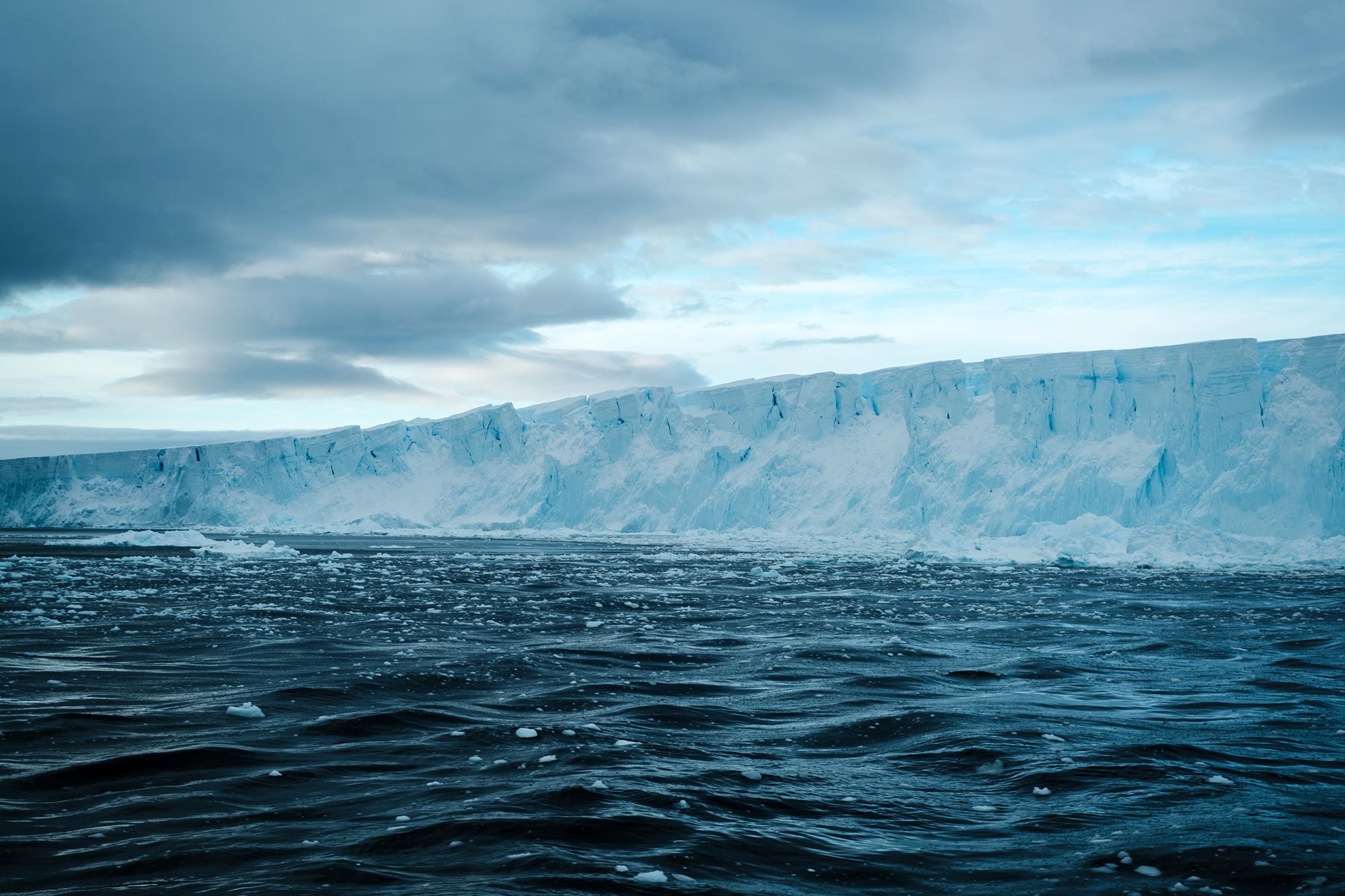
Scientists have discovered a colossal hidden structure beneath Antarctica that could reshape our understanding of the continent’s past and present.
Scientists have identified a massive hidden geological formation beneath East Antarctica, revealing a continent-scale structure buried under some of the thickest ice on Earth.
The discovery was made by an international team of researchers that included scientists from the University of Cambridge’s Department of Geography. Their findings show that several well-known subglacial basins are actually connected as part of a single enormous system.
Giant Basin System Hidden Beneath Antarctic Ice
The newly identified feature consists of a network of huge basins concealed beneath the East Antarctic Ice Sheet, where ice exceeds three kilometers (about two miles) in thickness in some locations.
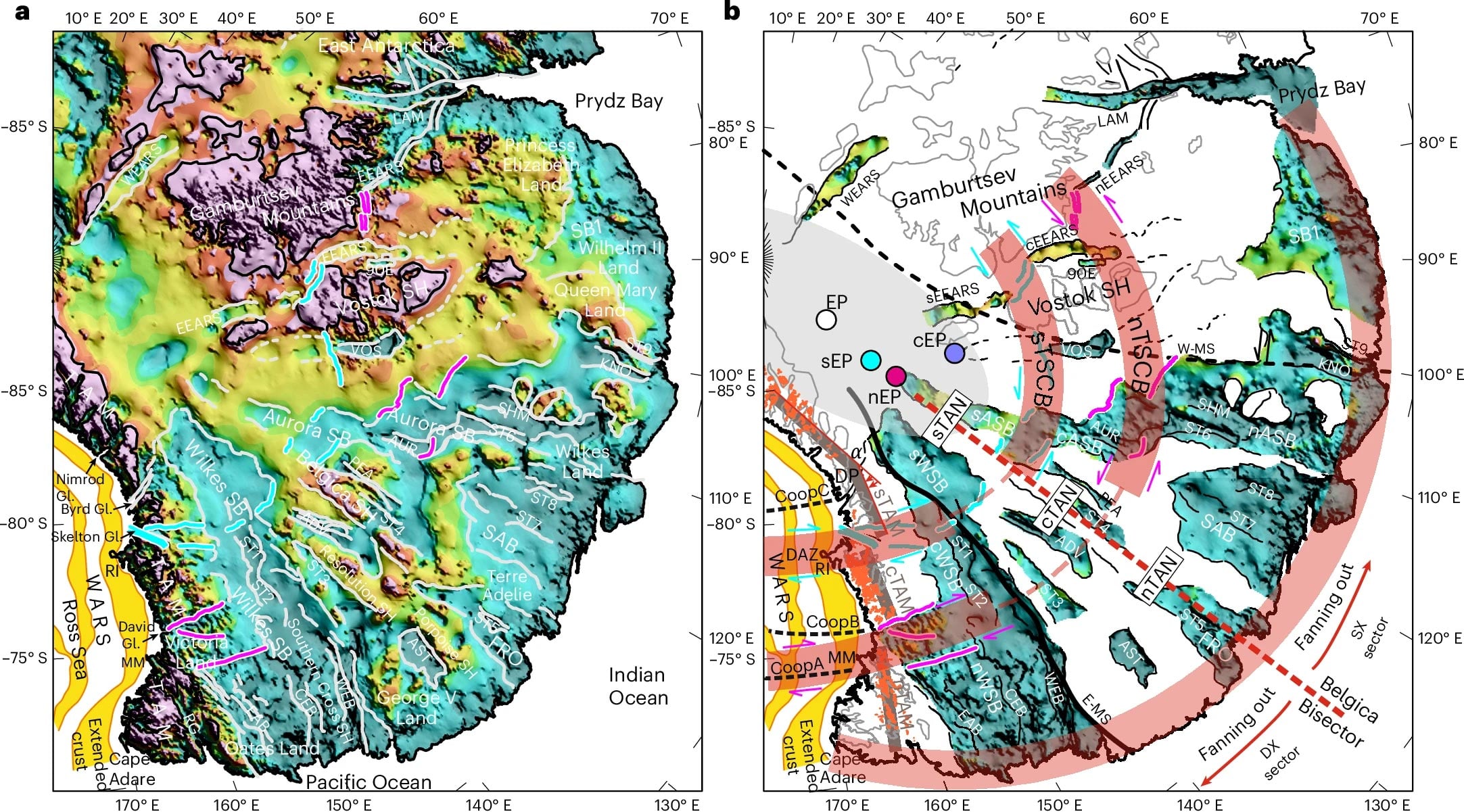
Taken together, these basins form a vast fan-shaped pattern stretching across a large portion of the continent. Researchers have named the formation the East Antarctic Fan-shaped Basin Province.
The province includes several of Antarctica’s most famous hidden features, including the Wilkes Basin, the Aurora Basin, and the basin that contains Lake Vostok, the largest known subglacial lake on Earth.
Although scientists have studied these basins individually for many years, this is the first time they have been recognized as parts of a single connected geological structure.
Clues to an Ancient Tectonic Process
The research suggests the formation developed through a mechanism known as distributed rotational extension.
In this process, continental crust stretches outward from a central location. The researchers compare the pattern to a hand. The base of the thumb remains relatively fixed while the fingers spread apart. The spaces that open between the fingers resemble the triangular basins that formed as the crust expanded.
According to the team, the East Antarctic Fan-shaped Basin Province may represent one of the largest examples of rotational extension ever identified within continental crust.
A Window Into Antarctica’s Geological Past
Scientists believe the structure formed through multiple tectonic episodes associated with the evolution of Gondwana, the ancient supercontinent that once united Antarctica with several other landmasses.
The feature may also be linked to the later separation of Antarctica and Australia, and researchers suggest it could even have influenced that breakup.
The discovery raises several important questions, including exactly when the structure formed and what geological forces drove its development.
Beyond helping scientists reconstruct Antarctica’s distant past, the finding could also have modern-day implications.
The shape of the bedrock beneath the ice sheet still affects how ice moves across the continent. It also influences the locations of subglacial lakes and basins. As a result, the hidden landscape may play a role in the stability of parts of the Antarctic Ice Sheet that are particularly vulnerable to climate change.
Reconstructing Antarctica Without Ice
To investigate the newly recognized structure, the researchers combined multiple types of evidence, including subglacial topography, geological observations, gravity measurements, magnetic data, seismic information, and models of the crust and lithosphere.
Their analysis indicates that the fan-shaped basin system is the surface expression of deep tectonic processes that occurred within Antarctica’s lithosphere.
Dr. Guy Paxman of the University of Cambridge’s Department of Geography was a member of the research team. He led efforts to model what East Antarctica’s landscape would look like if its ice sheet were to disappear entirely.
Removing the ice would allow the land beneath to rebound upward by as much as one kilometer. Researchers used this reconstructed “rebounded topography” to examine the elevation and orientation of the newly identified structure.
Reference: “A fan-shaped subglacial basin province in East Antarctica formed by rotational extension” by Egidio Armadillo, Daniele Rizzello, Pietro Balbi, Alessandro Ghirotto, Davide Scafidi, Guy J. G. Paxman, Andrea Zunino, Fausto Ferraccioli, Laura Crispini, Andreas Läufer, Frank Lisker, Antonia Ruppel, Danilo Morelli and Martin Siegert, 3 June 2026, Nature Geoscience.
DOI: 10.1038/s41561-026-01991-6
The study was led by Dr. Egidio Armadillo of the University of Genoa and was supported by the Italian National Antarctic Research Program.
Never miss a breakthrough: Join the SciTechDaily newsletter.
Follow us on Google and Google News.
2 Comments
Buna ziua