
Close Menu
    Facebook X (Twitter) Instagram
    SciTechDaily
    • Biology
    • Chemistry
    • Earth
    • Health
    • Physics
    • Science
    • Space
    • Technology
    Facebook X (Twitter) Pinterest YouTube RSS
    SciTechDaily
    Home»Earth»Micrometeorites: More Than 5,000 Tons of Extraterrestrial Dust Falls to Earth Each Year
    Earth

    Micrometeorites: More Than 5,000 Tons of Extraterrestrial Dust Falls to Earth Each Year

    By CNRSApril 14, 20211 Comment3 Mins Read
    Facebook Twitter Pinterest Telegram LinkedIn WhatsApp Email Reddit
    Share
    Facebook Twitter LinkedIn Pinterest Telegram Email Reddit
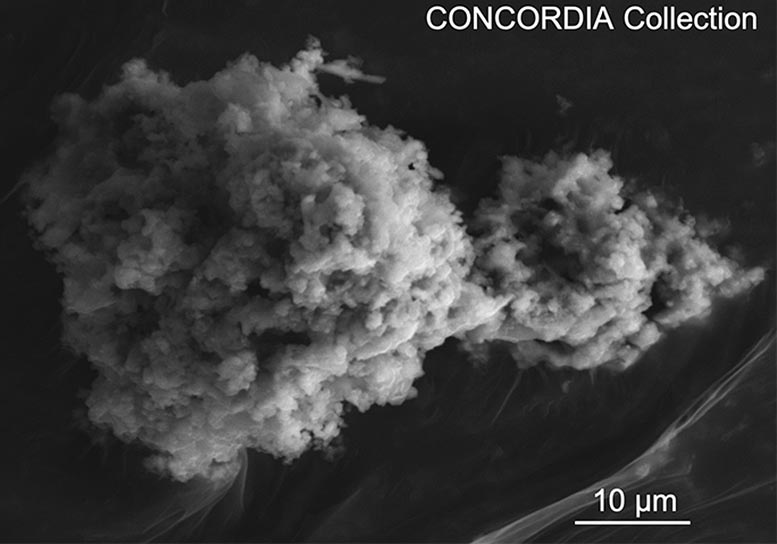
    Concordia Micrometeorite Extracted From Antarctic Snow at Dome C
    Electron micrograph of a Concordia micrometeorite extracted from Antarctic snow at Dome C. Credit: © Cécile Engrand/Jean Duprat

    Researchers estimate that 5,200 tons of micrometeorites fall to Earth annually, based on 20 years of Antarctic collection. Most of this space dust comes from comets and could have played a role in bringing water and organics to early Earth.

    Every year, our planet encounters dust from comets and asteroids. These interplanetary dust particles pass through our atmosphere and give rise to shooting stars. Some of them reach the ground in the form of micrometeorites. An international program conducted for nearly 20 years by scientists from the CNRS, the Université Paris-Saclay, and the National Museum of Natural History with the support of the French Polar Institute, has determined that 5,200 tons per year of these micrometeorites reach the ground. The study was published in the journal Earth & Planetary Science Letters on April 15, 2021.

    Micrometeorites have always fallen on our planet. These interplanetary dust particles from comets or asteroids are particles of a few tenths to hundredths of a millimeter that have passed through the atmosphere and reached the Earth’s surface.

    To collect and analyze these micrometeorites, six expeditions led by CNRS researcher Jean Duprat have taken place over the last two decades near the Franco-Italian Concordia station (Dome C), which is located 1,100 kilometers off the coast of Adélie Land, in the heart of Antarctica. Dome C is an ideal collection spot due to the low accumulation rate of snow and the near absence of terrestrial dust.

    Collecting Micrometeorites in Central Antarctic Regions
    Collecting micrometeorites in the central Antarctic regions, at Dome C in 2002. Snow sampling. Credit: © Jean Duprat/ Cécile Engrand/ CNRS Photothèque

    These expeditions have collected enough extraterrestrial particles (ranging from 30 to 200 micrometers in size), to measure their annual flux, which corresponds to the mass accreted on Earth per square meter per year.

    If these results are applied to the whole planet, the total annual flux of micrometeorites represents 5,200 tons per year. This is the main source of extraterrestrial matter on our planet, far ahead of larger objects such as meteorites, for which the flux is less than ten tons per year.

    A comparison of the flux of micrometeorites with theoretical predictions confirms that most micrometeorites probably come from comets (80%) and the rest from asteroids.

    This is valuable information to better understand the role played by these interplanetary dust particles in supplying water and carbonaceous molecules on the young Earth.

    Reference: “The micrometeorite flux at Dome C (Antarctica), monitoring the accretion of extraterrestrial dust on Earth” by J. Rojas, J. Duprat, C. Engrand, E. Dartois, L. Delauche, M. Godard, M. Gounelle, J. D. Carrillo-Sánchez, P. Pokorný and J. M. C. Plane, 10 February 2021, Earth & Planetary Science Letters.
    DOI: 10.1016/j.epsl.2021.116794

    Never miss a breakthrough: Join the SciTechDaily newsletter.
    Follow us on Google and Google News.

    Antarctica Astrophysics CNRS Geology Meteorites Popular
    Share. Facebook Twitter Pinterest LinkedIn Email Reddit

    Related Articles

    Uncovering the Past: The Most Detailed Look Yet at Earth’s Climatic History

    New Research Flips Our Understanding of Ice Age Frequency

    As Many as 300,000 Meteorites Await Discovery in Antarctica

    Balkanatolia: Forgotten Continent Discovered by Team of Paleontologists and Geologists

    Spectacular Ice Age Landscapes Beneath the North Sea Revealed by 3D Seismic “MRI” Scans

    Solar Wind From the Center of the Earth: Solar Noble Gases in Metal of an Iron Meteorite

    The Craters on Earth: New Atlas Presents and Explains the Impact Sites of Meteorites and Asteroids Worldwide

    Largest Extraterrestrial Diamonds Ever Discovered: Cosmic Diamonds Formed During Gigantic Planetary Collisions

    Researchers Probe Materials at Extreme Deep-Earth Conditions to Decipher Earth’s Evolutionary Tale

    1 Comment

    1. xABBAAA on April 15, 2021 10:30 am

      … how about some things that we don’t know about,…
      … It is bit like the Vikings gone from the Greenland…

      Reply
    Leave A Reply Cancel Reply

    • Facebook
    • Twitter
    • Pinterest
    • YouTube

    Don't Miss a Discovery

    Subscribe for the Latest in Science & Tech!

    Trending News

    Scientists Warn That This Common Pet Fish Can Wreck Entire Ecosystems

    Scientists Make Breakthrough in Turning Plastic Trash Into Clean Fuel Using Sunlight

    This Popular Supplement May Interfere With Cancer Treatment, Scientists Warn

    Scientists Finally Solved One of Water’s Biggest Mysteries

    Could This New Weight-Loss Pill Disrupt the Entire Market? Here’s What You Should Know About Orforglipron

    Earth’s Crust Is Tearing Open in Africa, and It Could Form a New Ocean

    Breakthrough Bowel Cancer Trial Leaves Patients Cancer-Free for Nearly 3 Years

    Natural Compound Shows Powerful Potential Against Rheumatoid Arthritis

    Follow SciTechDaily
    • Facebook
    • Twitter
    • YouTube
    • Pinterest
    • Newsletter
    • RSS
    SciTech News
    • Biology News
    • Chemistry News
    • Earth News
    • Health News
    • Physics News
    • Science News
    • Space News
    • Technology News
    Recent Posts
    • Ancient Roman Ship Coating Reveals Secrets Hidden for 2,200 Years
    • Enormous Prehistoric Insects Puzzle Scientists
    • College Student Identifies Bizarre New Carnivorous Dinosaur Three Times Older Than T. rex
    • The Most Effective Knee Arthritis Treatments Aren’t What You Expect
    • Scientists Develop Bioengineered Chewing Gum That Could Help Fight Oral Cancer
    Copyright © 1998 - 2026 SciTechDaily. All Rights Reserved.
    • Science News
    • About
    • Contact
    • Editorial Board
    • Privacy Policy
    • Terms of Use

    Type above and press Enter to search. Press Esc to cancel.