

La Brea Tar Pits scientists have successfully identified a previously unknown species to Southern California through fossilized seeds. This discovery sheds light on a drought-driven dance between two species of juniper, offering valuable insights into the region’s climate future.
Scientists at the La Brea Tar Pits have identified a previously unknown juniper species in the area, Juniperus scopulorum, commonly known as the Rocky Mountain juniper. This discovery, combined with the first-ever radiocarbon dating of fossilized plants from Southern California, provides critical insights into past environmental changes and underscores the vulnerability of junipers and the ecosystems they shape in the face of modern climate change.
The findings, published in the journal New Phytologist, shed light on the megafaunal extinction at the Tar Pits while offering a deeper understanding of our planet’s climate history and potential future.
During the Ice Age, Los Angeles was home to iconic megafauna like mammoths and saber-toothed cats, which thrived in juniper woodlands. These junipers were more than a food source for giant herbivores; they were keystone species that helped define the landscape. For at least 47,000 years, they shaped the region’s ecosystems before disappearing entirely during the same extinction event that wiped out much of the megafauna.
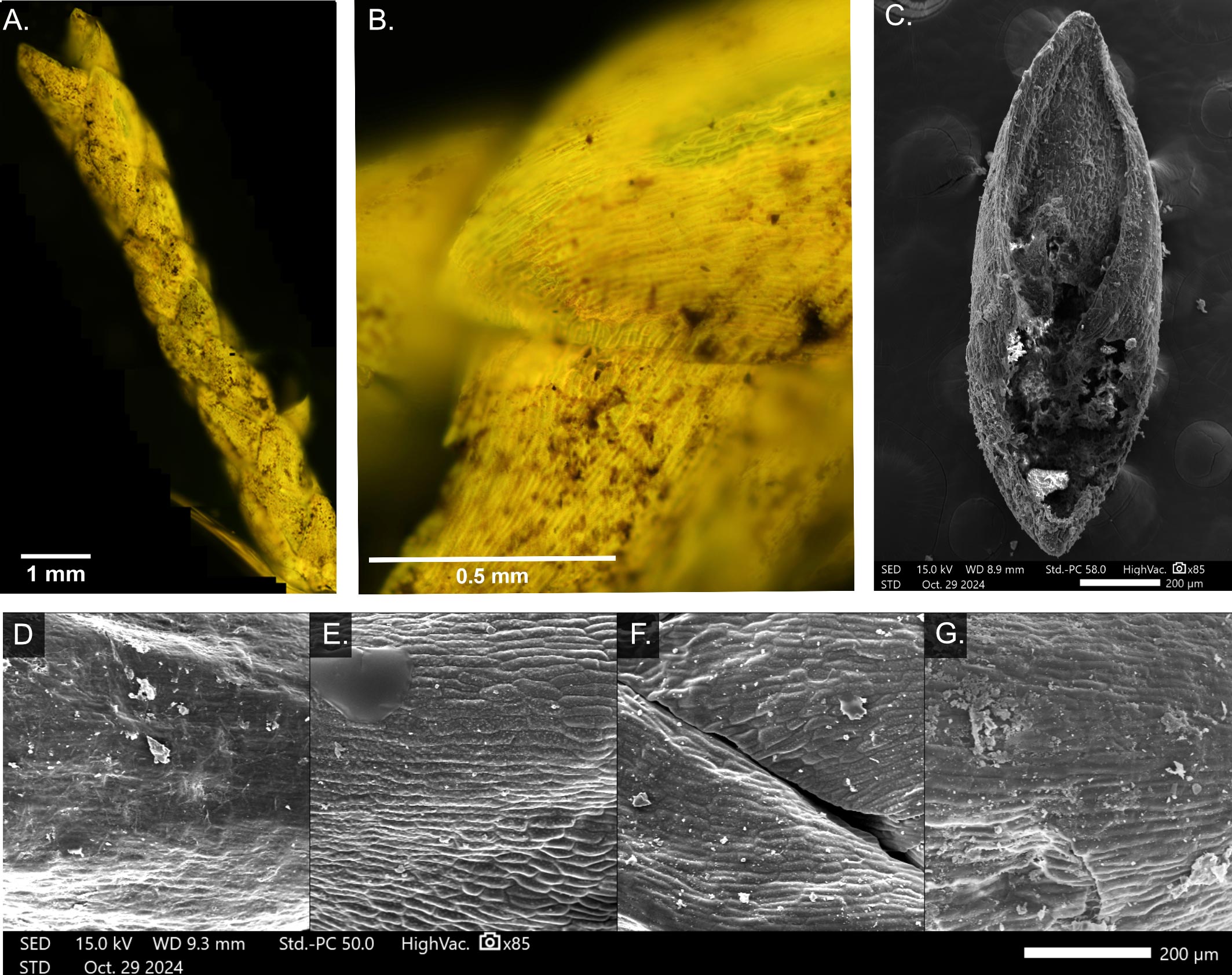
Researchers have long known that there are two different species of juniper found at the Tar Pits—the large-seeded J. californica (California juniper), and the small-seeded, mystery juniper. With distinct tolerances for temperature and drought, fossil junipers play a crucial role in understanding the changing climate of the last Ice Age, and how junipers can survive our climate future, but the identity of the mystery seed remained uncertain—until now.
Identifying the Mystery Juniper
“We set out to identify this mystery juniper, and in the process, we found a number of exciting things,” says Dr. Jessie George, a postdoctoral researcher at La Brea Tar Pits, and lead author on the study. “Number one, we identified this juniper as Rocky Mountain juniper, and it is one of the most extreme examples of a plant going extinct locally. It’s not present anywhere in California today.”
As part of the study, George and the other Tar Pits researchers radiocarbon-dated the two species of juniper, which led to the second exciting finding: “In the process of radiocarbon dating these juniper species, we found this really interesting pattern of reciprocal presence—either California juniper only or Rocky Mountain juniper only.”

Because each plant survives in specific conditions, its presence acts as a proxy for climate. George and her colleagues found that this dance between the two junipers coincided with long periods of drought and warm, dry weather that would otherwise be hidden in the fossil record. “California juniper is a much more drought tolerant species. It withstands moisture deficit way better than Rocky Mountain juniper,” says George. “Through these back-and-forth occurrences of the two species from the Tar Pits, we have this really fascinating record of aridity and drought that was previously undetected.”
Challenges in Identification
The small size of the unknown juniper seed—about as big as Lincoln’s forehead on a penny—made it a difficult subject, especially since DNA has yet to be extracted from Tar Pits fossils. Instead, George compared the structure of seeds and branchlets to other juniper species—the only way to uncover its identity. It required careful comparison using advanced microscopy, image analysis, and species distribution modeling (SDM) until the team reached a definitive answer.
While climate definitely played an important role in their local extinction, the team thinks that the abrupt disappearance of Ice Age megafauna and fires started by humans may have also contributed, much like in the case of those iconic giant mammals. In a hotter, drier climate, even plants well-adapted to drought couldn’t survive the extra stress of human fires. This is especially true for plants that are not adapted to wildfire–unlike many other conifer species, juniper has little tolerance for surviving or re-growing following fires. The finding highlights the threat junipers continue to face from human-caused climate change and could inform conservation efforts going forward.
“We’re seeing events of really dramatic decline of these trees in the southwest today because of warming temperatures and increased wildfire caused by modern climate change. So a direct record of how this might have occurred in the past, what factors were at play, and where those boundaries occurred is incredibly important,” says George. “It gives us a better framework to understand a baseline of climate and environment to contextualize changes in other plant life and the fauna that we see during these periods of significant change in the past. As our ability to precisely date fossils improves, better and more detailed information is revealed from ancient life at La Brea.”
Reference: “Identification of fossil juniper seeds from Rancho La Brea (California, USA): drought and extirpation in the Late Pleistocene” by Jessie George, Monica Dimson, Regan E. Dunn, Emily L. Lindsey, Aisling B. Farrell, Brenda Paola Aguilar and Glen M. MacDonald, 10 December 2024, New Phytologist.
DOI: 10.1111/nph.20324
Never miss a breakthrough: Join the SciTechDaily newsletter.
Follow us on Google and Google News.
4 Comments
Very interesting.
They do understand how fossils are actually formed right? How many assumptions are made for carbon dating? Hhmm?
47k, when the earth is only about 8-10k old? AMAZING! How can those seeds be older than the heavens and the earth which God created so few years ago? You can read the entire creation story in the first 11 chapters of the Bible. The creation, the fall of man, the promisd Redeemer, plate tectonics, the flood, the whole TRUE story of how we got here.story.
So climate change has been going for thousands to millions of years. Remind me again how climate change is our fault. The more we learn about our past the more it sounds like the present.
Must have been a lot of flatulence going on back then.