
Close Menu
    Facebook X (Twitter) Instagram
    SciTechDaily
    • Biology
    • Chemistry
    • Earth
    • Health
    • Physics
    • Science
    • Space
    • Technology
    Facebook X (Twitter) Pinterest YouTube RSS
    SciTechDaily
    Home»Science»Giant Oligocene Kairuku Penguins Stood Nearly Five Feet Tall
    Science

    Giant Oligocene Kairuku Penguins Stood Nearly Five Feet Tall

    By SciTechDailyMarch 5, 2012No Comments2 Mins Read
    Facebook Twitter Pinterest Telegram LinkedIn WhatsApp Email Reddit
    Share
    Facebook Twitter LinkedIn Pinterest Telegram Email Reddit
    kairuku-penguin-diving
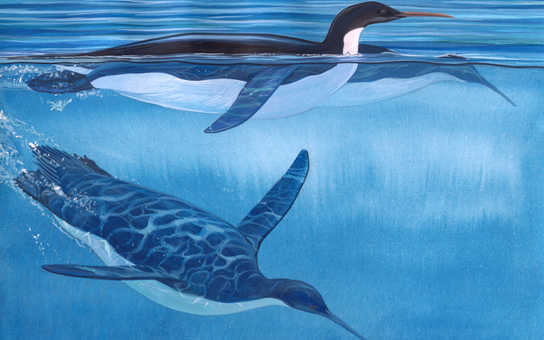
    Kairuku penguin illustration

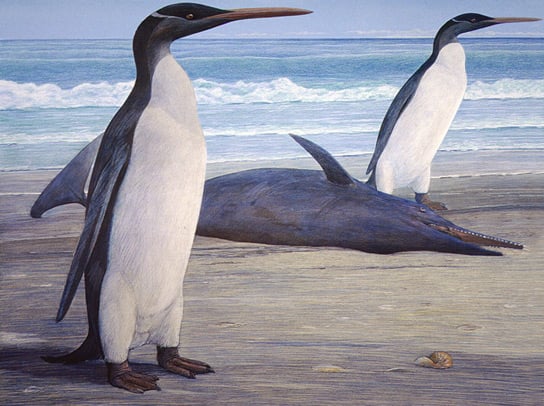
    Paleontologists have reconstructed a model of the Kairuku penguin that stood almost 4 feet 6 inches (1.46 meters) in height in what’s now New Zealand. The Kairuku penguin lived approximately 25 million years ago, in the Oligocene epoch, in the Chattian age.

    The Oligocene is often viewed by paleontologists as a time of transition, between the archaic world of the tropical Eocene and the modern Miocene. The major changes during the Oligocene included a global expansion of grasslands and the regression of tropical broad-leafed forests to the equatorial belt. The start of the Oligocene is marked by the Eocene-Oligoscene extinction event that is also known as the Grande Coupure, which was marked by large-scale extinction and floral and faunal turnover, from European to Asian. The Oligocene-Miocene boundary is not easily identified worldwide, but it can be seen in regional boundaries.
    kairuku-penguin-dolphin

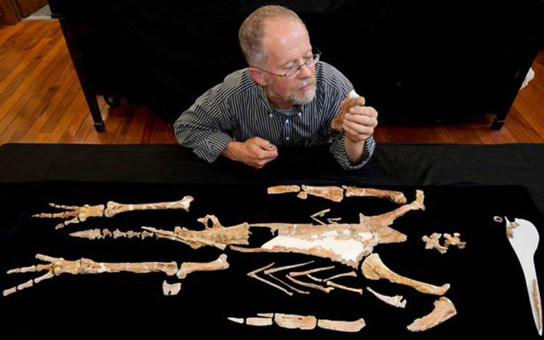
    The Kairuku, a Maori word that stands for diver who returns with food, was reconstructed from fossilized bones that were collected in 1977 by Ewan Fordyce, a paleontologist from the University of Otago, in New Zealand.

    Dan Ksepka, from North Carolina State University, was first interested by the bones because of the unusual shape of the body that they suggested. The Kairuku was an elegant bird, with a slender body, long flippers, and short, thick legs and feet. The unusual shape would have made the reconstruction stand six feet (1.82 meters) tall, if they would have used an extrapolation based upon the length of the flippers.
    kairuku-penguin-fossils

    The reconstruction was built using two separate fossils and the skeleton of an existing king penguin.  The Kairuku would have been the largest of the five species that lived in New Zealand during the Oligocene. The results of the research were published in the Journal of Vertebrate Paleontology.

    Never miss a breakthrough: Join the SciTechDaily newsletter.
    Follow us on Google and Google News.

    Eocene Eocene-oligoscene Extinction Event Kairuku Miocene New Zealand Oligocene Paleontology Penguin Prehistory
    Share. Facebook Twitter Pinterest LinkedIn Email Reddit

    Related Articles

    55-Million-Year-Old Penguin Fossils Preserve Clues to a Warmer Antarctica

    “Find of the Year” – Archaeologists Discover the Smallest Ice Age Figurines Ever Found

    17-Million-Year-Old Ape Fossil in Egypt Could Change What We Know About Human Origins

    Strange Red Rocks in Australia Are Challenging Long-Held Ideas About Fossils

    Frozen in Time: Scientists Discover 45-Million-Year-Old Ancient Walnuts on Remote Arctic Island

    New Species Discovered: The Largest Penguin That Ever Lived

    Giant Waikato Penguin: School Kids in New Zealand Discover New Species

    Haast’s Eagle Was Big & Strong Enough to Prey on Humans

    Prehistoric Fossilized Eocene Epoch Turtles Died Locked In Coitus

    Leave A Reply Cancel Reply

    • Facebook
    • Twitter
    • Pinterest
    • YouTube

    Don't Miss a Discovery

    Subscribe for the Latest in Science & Tech!

    Trending News

    These Toads Are Surviving a Deadly Fungus – Scientists May Finally Know Why

    These Brain Cells May Explain Why We Eventually Have To Sleep

    Tomatoes Contain an Invisible Ingredient With Surprising Effects on Liver Health

    World’s First Heat-Powered Cooling System Turns Waste Heat Into Cold

    Antarctica Gained a Record 695 Billion Tons of Ice in Just Two Years

    Don’t Miss: A Brilliant Venus and Glowing Harvest Moon Light Up the Sky

    New Twist on the Einstein Problem Reveals Unexpected Physics

    JWST Captures Stunning Evidence of How Supermassive Black Holes Feed

    Follow SciTechDaily
    • Facebook
    • Twitter
    • YouTube
    • Pinterest
    • Newsletter
    • RSS
    SciTech News
    • Biology News
    • Chemistry News
    • Earth News
    • Health News
    • Physics News
    • Science News
    • Space News
    • Technology News
    Recent Posts
    • Scientists Discover a Hidden Defect That Could Explain Why IBD Keeps Coming Back
    • Millions Take Blood Pressure Drugs, but Many May Be Missing Their Heart-Protective Benefits
    • Could Alien Life Be Conscious in Ways We Can’t Imagine?
    • Scientists Develop a Fruit Wash That Removes Pesticide Residues and Keeps Produce Fresh Longer
    • Scientists May Have Finally Explained Why Astronauts Get Constipated in Space
    Copyright © 1998 - 2026 SciTechDaily. All Rights Reserved.
    • Science News
    • About
    • Contact
    • Editorial Board
    • Privacy Policy
    • Terms of Use

    Type above and press Enter to search. Press Esc to cancel.