
Mutation Transmission in the Male Germline
The male reproductive system is a hotspot for the emergence of new genes, which may explain why more new mutations are passed down from fathers rather than mothers. However, the reason why older fathers tend to pass on more mutations than younger ones has remained unclear. A recent study in Nature Ecology & Evolution by scientists from Rockefeller University sheds light on why older male fruit flies are more likely to transmit mutations to their offspring. This research could provide insight into the risk of inherited diseases in humans.
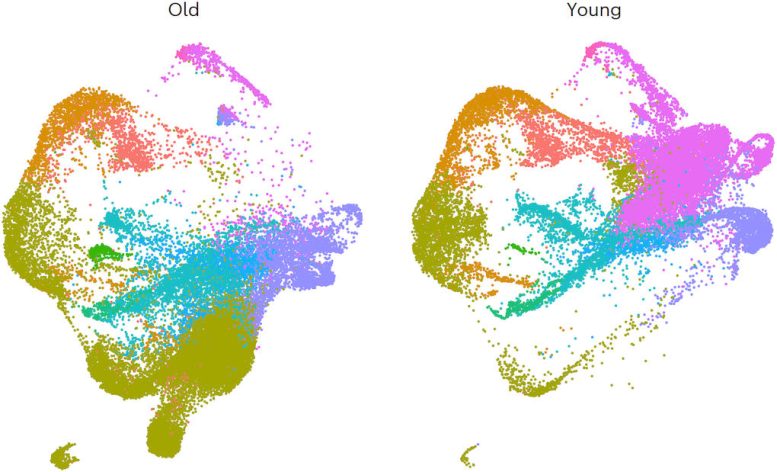
Researchers in Li Zhao‘s lab studied mutations that occur during the production of sperm from germline cells, known as spermatogenesis. They found that mutations are common in the testes of both young and old fruit flies, but more abundant in older flies from the outset. Moreover, many of these mutations seem to be removed in younger fruit flies during spermatogenesis by the body’s genomic repair mechanisms—but they fail to be fixed in the testes of older flies.
“We were trying to test whether the older germline is less efficient at mutation repair, or whether the older germline just starts out more mutated,” says first author Evan Witt, a former graduate student in the lab and now a computational biologist at Biomarin Pharmaceuticals. “Our results indicate that it’s actually both. At every stage of spermatogenesis, there are more mutations per RNA molecule in older flies than in younger flies.”
Self–Care at the Genetic Level
Genomes keep themselves tidy using a handful of repair mechanisms. When it comes to testes, they have to work overtime; testes have the highest rate of gene expression of any organ. Moreover, genes that are highly expressed in spermatogenesis tend to have fewer mutations than those that are not. This sounds counterintuitive, but it makes sense: One theory to explain why the testes express so many genes holds that it might be a sort of genomic surveillance mechanism—a way to reveal, and then weed out, problematic mutations.
But when it comes to older sperm, the researchers found, the weed-whacker apparently sputters out. Previous research suggests that a faulty transcription-coupled repair mechanism, which only fixes transcribed genes, could be to blame.
Inherited or New Mutations?
To get these results, scientists in the Laboratory of Evolutionary Genetics and Genomics did single-cell sequencing on the RNA from the testes of about 300 fruit flies, roughly half of them young (48 hours old) and half old (25 days old), advancing a line of inquiry they began in 2019. In order to understand whether the mutations they detected were somatic, or inherited from the flies’ parents, or de novo—arising in the individual fly’s germline—they then sequenced the genome of each fly. They were able to document that each mutation was a true original. “We can directly say this mutation was not present in the DNA of that same fly in its somatic cells,” says Witt. “We know that it’s a de novo mutation.”
This unconventional approach—inferring genomic mutations from single-cell RNA sequencing and then comparing them to the genomic data—allowed the researchers to match mutations to the cell type in which they occurred. “It’s a good way to compare mutational load between cell types because you can follow them throughout spermatogenesis,” Witt says.
The Human Connection
The next step is to expand the analysis to more age groups of flies and test whether or not this transcription repair mechanism can occur—and if it does, identify the pathways responsible, Witt says. “What genes,” he wonders, “are really driving the difference between old and young flies in terms of mutation repair?”
Because fruit flies have a high reproductive rate, investigating their mutation patterns can offer new insights into the effect of new mutations in human health and evolution, says Zhao.
Witt adds, “It’s largely unknown whether a more mutated male germline is more or less fertile than a less mutated one. There’s not been very much research on it except for at a population level. And if people inherit more mutations from aging fathers, that increases the odds of de novo genetic disorders or certain types of cancers.”
Reference: “Transcriptional and mutational signatures of the Drosophila ageing germline” by Evan Witt, Christopher B. Langer, Nicolas Svetec, and Li Zhao, 12 January 2023, Nature Ecology & Evolution.
DOI: 10.1038/s41559-022-01958-x
Never miss a breakthrough: Join the SciTechDaily newsletter.
Follow us on Google and Google News.
3 Comments
Mutations are the ‘fuel’ of evolution. Without mutations, an organism would be handicapped in dealing with a changing environment. Most mutations are benign. The mutations that are NOT benign are usually eliminated from the gene pool — except in humans.
Poor Barron.
Older individuals are, by definition, provably ‘successful’ and it would make sense for whatever traits they possess in life to be transferred to the species, genetically. Why wouldn’t a species have a mechanism to allow for particularly successful individuals to pass on their life success? What this article calls “mutations” I would call “updates”.
Of course there is one way to find out. Analyze individual’s dna from birth and through life and analyze the updates/changes/mutations. Why hasn’t this been tried?