
Close Menu
    Facebook X (Twitter) Instagram
    SciTechDaily
    • Biology
    • Chemistry
    • Earth
    • Health
    • Physics
    • Science
    • Space
    • Technology
    Facebook X (Twitter) Pinterest YouTube RSS
    SciTechDaily
    Home»Biology»Shedding Light on Sperm Development Failure Caused by Testicular Warming
    Biology

    Shedding Light on Sperm Development Failure Caused by Testicular Warming

    By National Institutes of Natural SciencesMay 26, 20221 Comment3 Mins Read
    Facebook Twitter Pinterest Telegram LinkedIn WhatsApp Email Reddit
    Share
    Facebook Twitter LinkedIn Pinterest Telegram Email Reddit
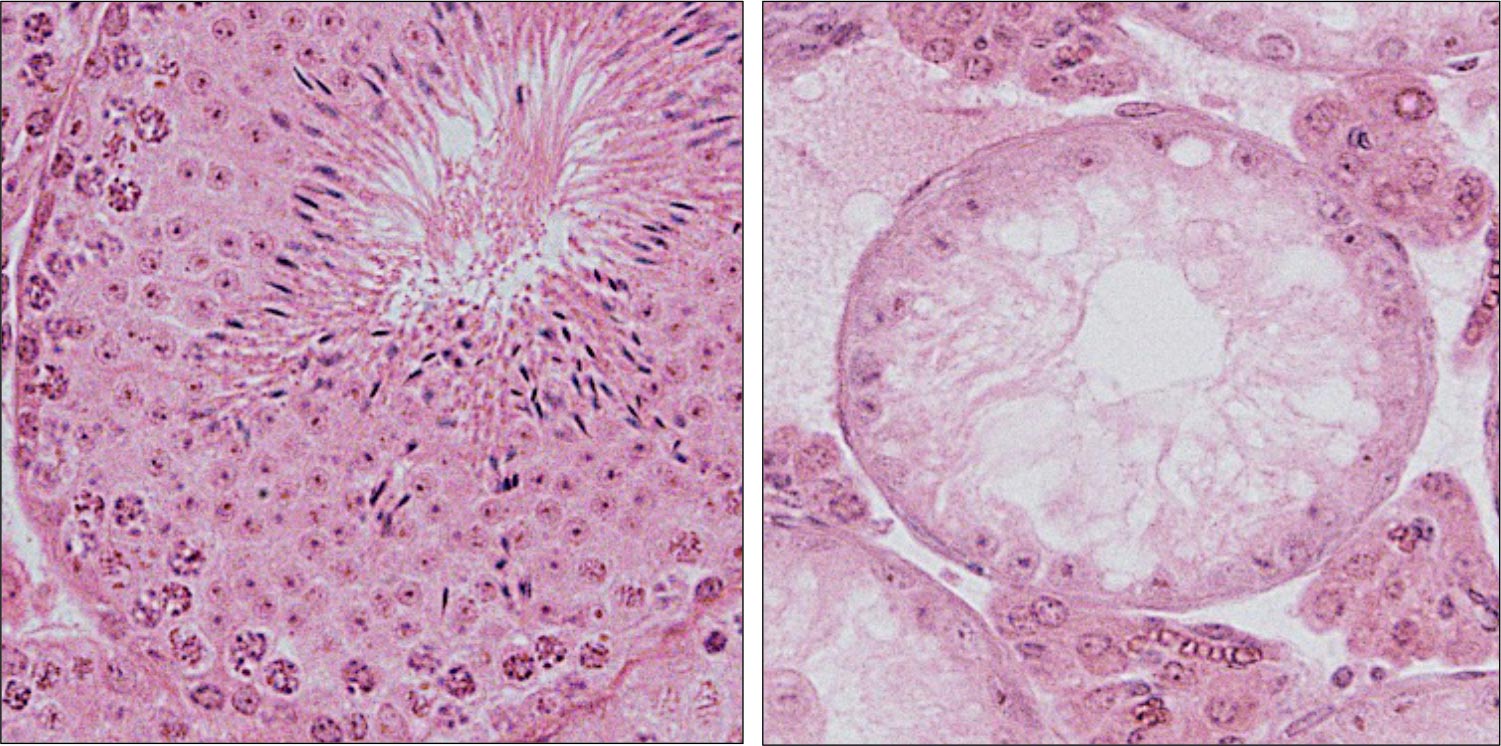
    Normal and Impaired Spermatogenesis
    Left: Normal spermatogenesis in the scrotum (34°C) Right: Impaired spermatogenesis in the abdomen (38°C). Credit: NIBB

    Spermatogenesis fails at elevated temperatures, disrupting meiosis and other processes, as shown in organ culture studies. This highlights the critical role of lower scrotal temperatures in maintaining male fertility.

    Testicles of most mammals are cooled in the scrotum, and elevated testicular temperatures lead to spermatogenesis failure and male infertility. A team of researchers led by Shosei Yoshida at the National Institute for Basic Biology in Japan detailed this process using organ cultures and revealed that spermatogenesis is impaired at multiple steps in a delicate temperature-dependent manner.

    Spermatogenesis is the process by which haploid spermatozoa develop from germ cells in the seminiferous tubules of the testis.

    In particular, although spermatogenesis is completed at 34°C/93°F (the scrotal temperature), warming to 37–38°C/98.6–100°F (temperatures in the abdomen) severely affects meiosis—the process of segregating homologous chromosomes into haploid sperms—and the damaged cells undergo cell death. Demonstrating the utility of organ culture, this study will boost the study of heat vulnerability in spermatogenesis.
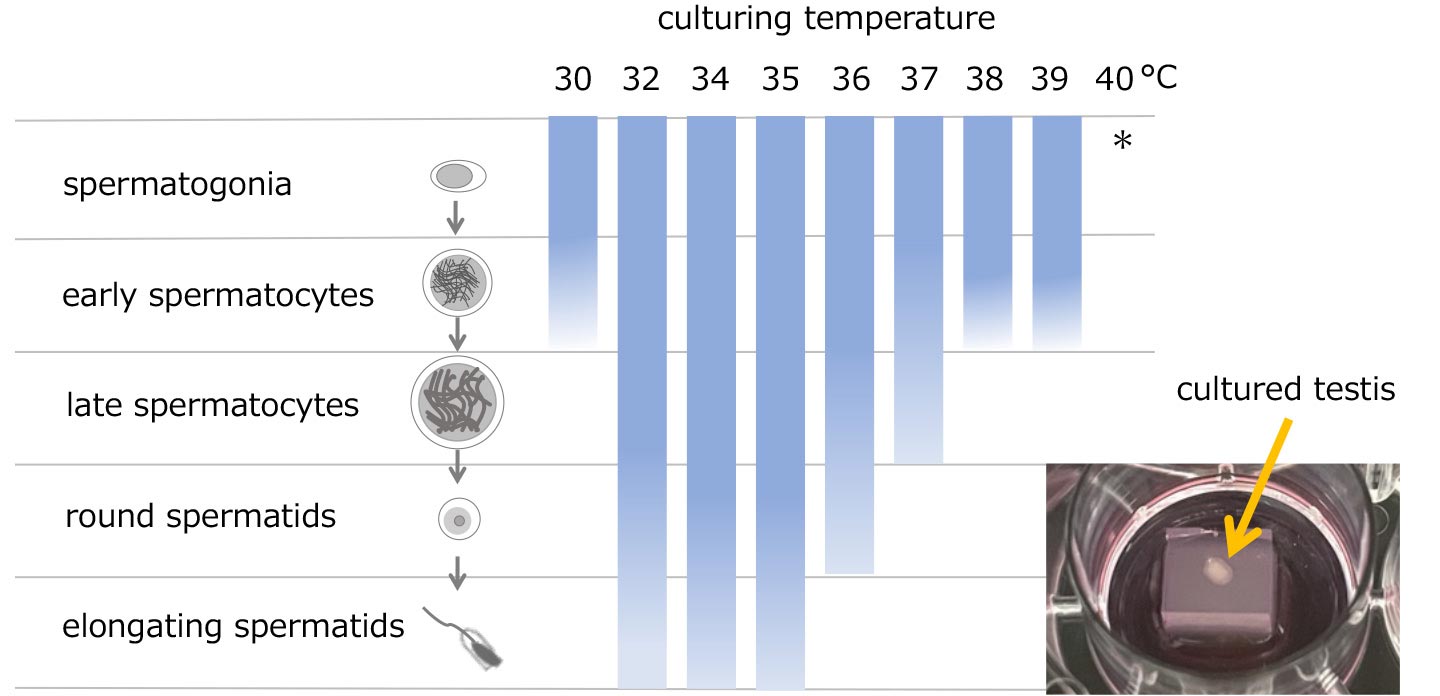
    Temperature-Dependent Spermatogenesis Defects
    Blue bars indicate the germ cell types observed in testis explants cultured at the indicated temperatures. *No germ cells survived at 40°C. Credit: NIBB

    Many studies have been conducted on the heat impairment of spermatogenesis by raising the testis temperature using animal models, for example, surgical relocation of the testis to the abdomen. However, actual testicular temperature could not be controlled in these experiments. Furthermore, the effects of extra-testicular factors such as the endocrine and nervous systems cannot be excluded.

    To overcome these limitations, the research group took advantage of the testis organ culture setting that supports complete spermatogenesis in incubators, which was developed by Takehiko Ogawa and colleagues at Yokohama City University. By culturing mouse testes at different temperatures, spermatogenesis was found to fail at multiple steps (e.g., progression of meiosis, and generation and transformation of haploid cells), showing sharp temperature dependencies between 30°C/86°F and 40°C/104°F.

    Meiosis and DNA Repair at Elevated Temperatures

    Yoshida says, “We did not expect such a delicate ensemble of multiple temperature-dependent events to underpin this well-known phenomenon. This discovery could only have been achieved using an organ culture system.”
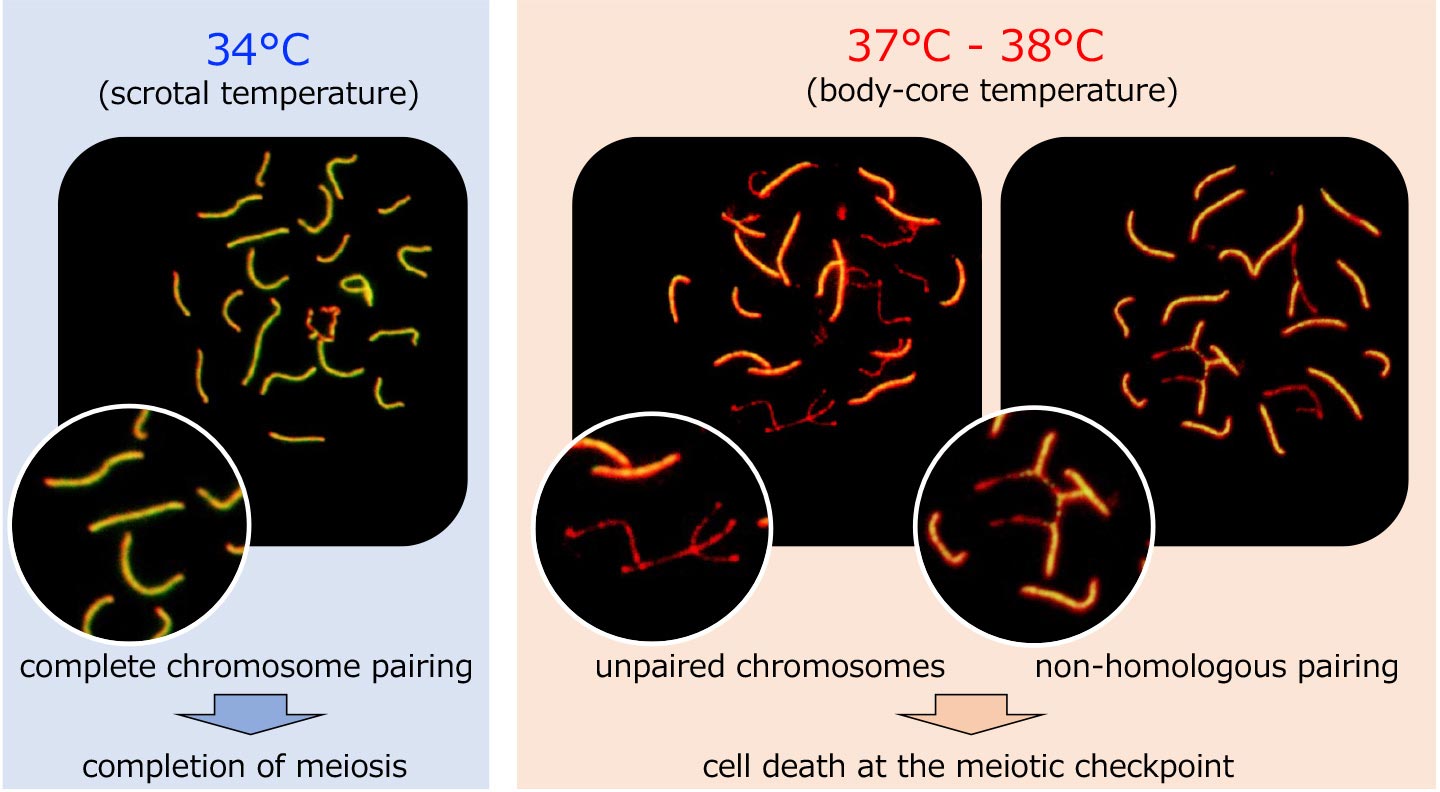
    Aberrant Spermatocytes in Testis Explants
    At 34°C (scrotal temperature), meiosis proceeds normally with all the homologous chromosomes paired normally. At 37 and 38°C (body core temperature), spermatocytes show aberrant chromosome pairing and undergo cell death. Credit: NIBB

    The group further revealed that meiosis, through which homologous chromosomes segregate into haploid sperms, was severely affected at 37–38°C. Specifically, the repair of DNA double-strand breaks and homologous chromosome pairing, which are requisites for proper chromosome segregation, were impaired. Damaged cells undergo cell death through a surveillance mechanism or a checkpoint. Kodai Hirano, the primary contributor to this study, says, “It was surprising that essential processes, such as meiosis, can be easily damaged at normal body core temperatures. Through the combined functions of the scrotum and checkpoint, only sperm developed at low temperatures fertilizes eggs to generate the next generation. Key questions for future studies include the molecular mechanism of heat sensitivity and the biological significance of low temperatures in sperm production.”

    This study has been published in Communications Biology.

    Reference: “Temperature sensitivity of DNA double-strand break repair underpins heat-induced meiotic failure in mouse spermatogenesis” by Kodai Hirano, Yuta Nonami, Yoshiaki Nakamura, Toshiyuki Sato, Takuya Sato, Kei-ichiro Ishiguro, Takehiko Ogawa and Shosei Yoshida, 26 May 2022, Communications Biology.
    DOI: 10.1038/s42003-022-03449-y

    Never miss a breakthrough: Join the SciTechDaily newsletter.
    Follow us on Google and Google News.

    National Institutes of Natural Sciences Sperm
    Share. Facebook Twitter Pinterest LinkedIn Email Reddit

    Related Articles

    Sperm Get Lost in Space and Scientists Finally Know Why

    X vs. Y: The Hidden Genetic War That Decides Sex

    Nanotechnology Milestone: DNA Motors Reach 30 nm/s Speeds

    A Leap Forward in Male Birth Control: Non-Hormonal, Reversible Method Unveiled

    Why Do Some Men Not Produce Sperm?

    Mathematically Decoding Nature: Sperm Swimming Linked to Alan Turing’s Pattern Formation Theory

    A Game-Changer for Infertile Men – New Diagnostic Detects Viable Sperm

    Mosquitoes No More? New Research Could Help Control Infectious Pests

    How Do Genomes Evolve Between Species? The Key Role of 3D Structure in Sperm Cells

    1 Comment

    1. mac1 on May 26, 2022 6:39 am

      I wonder if they will blame this too on global warming lol

      Reply
    Leave A Reply Cancel Reply

    • Facebook
    • Twitter
    • Pinterest
    • YouTube

    Don't Miss a Discovery

    Subscribe for the Latest in Science & Tech!

    Trending News

    Millions Take These IBS Drugs, But a New Study Finds Serious Risks

    Scientists Unlock Hidden Secrets of 2,300-Year-Old Mummies Using Cutting-Edge CT Scanner

    Bread Might Be Making You Gain Weight Even Without Eating More Calories

    Scientists Discover Massive Magma Reservoir Beneath Tuscany

    Europe’s Most Active Volcano Just Got Stranger – Here’s Why Scientists Are Rethinking It

    Alzheimer’s Symptoms May Start Outside the Brain, Study Finds

    Millions Take This Popular Supplement – Scientists Discover a Concerning Link to Heart Failure

    The Universe Is Expanding Too Fast and Scientists Can’t Explain Why

    Follow SciTechDaily
    • Facebook
    • Twitter
    • YouTube
    • Pinterest
    • Newsletter
    • RSS
    SciTech News
    • Biology News
    • Chemistry News
    • Earth News
    • Health News
    • Physics News
    • Science News
    • Space News
    • Technology News
    Recent Posts
    • Doctors Surprised by the Power of a Simple Drug Against Colon Cancer
    • Why Popular Diabetes Drugs Like Ozempic Don’t Work for Everyone: The “Genetic Glitch”
    • Scientists Create Improved Insulin Cells That Reverse Diabetes in Mice
    • Scientists Stunned After Finding Plant Thought Extinct for 60 Years
    • A Common Diabetes Drug May Hold the Key to Stopping HIV From Coming Back
    Copyright © 1998 - 2026 SciTechDaily. All Rights Reserved.
    • Science News
    • About
    • Contact
    • Editorial Board
    • Privacy Policy
    • Terms of Use

    Type above and press Enter to search. Press Esc to cancel.