
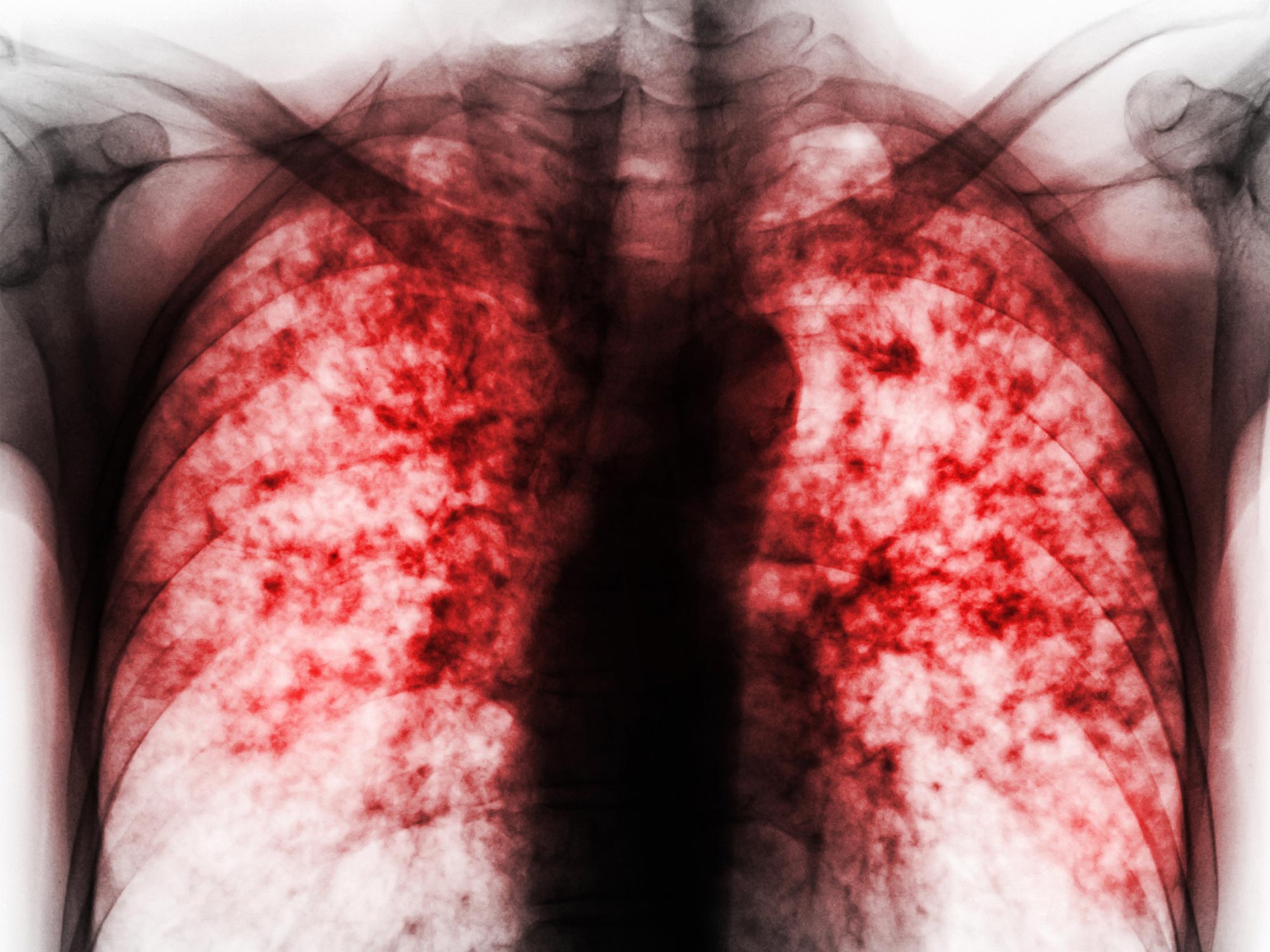
The world’s deadliest infectious disease urgently requires new and effective antibiotics.
Researchers have created a promising new compound that may mark a major step forward in the global effort to combat tuberculosis, the deadliest infectious disease in human history.
According to a new study published in Nature, the compound, called CMX410, works by attacking a vital enzyme in Mycobacterium tuberculosis, the bacterium that causes tuberculosis. Notably, the compound also showed effectiveness against drug-resistant strains, which continue to be a major obstacle to treatment and disease control worldwide.
The research was led by James Sacchettini, Ph.D., the Rodger J. Wolfe-Welch Foundation Chair in Science, Texas A&M AgriLife Research scientist and professor in the Texas A&M College of Agriculture and Life Sciences Department of Biochemistry and Biophysics and the College of Arts and Sciences Department of Chemistry. Collaborating on the study was Case McNamara, Ph.D., senior director of infectious disease at the Calibr-Skaggs Institute for Innovative Medicines, the nonprofit drug development arm of Scripps Research focused on advancing next-generation therapies.
This breakthrough was achieved through the TB Drug Accelerator program, a global partnership supported by The Gates Foundation that brings together leading scientists to discover and develop new treatments for tuberculosis.
“A lot of people think of tuberculosis as a disease of the past,” Sacchettini said. “But in reality, it remains a major public health issue requiring significant attention, collaboration, and innovation to overcome.”
A smarter way to fight back
The compound developed through AgriLife Research and Calibr-Skaggs functions by shutting down a key enzyme called polyketide synthase 13 (Pks13), which M. tuberculosis requires to construct its protective outer cell wall. Without this enzyme, the bacteria lose their ability to survive and cause infection.
Scientists have long viewed Pks13 as an important target in the search for new tuberculosis treatments. However, past attempts to design effective drugs against it have struggled to balance safety with strong therapeutic results.
CMX410’s design overcomes these challenges through a highly selective approach. The compound includes a reactive chemical group that permanently attaches to a critical site on Pks13, improving precision while limiting unwanted interactions with other molecules. This tailored bonding also helps prevent the bacteria from developing resistance to the treatment.
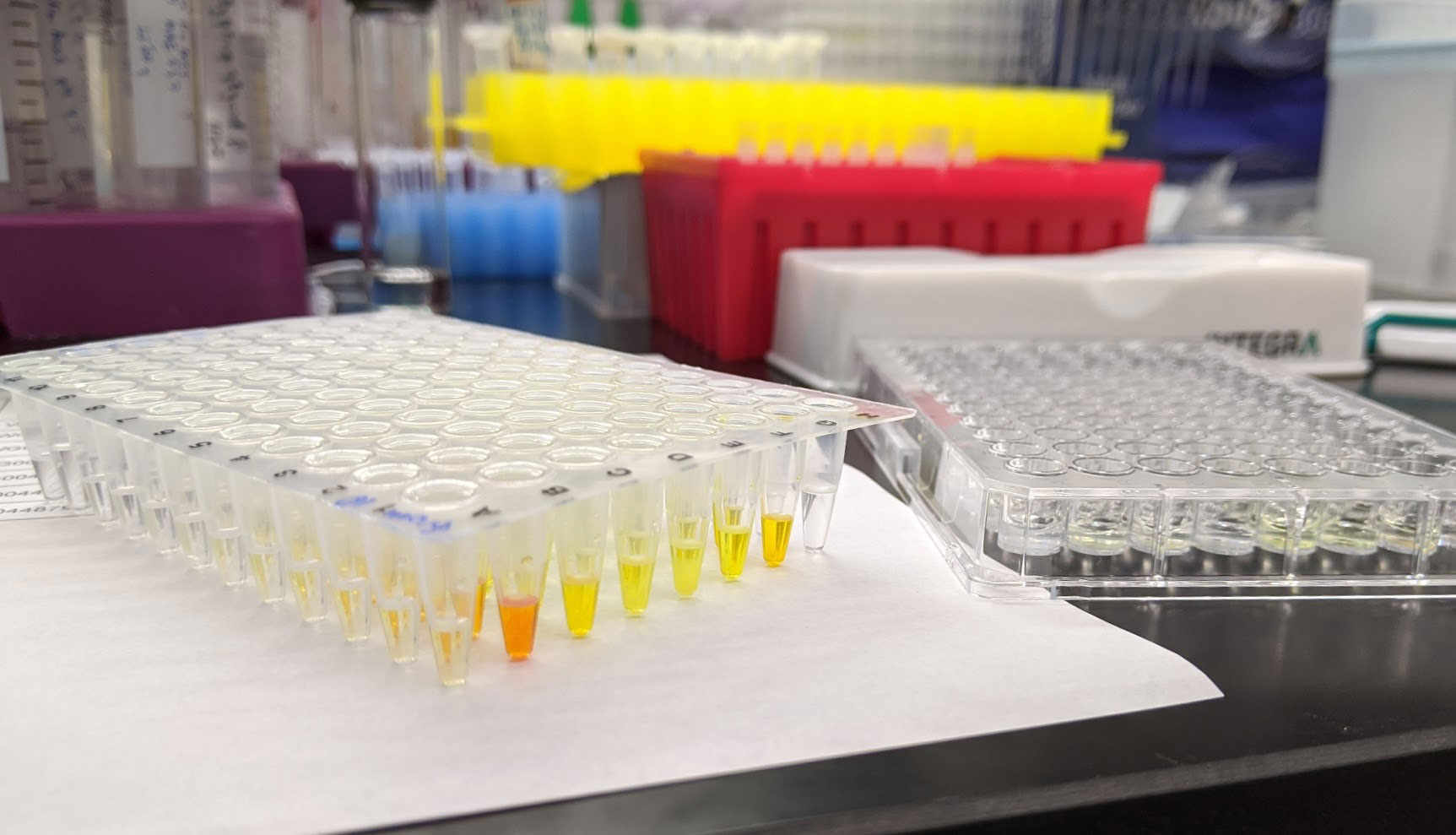
The addition of this key chemical group was accomplished with click chemistry, a method that snaps molecules together like puzzle pieces. Click chemistry was developed by co-author Barry Sharpless, Ph.D., W.M. Keck Professor of Chemistry at Scripps Research and two-time Nobel Laureate, and it has led to the development of extensive libraries of chemical compounds.
“This technique represents a new tool for drug design,” said McNamara. “We expect to see its uses expand in the coming years to help address public health concerns with a critical need, including tuberculosis.”
Early results prove safe and effective
The team began by investigating a library of compounds shared by the Sharpless lab to identify molecules that could inhibit bacterial growth of M. tuberculosis.
After intensive optimization to improve compound potency and other pharmacological properties led by Calibr-Skaggs tuberculosis team members and co-first authors Baiyuan Yang, Ph.D., associate director of medicinal chemistry, and Paridhi Sukheja, Ph.D., investigator of infectious diseases, CMX410 was identified as a strong contender.
Yang, who led the chemistry optimization, said the team explored more than 300 analogs to identify a compound with the right balance of potency, selectivity and safety. The team ultimately tested CMX410 against 66 strains of M. tuberculosis and found that it worked on both laboratory and multidrug-resistant strains collected from real patients.
“Identifying this novel target was an exciting moment,” said Sukheja, who led many early studies showing CMX410 could target a previously unexplored gene. “It opened up a completely new path forward, especially against strains that have learned to evade existing treatments.”
In other early experiments, the researchers determined that CMX410 could be safely combined with other tuberculosis antibiotics. This was an especially important factor for this disease, as treatment regimens require multiple drugs to be taken together for months at a time.
Researchers found no adverse effects in their initial tests in animal models, even at the maximum dose level. And because CMX410 is highly specific to its target protein, they see it as unlikely to disrupt other beneficial bacteria or cause broader microbiome imbalances, a common side effect of conventional antibiotics.
Progress toward better treatments
The addition of a specialized chemical group that allows CMX410 to irreversibly bind to its target makes the compound extremely selective. These types of inhibitors remain an exciting and underexplored class of drugs, and further research will be needed to confirm their safety for humans.
Nonetheless, the precision, unique mechanism, good safety profile, and other key features all make CMX410 a promising candidate for treating tuberculosis.
“These early results are very encouraging,” said Inna Krieger, Ph.D., senior research scientist in Sacchettini’s lab and co-first author of the study. “Cell wall-targeting antibiotics have long been a cornerstone of tuberculosis treatment. However, after decades of widespread use, their effectiveness is waning due to the rise of drug-resistant strains.
“We are working to discover new drugs that disrupt essential biological processes and identify optimal combinations with existing drugs to enable shorter, safer, and more effective treatment regimens. Through these efforts, we hope to help move the world closer to a future free from tuberculosis.”
Never miss a breakthrough: Join the SciTechDaily newsletter.
Follow us on Google and Google News.
1 Comment
..the deadliest infectious disease in human history….
Pneumonic Plague?
Buobonic Plague?
Smallpox?
“Spanish”Flu?
At least TB lingers long enough to allow many of the affected to have children and indeed to live productive lives e.g. Anton Chekov, DH Lawrence, Keats, Erwin Schrodinger, George Orwell.