

An NIH-funded project leverages advanced synapse imaging to monitor real-time neuronal changes during learning, unveiling new insights that could inspire next-generation brain-like AI systems.
How do we learn something new? How do tasks at a new job, the lyrics to the latest hit song, or directions to a friend’s house become encoded in our brains?
At a fundamental level, learning triggers adaptive changes in the brain. To adopt new behaviors or retain unfamiliar information, the brain’s neural circuitry must reorganize.
These changes occur across trillions of synapses, the junctions where neurons (nerve cells) communicate. During learning, some synapses strengthen while others weaken, in a carefully orchestrated process that enables the brain to store new experiences. This phenomenon is known as “synaptic plasticity.”
Neuroscientists have uncovered a variety of molecular mechanisms that drive synaptic plasticity. However, one enduring question has been: What determines which synapses are modified during learning? Understanding these underlying “rules” remains key to decoding how the brain captures and preserves learned information.
A Breakthrough Study at UC San Diego
University of California San Diego neurobiologists William “Jake” Wright, Nathan Hedrick, and Takaki Komiyama have now uncovered key details about this process. The main financial support for this multi-year study was provided by several National Institutes of Health research grants and a training grant.
As published April 17 in the journal Science, the researchers used a cutting-edge brain visualization methodology, including two-photon imaging, to zoom into the brain activity of mice and track the activities of synapses and neuron cells during learning activities.
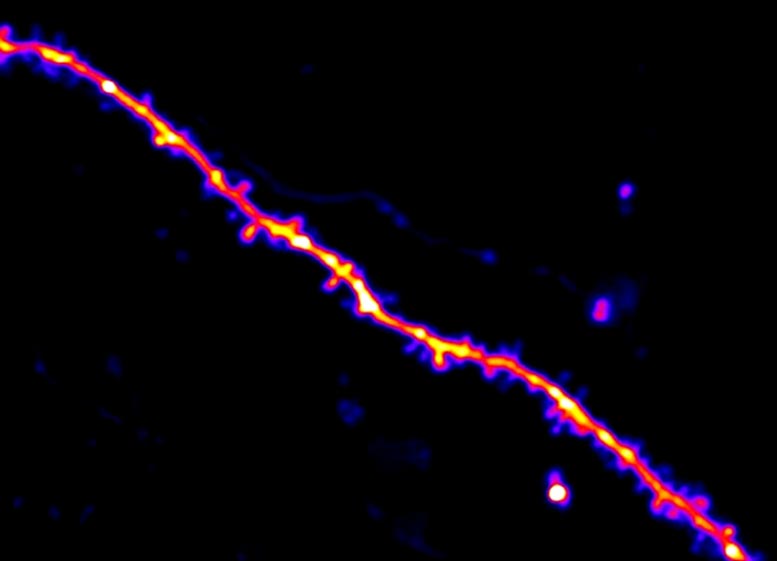
With the ability to see individual synapses like never before, the new images revealed that neurons don’t follow one set of rules during episodes of learning, as had been assumed under conventional thinking. Rather, the data revealed that individual neurons follow multiple rules, with synapses in different regions following different rules. These new findings stand to aid advancements in many areas, from brain and behavior disorders to artificial intelligence.
“When people talk about synaptic plasticity, it’s typically regarded as uniform within the brain,” said Wright, a postdoctoral scholar in the School of Biological Sciences and first author of the study. “Our research provides a clearer understanding of how synapses are being modified during learning, with potentially important health implications since many diseases in the brain involve some form of synaptic dysfunction.”
Solving the ‘Credit Assignment Problem’
Neuroscientists have carefully studied how synapses only have access to their own “local” information, yet collectively they help shape broad new learned behaviors, a conundrum labeled as the “credit assignment problem.” The issue is analogous to individual ants that work on specific tasks without knowledge of the goals of the entire colony.
Finding that neurons follow multiple rules at once took the researchers by surprise. The cutting-edge methods used in the studied allowed them to visualize the inputs and outputs of changes in neurons as they were happening.
“This discovery fundamentally changes the way we understand how the brain solves the credit assignment problem, with the concept that individual neurons perform distinct computations in parallel in different subcellular compartments,” said study senior author Takaki Komiyama, a professor in the Departments of Neurobiology (School of Biological Sciences) and Neurosciences (School of Medicine), with appointments in the Halıcıoğlu Data Science Institute and Kavli Institute for Brain and Mind.
The new information offers promising insights for the future of artificial intelligence and the brain-like neural networks upon which they operate. Typically an entire neural network functions on a common set of plasticity rules, but this research infers possible new ways to design advanced AI systems using multiple rules across singular units.
For health and behavior, the findings could offer a new way to treat conditions including addiction, post-traumatic stress disorder, and Alzheimer’s disease, as well as neurodevelopmental disorders such autism.
“This work is laying a potential foundation of trying to understand how the brain normally works to allow us to better understand what’s going wrong in these different diseases,” said Wright.
The new findings are now leading the researchers on a course to dig deeper to understand how neurons are able to utilize different rules at once and what benefits using multiple rules gives them.
Reference: “Distinct synaptic plasticity rules operate across dendritic compartments in vivo during learning” by William J. Wright, Nathan G. Hedrick and Takaki Komiyama, 17 April 2025, Science.
DOI: 10.1126/science.ads4706
Funding: National Institutes of Health, U.S. National Science Foundation, Simons Collaboration on the Global Brain Pilot Award, Eric and Wendy Schmidt AI in Science Fellowship
Never miss a breakthrough: Join the SciTechDaily newsletter.
Follow us on Google and Google News.
1 Comment
It’s becoming clear that with all the brain and consciousness theories out there, the proof will be in the pudding. By this I mean, can any particular theory be used to create a human adult level conscious machine. My bet is on the late Gerald Edelman’s Extended Theory of Neuronal Group Selection. The lead group in robotics based on this theory is the Neurorobotics Lab at UC at Irvine. Dr. Edelman distinguished between primary consciousness, which came first in evolution, and that humans share with other conscious animals, and higher order consciousness, which came to only humans with the acquisition of language. A machine with only primary consciousness will probably have to come first.
What I find special about the TNGS is the Darwin series of automata created at the Neurosciences Institute by Dr. Edelman and his colleagues in the 1990’s and 2000’s. These machines perform in the real world, not in a restricted simulated world, and display convincing physical behavior indicative of higher psychological functions necessary for consciousness, such as perceptual categorization, memory, and learning. They are based on realistic models of the parts of the biological brain that the theory claims subserve these functions. The extended TNGS allows for the emergence of consciousness based only on further evolutionary development of the brain areas responsible for these functions, in a parsimonious way. No other research I’ve encountered is anywhere near as convincing.
I post because on almost every video and article about the brain and consciousness that I encounter, the attitude seems to be that we still know next to nothing about how the brain and consciousness work; that there’s lots of data but no unifying theory. I believe the extended TNGS is that theory. My motivation is to keep that theory in front of the public. And obviously, I consider it the route to a truly conscious machine, primary and higher-order.
My advice to people who want to create a conscious machine is to seriously ground themselves in the extended TNGS and the Darwin automata first, and proceed from there, by applying to Jeff Krichmar’s lab at UC Irvine, possibly. Dr. Edelman’s roadmap to a conscious machine is at https://arxiv.org/abs/2105.10461, and here is a video of Jeff Krichmar talking about some of the Darwin automata, https://www.youtube.com/watch?v=J7Uh9phc1Ow