
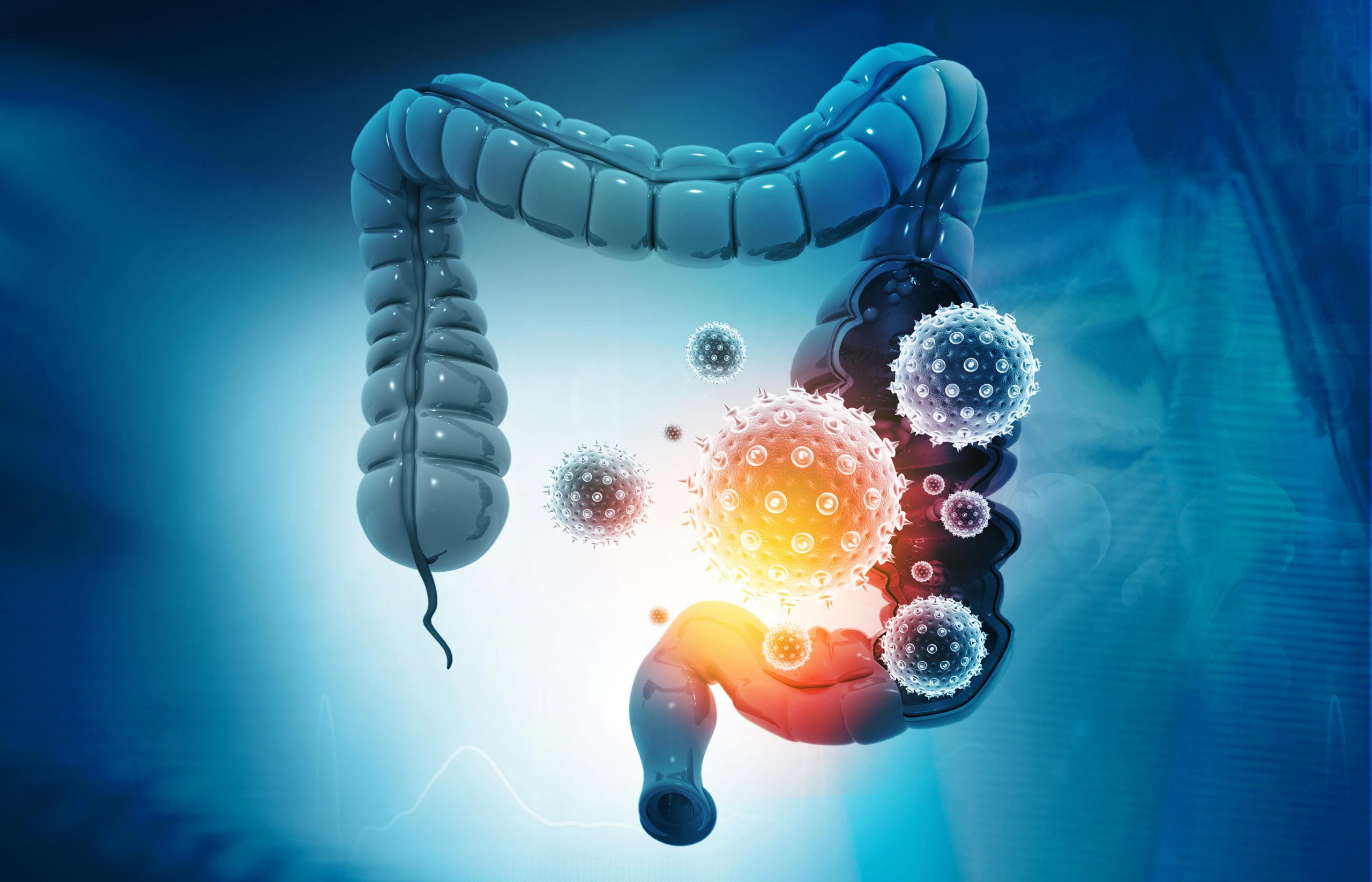
Researchers using machine learning discovered that variations in microbial load in the gut, influenced by age, sex, diet, and more, play a significant role in disease-related bacterial presence.
This new insight challenges the conventional belief that certain microbes directly cause diseases like IBD or colorectal cancer. Instead, symptoms such as diarrhea and constipation are more closely linked to changes in microbial load. The findings, based on vast metagenomic datasets, could reshape approaches to diagnosing and understanding gastrointestinal diseases.
Microbial Load and Disease
Many bacterial-linked illnesses, like inflammatory bowel disease and colorectal cancer, are often associated with an overgrowth of certain gut bacteria seen as harmful. However, when researchers used a machine learning algorithm to predict the density of microbes (known as microbial load) from gut microbiome samples, they discovered that changes in microbial load itself—not the disease—may drive the presence of bacteria associated with these illnesses.
Published today (November 13, 2024) in the journal Cell, the study shows that variations in microbial load—shaped by factors such as age, sex, diet, country of origin, and antibiotic use—play a significant role in the types and amounts of bacteria found in fecal samples, even among patients with these diseases.
Surprising Insights From Microbial Research
“We were surprised to find that many microbial species, previously believed to be associated with disease, were more strongly explained by changes in microbial load,” says Peer Bork of the European Molecular Biology Laboratory (EMBL) Heidelberg, one of the senior authors on the study. “This indicates that these species are mainly associated with symptoms like diarrhea and constipation, rather than being directly linked to the disease conditions themselves.”
Microbial load has long been recognized as an important factor in microbiome research, but large-scale analysis has been largely limited due to the high cost and labor-intensive nature of experimental methods, which the investigators overcame with a machine-learning approach. They developed a prediction model for fecal microbial load based on the relative microbiome composition and applied it to a large-scale metagenomic dataset to explore its variation in health and disease.
Leveraging Data for Broader Research
“Measuring microbial load in fecal samples takes a lot of effort and we were glad to have access to two large metagenomic datasets where the microbial load had been experimentally measured,” says Michael Kuhn, also of EMBL and the other senior author on the study. “With our approach, we want to generalize these data for the benefit of the larger field and with the tools we provide, microbial load can be predicted for all adult human gut microbiome studies.”
The datasets the team generated for the research are thousands of metagenomes and experimentally measured microbial load in the EU-funded GALAXY (Gut-and-Liver Axis in Alcoholic Liver Fibrosis) and the Novo Nordisk Foundation’s MicrobLiver projects. They also used metagenomes and microbial load data from a previously public MetaCardis study population. For exploratory datasets, they used tens of thousands of metagenomes from previous studies including populations from Japan and Estonia.
Challenges and Limitations
The team acknowledges limitations to the work. Because the analysis was based only on associations, they were not able to establish a clear direction of causality, nor could they provide mechanistic insight. Additionally, the method developed only applies to the human gut microbiome: Different training datasets are needed to predict the microbial load in other habitats.
Future Directions in Microbial Load Research
Future research will focus on microbial species that are more directly associated with diseases, independent of microbial load, to better understand their roles in disease etiology and their potential use as biomarkers. Additionally, adapting this prediction model to other environments, such as ocean and soil microbiomes, could provide further insights into microbial ecology on a global scale.
Reference: “Fecal microbial load is a major determinant of gut microbiome variation and a confounder for disease associations” by Suguru Nishijima, Evelina Stankevic, Oliver Aasmets, Thomas S.B. Schmidt, Naoyoshi Nagata, Marisa Isabell Keller, Pamela Ferretti, Helene Bæk Juel, Anthony Fullam, Shahriyar Mahdi Robbani, Christian Schudoma, Johanne Kragh Hansen, Louise Aas Holm, Mads Israelsen, Robert Schierwagen, Nikolaj Torp, Anja Telzerow, Rajna Hercog, Stefanie Kandels, Diënty H.M. Hazenbrink, Manimozhiyan Arumugam, Flemming Bendtsen, Charlotte Brøns, Cilius Esmann Fonvig, Jens-Christian Holm, Trine Nielsen, Julie Steen Pedersen, Maja Sofie Thiele, Jonel Trebicka, Elin Org, Aleksander Krag, Torben Hansen, Michael Kuhn, Peer Bork, Torben Hansen, Matthias Mann, Jelle Matthijnssens, Aleksander Krag, Peer Bork, Manimozhiyan Arumugam, Jonel Trebicka, Morten Karsdal, Ema Anastasiadou, Hans Israelsen, Hans Olav Melberg, Cristina Legido-Quigley and Maja Thiele, 14 November 2024, Cell.
DOI: 10.1016/j.cell.2024.10.022
Never miss a breakthrough: Join the SciTechDaily newsletter.
Follow us on Google and Google News.