
A Jellyfish-Like Soft Gripper Simulates the Mechanics of Curly Hair
You are aware of how difficult it is to grasp and hold onto items with robotic grippers if you have ever played the claw game at an arcade. Imagine how much more nerve-wracking that game would be if you were attempting to grab a delicate piece of endangered coral or precious treasure from a sunken ship instead of soft stuffed animals.
Most of today’s robotic grippers use a combination of the operator’s skill and embedded sensors, intricate feedback loops, or cutting-edge machine-learning algorithms to grasp fragile or irregularly shaped items. However, scientists at Harvard’s John A. Paulson School of Engineering and Applied Sciences (SEAS) have shown that there is a simpler method.
How the Soft Tentacle Gripper Works
Taking inspiration from nature, scientists created a new type of soft, robotic gripper that employs a network of thin tentacles to entangle and grab objects, similar to how jellyfish collect their prey. Individual filaments, or tentacles, are not very strong on their own. However, when used as a group, the filaments can firmly grip and hold things of all shapes and sizes. The gripper doesn’t need sensing, planning, or feedback control; it relies on simple inflation to wrap around items.
The study was recently published in the journal Proceedings of the National Academy of Sciences (PNAS).
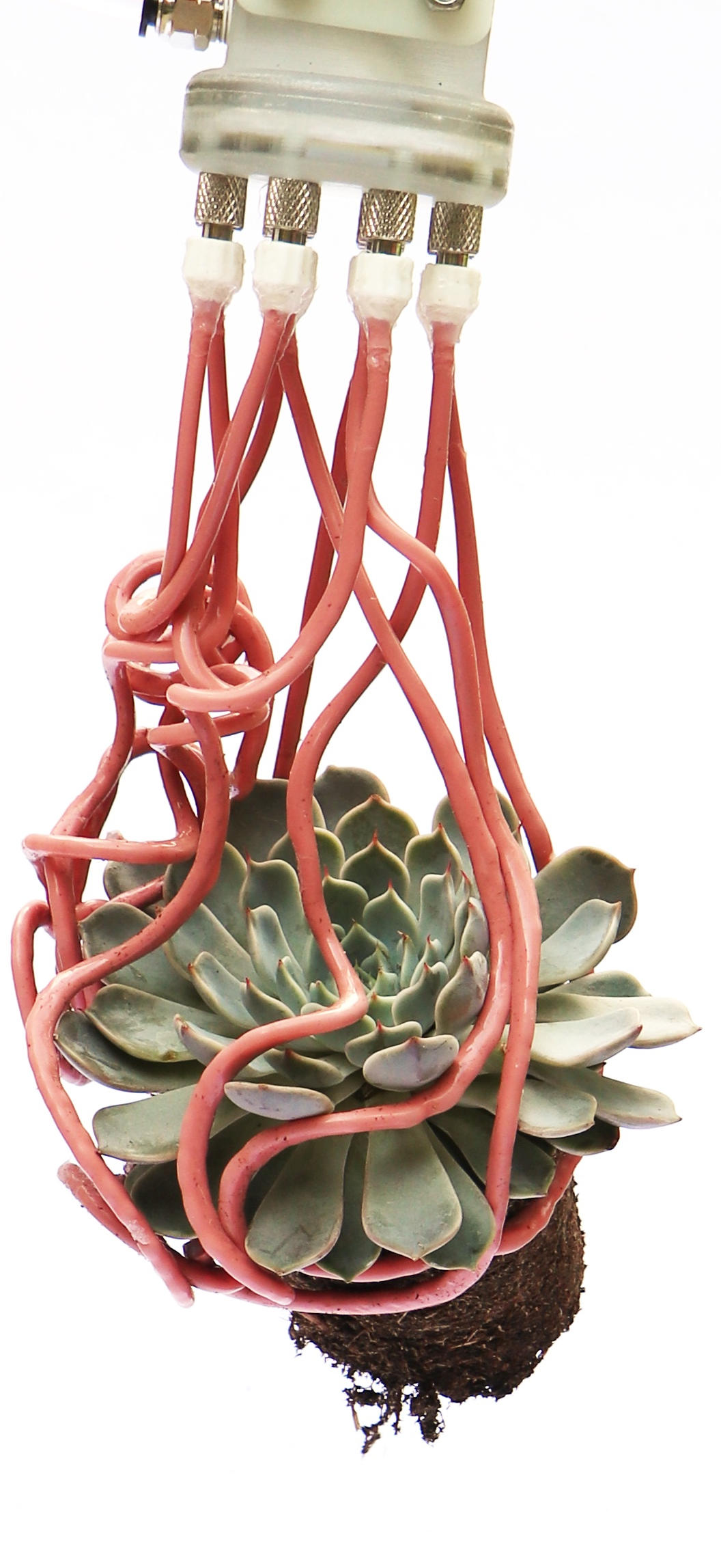
“With this research, we wanted to reimagine how we interact with objects,” said Kaitlyn Becker, former graduate student and postdoctoral fellow at SEAS and first author of the paper. “By taking advantage of the natural compliance of soft robotics and enhancing it with a compliant structure, we designed a gripper that is greater than the sum of its parts and a grasping strategy that can adapt to a range of complex objects with minimal planning and perception.”
Becker is currently an Assistant Professor of Mechanical Engineering at MIT.
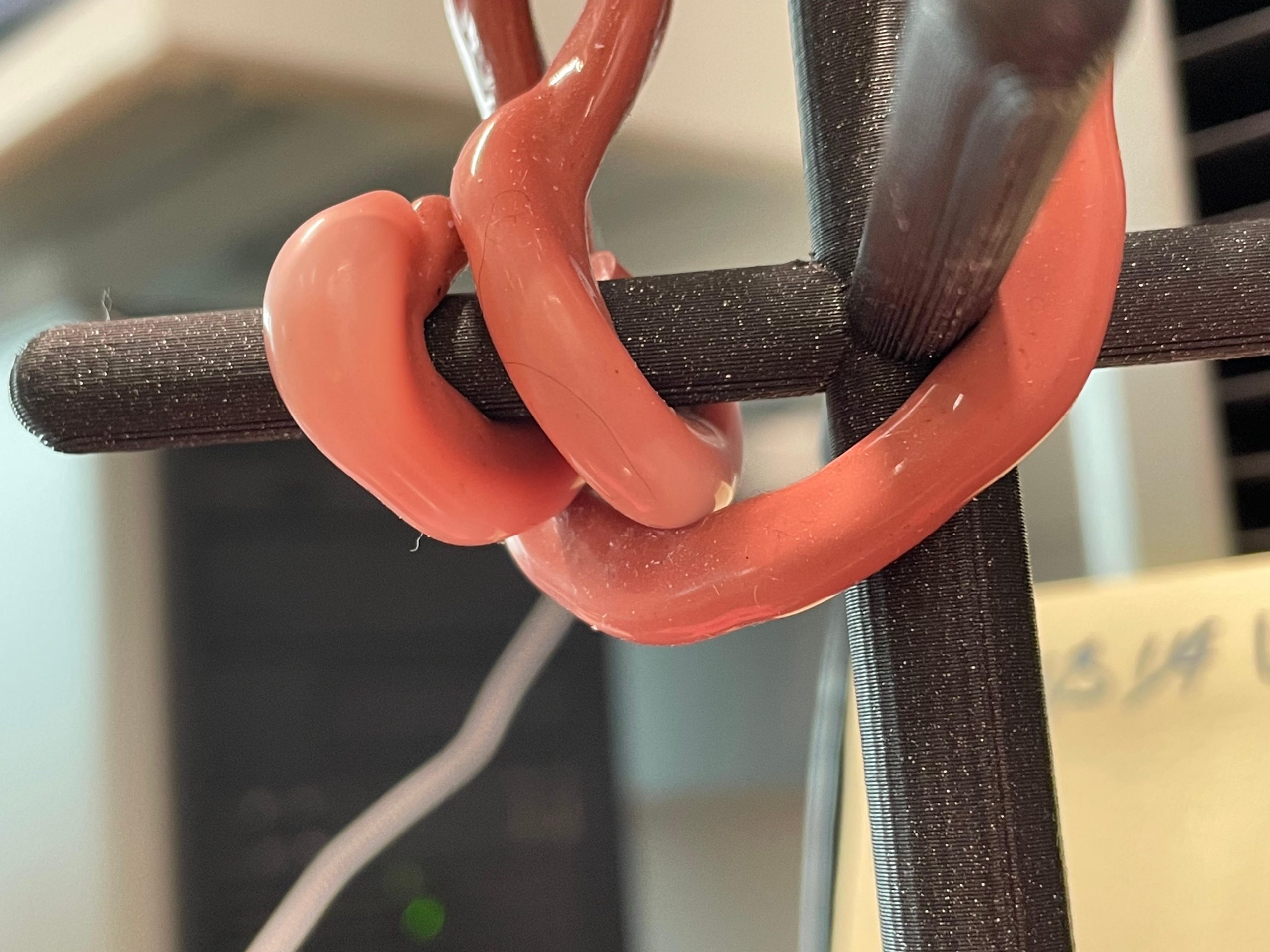
The gripper’s strength and adaptability come from its ability to entangle itself with the object it is attempting to grasp. The foot-long filaments are hollow, rubber tubes. One side of the tube has thicker rubber than the other, so when the tube is pressurized, it curls like a pigtail or like straightened hair on a rainy day.
A video demonstrating the robot. Credit: Harvard John A. Paulson School of Engineering and Applied Sciences
The curls knot and entangle with each other and the object, with each entanglement increasing the strength of the hold. While the collective hold is strong, each contact is individually weak and won’t damage even the most fragile object. To release the object, the filaments are simply depressurized.
Testing and Applications of the Tentacle Gripper
The researchers used simulations and experiments to test the efficacy of the gripper, picking up a range of objects, including various houseplants and toys. The gripper could be used in real-world applications to grasp soft fruits and vegetables for agricultural production and distribution, delicate tissue in medical settings, and even irregularly shaped objects in warehouses, such as glassware.
This new approach to grasping combines Professor L. Mahadevan’s research on the topological mechanics of entangled filaments with Professor Robert Wood’s research on soft robotic grippers.
“Entanglement enables each highly compliant filament to conform locally with a target object leading to a secure but gentle topological grasp that is relatively independent of the details of the nature of the contact,” said Mahadevan, the Lola England de Valpine Professor of Applied Mathematics in SEAS, and of Organismic and Evolutionary Biology, and Physics in FAS and co-corresponding author of the paper.
“This new approach to robotic grasping complements existing solutions by replacing simple, traditional grippers that require complex control strategies with extremely compliant, and morphologically complex filaments that can operate with very simple control,” said Wood, the Harry Lewis and Marlyn McGrath Professor of Engineering and Applied Sciences and co-corresponding author of the paper. “This approach expands the range of what’s possible to pick up with robotic grippers.”
Reference: “Active entanglement enables stochastic, topological grasping” by Kaitlyn Becker, Clark Teeple, Nicholas Charles, Yeonsu Jung, Daniel Baum, James C. Weaver, L. Mahadevan and Robert Wood, 10 October 2022, Proceedings of the National Academy of Sciences.
DOI: 10.1073/pnas.2209819119
The study was funded by the Office of Naval Research, the National Science Foundation, the Simons Foundation, and the Henri Seydoux Fund.
Never miss a breakthrough: Join the SciTechDaily newsletter.
Follow us on Google and Google News.