

Close Menu
    Facebook X (Twitter) Instagram
    SciTechDaily
    • Biology
    • Chemistry
    • Earth
    • Health
    • Physics
    • Science
    • Space
    • Technology
    Facebook X (Twitter) Pinterest YouTube RSS
    SciTechDaily
    Home»Health»Hate Needles? Injections for Diabetes and Cancer Could Become Unnecessary
    Health

    Hate Needles? Injections for Diabetes and Cancer Could Become Unnecessary

    By University of California - RiversideNovember 14, 2022No Comments4 Mins Read
    Facebook Twitter Pinterest Telegram LinkedIn WhatsApp Email Reddit
    Share
    Facebook Twitter LinkedIn Pinterest Telegram Email Reddit
    Insulin Injection Woman
    Scientists are working on a chemical “tag” that will allow diabetes and cancer patients to manage their conditions with pills instead of needles and injections.

    Hate Needles and Injections? These Researchers Do Too.

    Scientists at the University of California, Riverside (UCR) are paving the way for diabetes and cancer patients to forget needles and injections. Instead, these patients will be able to take pills to manage their conditions.

    Some drugs for these diseases dissolve in water. This means that transporting them through the intestines, which receive what we drink and eat, is not feasible. Consequently, these drugs cannot be effectively administered orally, by swallowing medicine through the mouth. However, UCR scientists have created a chemical “tag” that can be added to these drugs, which would them to enter blood circulation via the intestines.

    In a new paper that was recently published in the Journal of the American Chemical Society, the researchers detail how they found the tag and demonstrate its effectiveness.
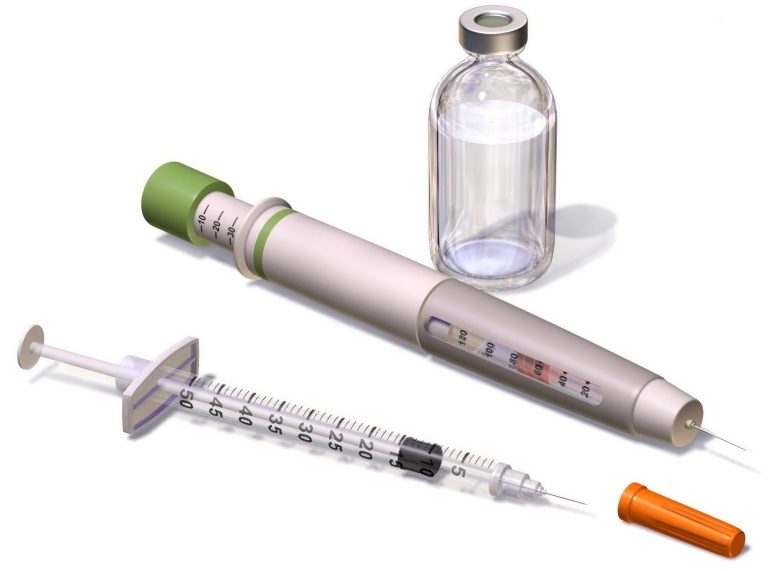
    Syringes for Insulin Injection
    Syringes for insulin injection could become a thing of the past. Credit: Medical gallery of Blausen Medical 2014

    The tag is composed of a small peptide, which is like a protein fragment. “Because they are relatively small molecules, you can chemically attach them to drugs, or other molecules of interest, and use them to deliver those drugs orally,” said Min Xue, UCR chemistry professor who led the research.

    Xue’s laboratory was testing something unrelated when the researchers observed these peptides making their way into cells.

    “We did not expect to find this peptide making its way into cells. It took us by surprise,” Xue said. “We always wanted to find this kind of chemical tag, and it finally happened serendipitously.”
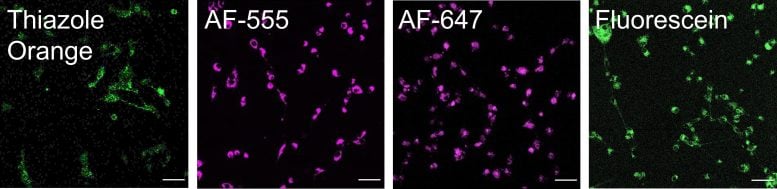
    EPP6 Delivery Into Cells
    Microscopy images show that EPP6 can deliver different types of fluorescent dye molecules into cells. Credit: Min Xue/UCR

    This observation was unexpected, Xue said, because previously, the researchers believed that this type of delivery tag needed to carry positive charges to be accepted into the negatively charged cells. Their work with this neutral peptide tag, called EPP6, shows that belief was not accurate.

    Testing the peptide’s ability to move through a body, the Xue group teamed up with Kai Chen’s group in the Keck School of Medicine at the University of Southern California and fed the peptide to mice. Using a PET scan — a technique similar to a whole-body X-ray that is available at USC, the team observed the peptide accumulating in the intestines, and documented its ultimate transfer into the animals’ organs via the blood.
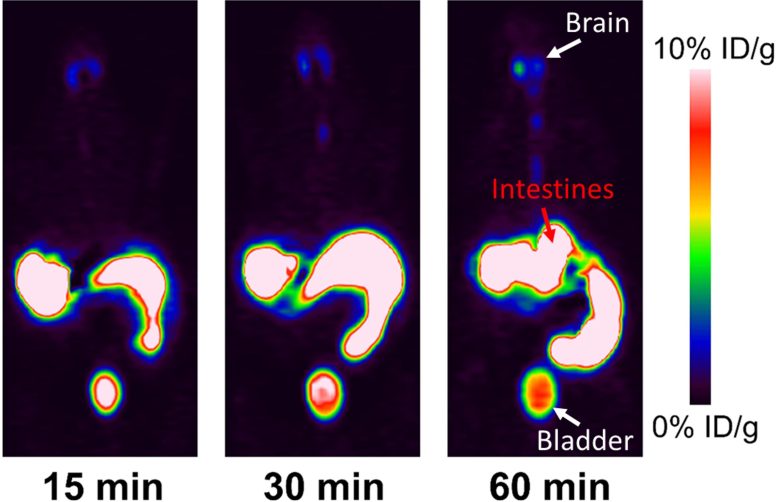
    Orally Administered EPP6 Accumulated in Intestines
    PET scan images show orally administered EPP6 accumulated in the intestines and made its way into the brain and bladder through blood circulation. Credit: Min Xue/UCR

    Having proven the tag successfully navigated the circulatory systems through oral administration, the team now plans to demonstrate that the tag can do the same thing when attached to a selection of drugs. “Quite compelling preliminary results make us think we can push this further,” Xue said.

    Many drugs, including insulin, must be injected. The researchers are hopeful their next set of experiments will change that, allowing them to add this tag to a wide variety of drugs and chemicals, changing the way those molecules move through the body.

    “This discovery could lift a burden on people who are already burdened with illness,” Xue said.

    Reference: “Hydroxyl-Rich Hydrophilic Endocytosis-Promoting Peptide with No Positive Charge” by Siwen Wang, Zhonghan Li, Desiree Aispuro, Nathan Guevara, Juno Van Valkenburgh, Boxi Chen, Xiaoyun Zhou, Matthew N. McCarroll, Fei Ji, Xu Cong, Priyanka Sarkar, Rohit Chaudhuri, Zhili Guo, Nicole P. Perkins, Shiqun Shao, Jason K. Sello, Kai Chen and Min Xue, 27 October 2022, Journal of the American Chemical Society.
    DOI: 10.1021/jacs.2c07420

    Never miss a breakthrough: Join the SciTechDaily newsletter.
    Follow us on Google and Google News.

    Diabetes UC Riverside
    Share. Facebook Twitter Pinterest LinkedIn Email Reddit

    Related Articles

    Scientists Warn: Chemicals in Your Living Room Cause Diabetes

    New Evidence of a Possible Link Between Diabetes and the Hardening of Heart Valves

    Yale Researchers Discover Glucose ‘Control Switch’ Linked to Diabetes

    Researchers Reverse Diabetic Symptoms in Mice

    Asthma Drug May Lead to New Treatments for Diabetes and Obesity

    Vitamin D Could Reduce the Risk of Type 1 Diabetes

    Examining the Relationship Between Diabetes and Cognitive Decline

    Intensive Glycemic Control Does Not Definitively Reduce the Risk of Impaired Kidney Function

    Worldwide Rise in Type 1 Diabetes Could Be Linked to Obesity

    Leave A Reply Cancel Reply

    • Facebook
    • Twitter
    • Pinterest
    • YouTube

    Don't Miss a Discovery

    Subscribe for the Latest in Science & Tech!

    Trending News

    Bone-Strengthening Discovery Could Reverse Osteoporosis

    Scientists Uncover Hidden Trigger Behind Stem Cell Aging

    Scientists Find Way to Reverse Fatty Liver Disease Without Changing Diet

    Could Humans Regrow Limbs? New Study Reveals Promising Genetic Pathway

    Scientists Reveal Eating Fruits and Vegetables May Increase Your Risk of Lung Cancer

    Scientists Reverse Brain Aging With Simple Nasal Spray

    Scientists Uncover Potential Brain Risks of Popular Fish Oil Supplements

    Scientists Discover a Surprising Way To Make Bread Healthier and More Nutritious

    Follow SciTechDaily
    • Facebook
    • Twitter
    • YouTube
    • Pinterest
    • Newsletter
    • RSS
    SciTech News
    • Biology News
    • Chemistry News
    • Earth News
    • Health News
    • Physics News
    • Science News
    • Space News
    • Technology News
    Recent Posts
    • Europe’s Most Active Volcano Just Got Stranger – Here’s Why Scientists Are Rethinking It
    • Why Are Giant Ants Letting Tiny Ants Crawl All Over Them?
    • Revolutionary Technique Sends Healthy Mitochondria Exactly Where They’re Needed
    • This Student Recreated the Universe in a Bottle. What She Discovered Could Help Reveal How Life Started on Earth
    • Alzheimer’s Symptoms May Start Outside the Brain, Study Finds
    Copyright © 1998 - 2026 SciTechDaily. All Rights Reserved.
    • Science News
    • About
    • Contact
    • Editorial Board
    • Privacy Policy
    • Terms of Use

    Type above and press Enter to search. Press Esc to cancel.