
Novel Membranes Can Remove Salt From Water
A team led by King Abdullah University of Science & Technology (KAUST) has shown how ultrathin polymer-based ordered membranes can efficiently remove salt from brine and seawater, offering a potential alternative for current desalination systems.
“Water desalination membranes should simultaneously exhibit high water flux and high salt rejection,” says Yu Han, who led the study. Carbon nanomaterials, such as carbon nanotubes and graphene, are projected to match these requirements because of their unique surface chemistry and tendency to stack into channels with diameters less than one nanometer. However, the challenges of channel alignment and stacking prevent their large-scale use in membranes.
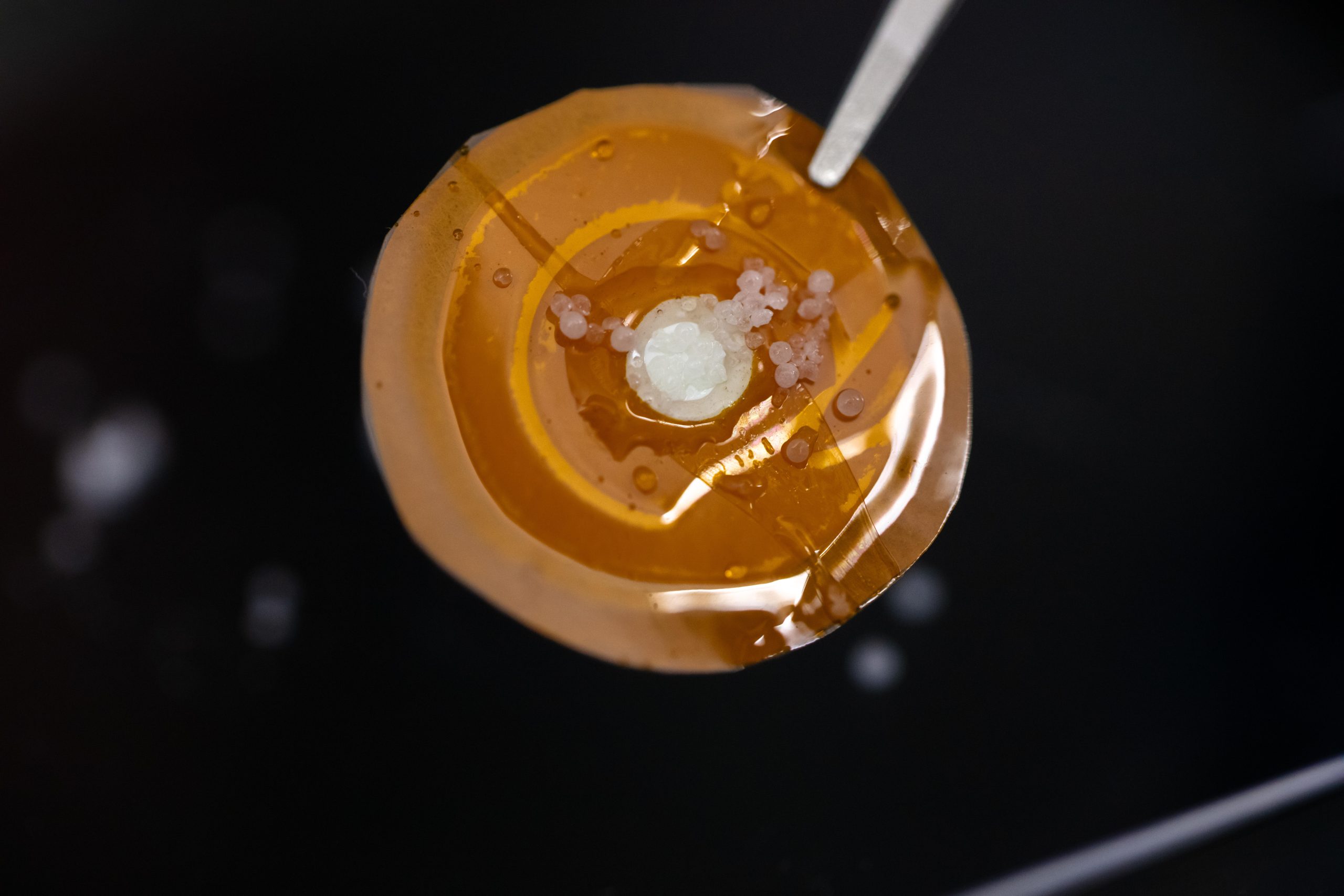
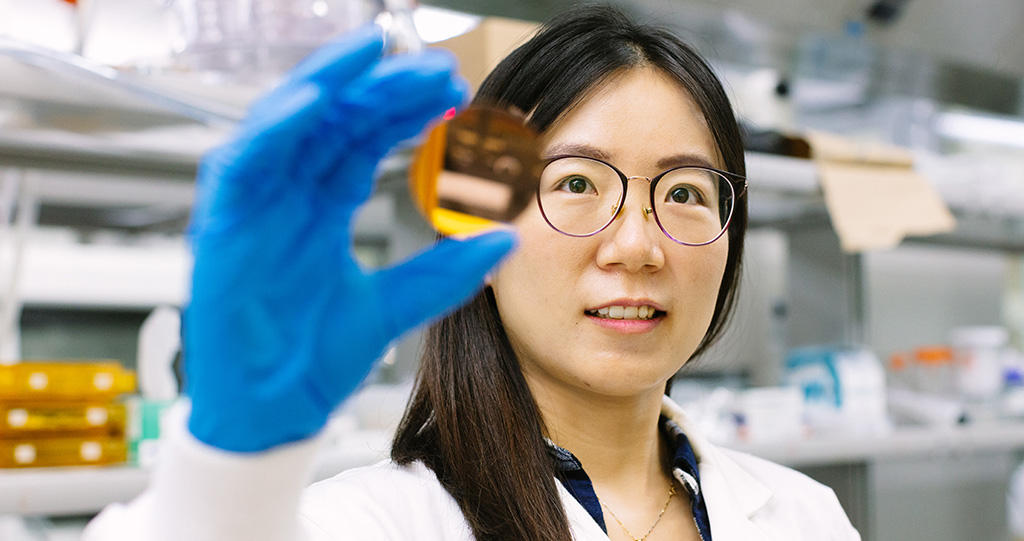
“One way to address these limitations is through two-dimensional porous carbonaceous membranes with regular and uniformly distributed subnanometer-sized molecular transport channels,” says first author Jie Shen, a postdoc in Han’s group. However, these membranes are typically synthesized in solution, which promotes the random growth of a disordered three-dimensional structure with poorly defined micropores.
Using chemical vapor deposition, Yu Han, Vincent Tung, Ingo Pinnau, and Lance Li, a former researcher at KAUST who is now affiliated with the University of Hong Kong, have developed a technique that helps control the growth of two-dimensional conjugated polymer frameworks into ultrathin carbon films.
The researchers deposited the monomer triethynylbenzene on atomically flat single-crystalline copper substrates in the presence of an organic base that acts as a catalyst. Triethynylbenzene bears three reactive groups that serve as anchor points for additional monomers. These groups show a 120-degree angle with respect to each other, generating organized arrays of well-defined cyclic structures that stack into subnanometer-sized rhombic hydrophobic channels.
The membrane displayed excellent water desalination performance in forward and reverse osmosis configurations, surpassing those containing advanced materials such as carbon nanotubes and graphene. It also showed strong rejection for divalent ions, as well as small charged and neutral molecules.
The researchers discovered that the water molecules formed a three-dimensional network inside the membrane instead of moving through the membrane along vertical triangular channels as one-dimensional chains. This explains the fast water transport through the membrane. “This unexpected result revealed that the seemingly discrete vertical channels are actually interconnected by short horizontal channels that can be easily overlooked in the projected structural model,” Han says.
The team is now working on improving the antifouling property, mechanical strength, and long-term chemical stability of the membrane for future practical applications. They are also fine-tuning its surface-charge properties and channel sizes. “Our ultimate goal is to provide a versatile multifunctional platform that meets the needs of various applications, such as ion sieving, single-molecule sensing, and neural interfaces,” Han says.
Reference: “Fast water transport and molecular sieving through ultrathin ordered conjugated-polymer-framework membranes” by Jie Shen, Yichen Cai, Chenhui Zhang, Wan Wei, Cailing Chen, Lingmei Liu, Kuiwei Yang, Yinchang Ma, Yingge Wang, Chien-Chih Tseng, Jui-Han Fu, Xinglong Dong, Jiaqiang Li, Xi-Xiang Zhang, Lain-Jong Li, Jianwen Jiang, Ingo Pinnau, Vincent Tung, and Yu Han, 8 August 2022, Nature Materials.
DOI: 10.1038/s41563-022-01325-y
Never miss a breakthrough: Join the SciTechDaily newsletter.
Follow us on Google and Google News.
8 Comments
Leave it to China, where all the water is more polluted than a New Jersey Sunday school. China is quickly destroying the planet, people. It’s time to send in the Japanese like they did in Manchuria.
This seems to be good news…but the impact of the waste salt byproduct must be considered also.
Great news, Somalia really really need this….It would take thousands of years to bleed the ocean dry…let’s all drink from it…
China is gona chop us up piece by piece and finish us militarily. FIRST IT WAS COVID, NOW IT IS STUDENT SPIES, THEN IT WAS AMERICAN CHINESE SCIENTIST STEALING AGRICULTURE TECHNOLOGY AND GOING BACK TO CHINA, THEN IT WAS HACKING OUR DATA, THEN IT WAS CHINESE LIVING IN UR HOMES PROGRAM, NOW THEY GONA START MESSING WITH OUR WATER?? YO MESSAGE TO CHINA, IF U KNOW SOMETHING WE DONT LET US KNOW.. IF UR AFTER CORRUPT POLITICIANS WHO DONT CARE ABOUT USA TELL US AND WE CAN CONDUCT OUR OWN INVESTIGATIONS.. DONT GO AFTER THE INNOCENT OVER A PAIR OF FAKE CORRUPT LEADERS OF. OURS
SO true I cannot agree more. On another note, are there any pills that you maybe took too many of, or too little?
Erik Rodriguez, are you insane?
To those who like to bash China. We all need to work together to protect our planet. Please quit promoting your dislikes of other races firstly because we are all homo sapient.
This is absolutely fantastic and a new beginning for delivery of potable water but there’s a need to consider disposal efforts for the salty residue.