
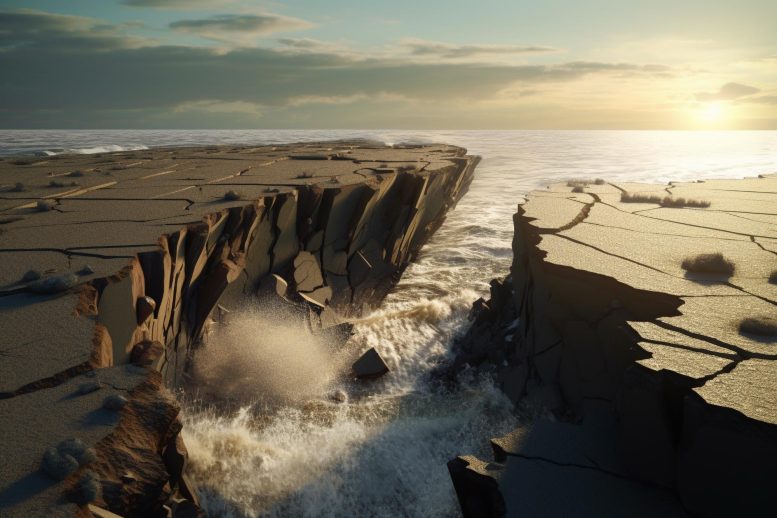
Scientists uncovered a hidden coastal uplift in Rarangi, New Zealand, using LiDAR mapping and kelp genetics. Evidence suggests an earthquake 2000–3000 years ago reshaped the coastline, with kelp recolonizing the area after extinction.
Leveraging the combined strengths of genetics and geology, a team of researchers from the University of Otago has revealed a previously unidentified zone of coastal uplift in Rarangi, Marlborough, that was hiding in plain sight.
This unknown earthquake uplift region was unearthed using a combination of new data sourced from laser mapping and kelp genetics.
Co-author Professor Jon Waters, of the Department of Zoology, says the study gives new insights into the changes in Aotearoa’s landscapes and the recent history of earthquake impacts.
“In a geologically well-studied country like New Zealand, there is still a lot to learn about our history of earthquakes and changing landforms,” he says.
The paper, just published in the Journal of the Royal Society Interface, utilized LiDAR mapping (remote sensing technology used to model ground elevation) and genetic analysis of bull kelp from the uplifted section of the coast.
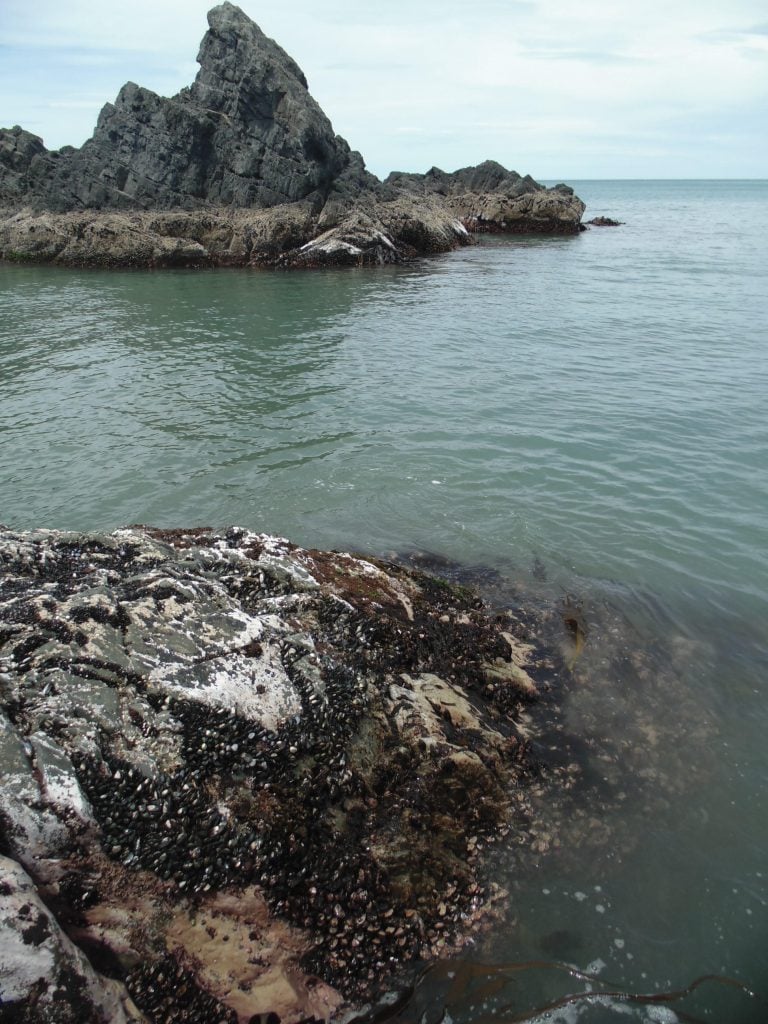
The team identified a previously unrecognized area of uplifted rocky coastline – a bench about 1m above sea level – and a genetic anomaly in kelp below that bench. The kelp’s genetics indicate the species went extinct in the area following an earthquake, before being recolonized by kelp which drifted from 300km south.
Reconstructing the Timeline of Ancient Earthquakes
The group believes the earthquake responsible occurred about 2000 to 3000 years ago, showing the potential for kelp to record geological disturbance events.
“The area is close to a well-known active fault and several big, past earthquakes have been well quantified by other researchers, but this coastal uplift zone was not previously known – the evidence for it is extremely clear now we’ve had a chance to look more closely. Rarangi is also a very popular summer swimming spot, rather than some obscure or remote location, and the evidence of coastal uplift was hiding in plain sight,” Professor Waters says.
The research is the latest output from the group’s Marsden-funded project assessing earthquake impacts on coastal species.
“Our work uses a combination of genetics and geology, and it’s quite exciting that these combined approaches have allowed us to pinpoint a previously unknown site of coastal uplift in New Zealand.
“This work serves to highlight again just how dynamic our country is – and how earthquake uplift leaves long-lasting signatures in our coastal species.”
Reference: “Integrating kelp genomic analyses and geological data to reveal ancient earthquake impacts” by Felix Vaux, Ceridwen I. Fraser, Dave Craw, Stephen Read and Jonathan M. Waters, 17 May 2023, Journal of The Royal Society Interface.
DOI: 10.1098/rsif.2023.0105
Never miss a breakthrough: Join the SciTechDaily newsletter.
Follow us on Google and Google News.
2 Comments
Wow is all I can say
Why does no one understand the secrets that I revealed, I mean the underground secrets left by humans who were buried in the earth tens of millions of years ago, but their secrets remain 100% under two thousand meters of soil, the same place where the fish were buried and turned into They became oil at a depth of 2,000 meters underground. How can I agree with NASA scientists that the earth is full of secrets, that we should dig the earth to a depth of 2,000 meters to find the urban fabric and museums of people tens of millions of years ago? I know the statues. And there are engraved and carved inscriptions of humans in the museum of underground cities, which whenever we reach those secrets, we can cultivate the soul. Millions of years ago, it is possible to understand what progress had been made by the humans who had conquered the earth before us and had thirty thousand years of history and civilization. The humans who had set foot on this planet and set foot on the planet before us explained everything. Mars was planted, but several thousand meters of soil settled on the entire surface of the earth from the objects of the arm of the galaxy and everything is hidden under the soil!!!doctor mehrdadaghakasiri09332197646tehrandarabad masih daneshvary