
Close Menu
    Facebook X (Twitter) Instagram
    SciTechDaily
    • Biology
    • Chemistry
    • Earth
    • Health
    • Physics
    • Science
    • Space
    • Technology
    Facebook X (Twitter) Pinterest YouTube RSS
    SciTechDaily
    Home»Space»HiRISE Views Secondary Craters in Bas Relief
    Space

    HiRISE Views Secondary Craters in Bas Relief

    By SciTechDailyApril 18, 2017No Comments2 Mins Read
    Facebook Twitter Pinterest Telegram LinkedIn WhatsApp Email Reddit
    Share
    Facebook Twitter LinkedIn Pinterest Telegram Email Reddit
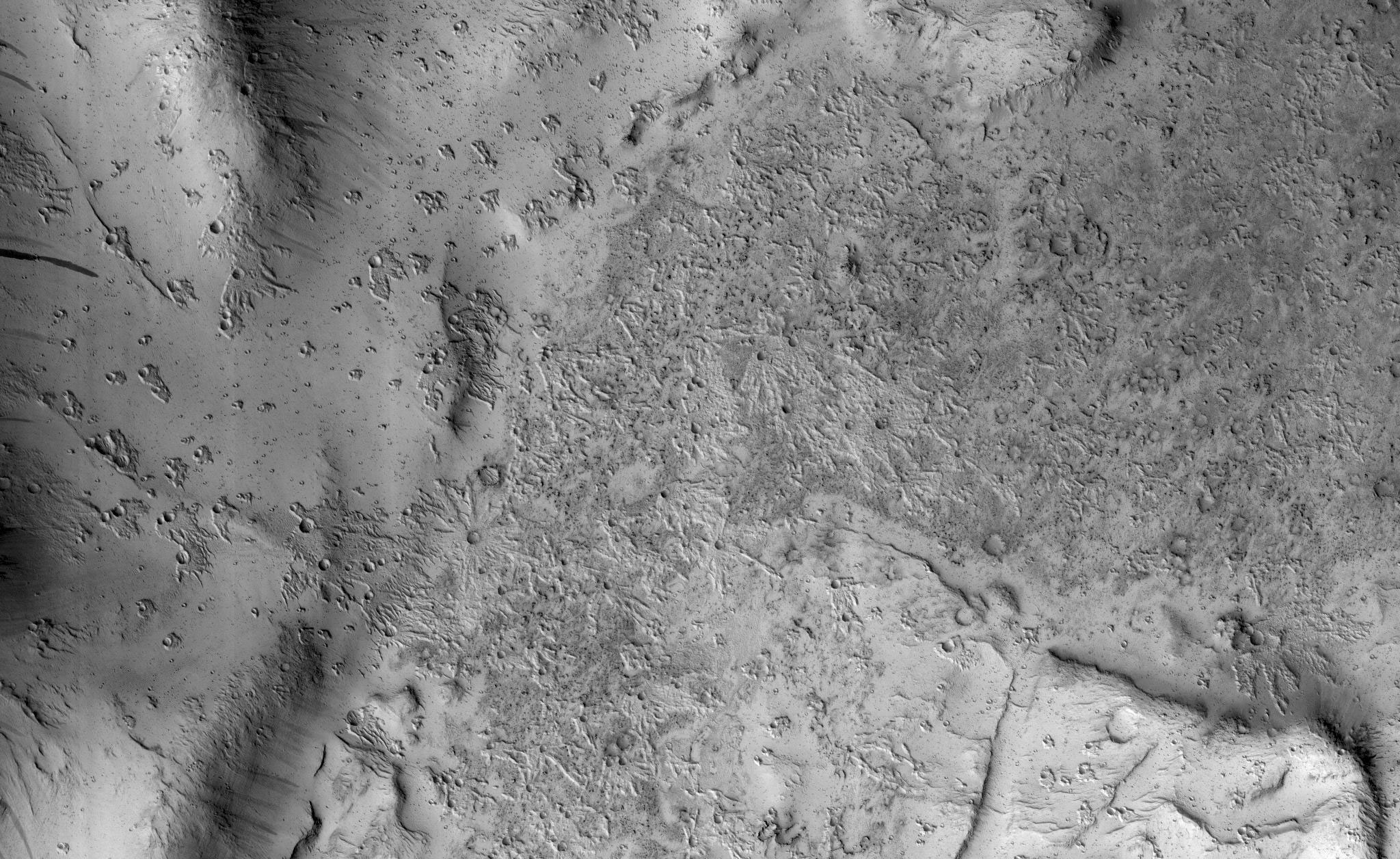
    MRO Views Secondary Craters in Bas Relief on Mars
    Region of Mars sprayed with secondary craters. Credit: NASA/JPL-Caltech/University of Arizona

    This new image comes from NASA’s Mars Reconnaissance Orbiter, revealing a region of Mars sprayed with secondary craters from 10-kilometer (6-mile) Zunil Crater to the northwest.

    Secondary craters form from rocks ejected at high speed from the primary crater, which then impact the ground at sufficiently high speed to make huge numbers of much smaller craters over a large region. In this scene, however, the secondary crater ejecta has an unusual raised-relief appearance like bas-relief sculpture. How did that happen?

    One idea is that the region was covered with a layer of fine-grained materials like dust or pyroclastics about 1 to 2 meters (3 to 7 feet) thick when the Zunil impact occurred (about a million years ago), and the ejecta served to harden or otherwise protect the fine-grained layer from later erosion by the wind.

    The map is projected here at a scale of 50 centimeters (19.7 inches) per pixel. The original image scale is 55 centimeters (21.7 inches) per pixel (with 2 x 2 binning); objects on the order of 165 centimeters (65 inches) across are resolved. North is up.

    This is a stereo pair with ESP_049564_1845.

    Never miss a breakthrough: Join the SciTechDaily newsletter.
    Follow us on Google and Google News.

    Astronomy HiRISE Mars Mars Reconnaissance Orbiter Planetary Science
    Share. Facebook Twitter Pinterest LinkedIn Email Reddit

    Related Articles

    HiRISE Views Snowy Dunes on Mars

    New HiRISE Image Views a Hill in the South Polar Region of Mars

    Astronomers Show Similar-Looking Ridges on Mars Have Diverse Origins

    Mars Orbiter Shows Gullies on Mars Not Likely Formed by Liquid Water

    Mars Reconnaissance Orbiter Reveals Frosted Dunes on Mars

    New HiRISE Image of a “Fresh” Crater Near Sirenum Fossae

    Orbiter Examines Clues to Possible Water Flows on Mars

    Color HiRISE Image of Curiosity Rover on Mars

    A Connection Between Volatiles in the Subsurface of Mars and the Impact Process

    Leave A Reply Cancel Reply

    • Facebook
    • Twitter
    • Pinterest
    • YouTube

    Don't Miss a Discovery

    Subscribe for the Latest in Science & Tech!

    Trending News

    Wasp Colonies Explode Into Violence After Losing Their Queen

    Scientists Create “Living Plastic” That Self-Destructs in Just Six Days

    Your Blood May Carry a 700-Million-Year-Old Secret

    Scientists Discover Some “Zombie Cells” May Actually Help You Live Longer

    Earth May Be Seeding Venus With Life, According to New Research

    What Scientists Found Inside a 117-Year-Old Woman Reveals New Clues to Long Life

    Scientists Discover Mysterious Creature Living in the Great Salt Lake – and It Exists Nowhere Else on Earth

    It’s Alive? Surprising Discovery Changes What We Know About Fog

    Follow SciTechDaily
    • Facebook
    • Twitter
    • YouTube
    • Pinterest
    • Newsletter
    • RSS
    SciTech News
    • Biology News
    • Chemistry News
    • Earth News
    • Health News
    • Physics News
    • Science News
    • Space News
    • Technology News
    Recent Posts
    • Vitamin D Drug Shows Surprising Promise Against One of the Deadliest Cancers
    • Scientists Crack Major Ammonia Problem With a Platinum Catalyst Breakthrough
    • MIT Engineers Solve a Major Lidar Problem That Has Stumped Researchers for Years
    • NASA’s X-59 Sonic Boom Killer Is Ready for Its Biggest Test Yet
    • Why Some Cancers Turn Deadly: Researchers Uncover a Hidden Trigger
    Copyright © 1998 - 2026 SciTechDaily. All Rights Reserved.
    • Science News
    • About
    • Contact
    • Editorial Board
    • Privacy Policy
    • Terms of Use

    Type above and press Enter to search. Press Esc to cancel.