
Using updated statistical methods and historical data, scientists have reinterpreted Johannes Kepler’s sunspot drawings, shedding light on the solar cycles before the Maunder Minimum and the onset of the telescopic era of astronomy.
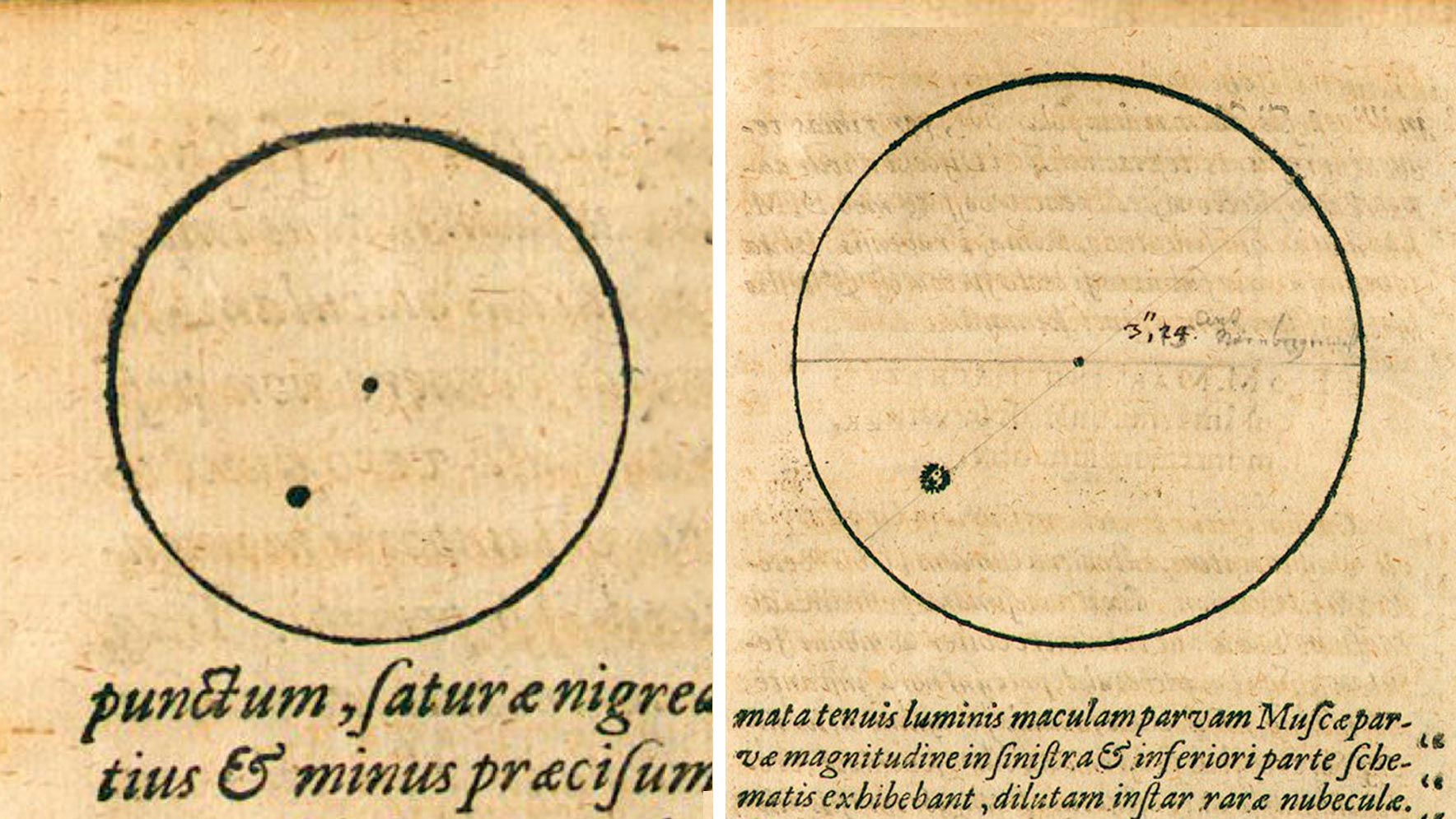
Researchers have re-examined Johannes Kepler’s half-forgotten sunspot drawings using modern techniques and revealed previously hidden information about the solar cycles before the grand solar minimum. By recreating the conditions of the great astronomer’s observations and applying Spörer’s law in the light of modern statistics, an international collaborative group led by Nagoya University in Japan has measured the position of Kepler’s sunspot group, placing it at the tail-end of the solar cycle before the cycle that Thomas Harriot, Galileo Galilei, and other early telescopic observers later witnessed.
The group’s findings, reported in Astrophysical Journal Letters, offer a key to resolving the controversy on the duration of solar cycles at the beginning of the 17th century, which are associated with the transition from regular solar cycles to the grand solar minimum, known as the Maunder Minimum (1645–1715). A grand solar minimum is an abnormally prolonged period of low sunspot activity, which is important for telling researchers about solar activity and its effect on the Earth.
Early Instrumental Records by Kepler
Kepler, renowned for his historical achievements in astronomy and mathematics, made one of the earliest datable instrumental records of solar activity in the early 17th Century, before the earliest telescopic sunspot drawings. He used an apparatus known as a camera obscura, consisting of a small hole in a wall to project the Sun’s image on to a sheet of paper, which allowed him to sketch visible features on the Sun.
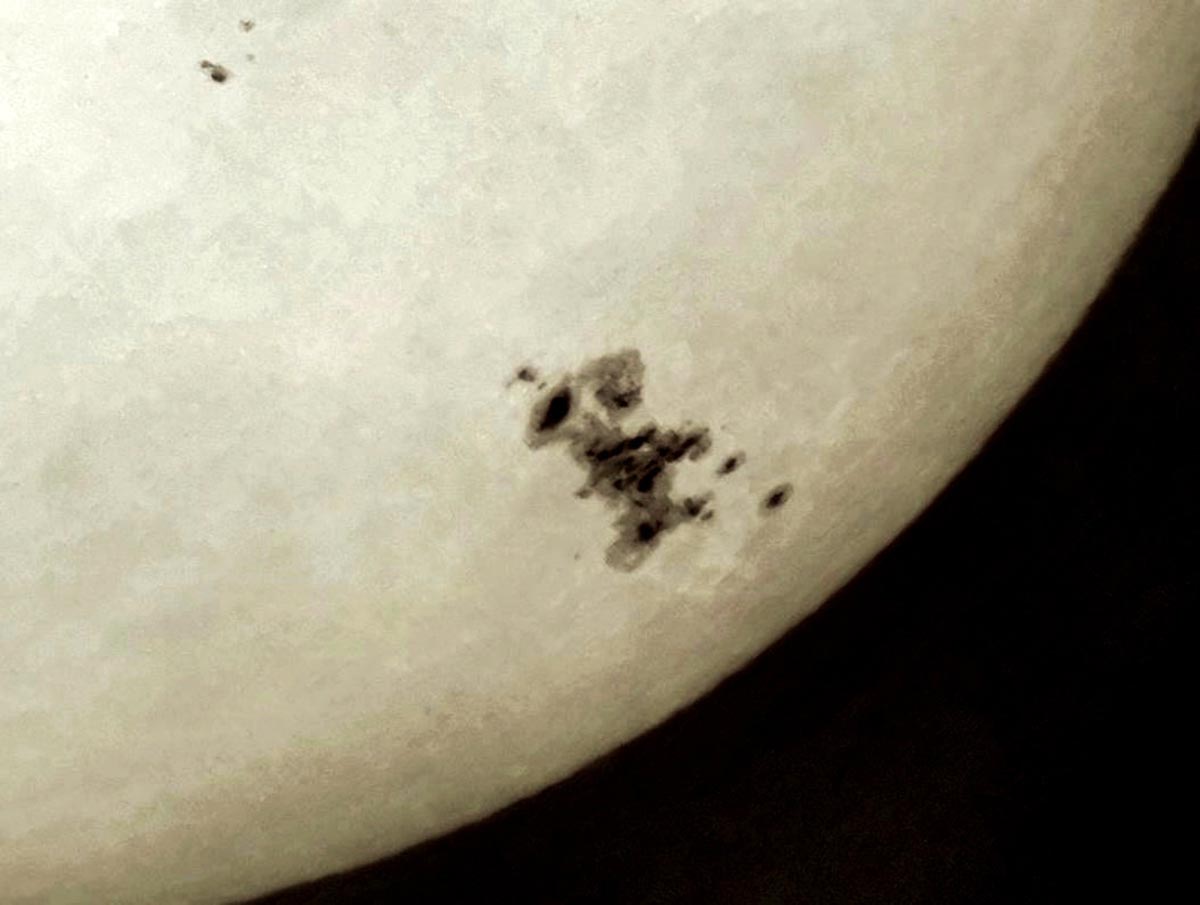
In May 1607, he recorded what he mistakenly interpreted as a transit of Mercury across the Sun, later clarified to be a sunspot group sighting. Sunspots are areas on the Sun’s surface that appear darker because of intense magnetic activity. Their occurrence, frequency, and latitudinal distributions appear in cycles that affect solar radiation and space weather.
Hisashi Hayakawa, the lead author of the study, believes that researchers have underappreciated the significance of this finding. “Since this record was not a telescopic observation, it has only been discussed in the context of the history of science and had not been used for quantitative analyses for the solar cycles in the 17th century,” he said. “But this is the oldest sunspot sketch ever made with an instrumental observation and a projection.”
He continued: “We realized that this sunspot drawing should be able to tell us the location of the sunspot and indicate the solar cycle phase in 1607 as long as we managed to narrow down the observation point and time and reconstruct the tilt of the heliographic coordinates – meaning the positions of features on the Sun’s surface – at that point in time.”
Critical Insights Into 17th Century Solar Activity
The observations were important because the 17th century was a pivotal period in the solar cycle, not only as the time when sunspot observations had just begun but also when solar activity transitioned from normal solar cycles to the Maunder Minimum, a unique grand solar minimum in observational history.
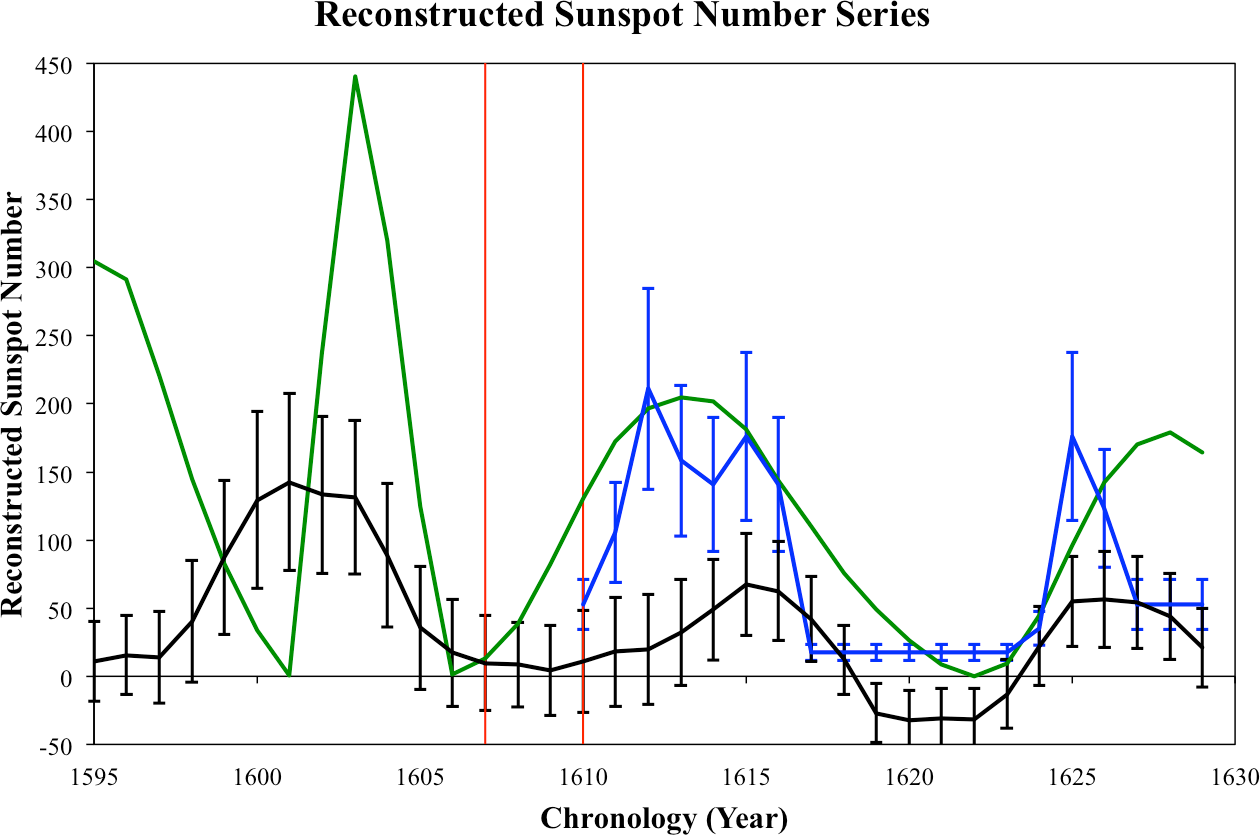
It is not fully understood how the pattern of solar activity shifted from regular cycles to the grand minimum, other than that the transition was gradual. One of the previous tree-ring-based reconstructions claimed a sequence consisting of an extremely short solar cycle (≈ 5 years) and an extremely long solar cycle (≈ 16 years), associating these anomalous solar-cycle durations with a precursor of the transition from regular solar cycles to the grand solar minimum.
“If true, this would indeed be interesting. However, another tree-ring-based reconstruction indicated a sequence of solar cycles with normal durations,” said Nagoya University’s Hisashi Hayakawa; “Then, which reconstruction should we trust? It is extremely important to check these reconstructions with independent – preferably observational – records.”
Deciphering Historical Solar Cycles
Kepler’s sunspot record is a key observational reference. By analyzing Kepler’s records and comparing them with contemporaneous data and modern statistics, the researchers made several important discoveries:
First, after ‘deprojecting’ Kepler’s sunspot drawings and compensating for the solar position angle, they placed Kepler’s sunspot group at a low heliographic latitude. This suggests that the famous schematic drawing of the solar image that Kepler diagrammed in his book is not consistent with Kepler’s original text and the two camera obscura images, which show the sunspot in the upper left portion of the solar disk.
Second, by applying Spörer’s law and the knowledge gained from modern sunspot statistics, they identified the sunspot group as being probably located in the tail-end of solar cycle -13 rather than the beginning of solar cycle -14.
Third, their findings contrast with later telescopic observations, which show sunspots at higher latitudes. “This shows a typical transition from the preceding solar cycle to the following cycle, in accordance with Spörer’s law,” Thomas Teague, an observer for the WDC SILSO and a member of the team, said, referring to the German astronomer Gustav Spörer who described a migration of sunspots from higher to lower latitudes during a solar cycle.
Fourth, this finding allows the authors to approximate the transition between the previous solar cycle (-14) and the next solar cycle (-13) between 1607 and 1610, narrowing down the possible dates when it occurred. On this basis, Kepler’s records suggested a regular duration for solar cycle-13, challenging alternative reconstructions that propose an extremely long cycle during this period.
Continuing Kepler’s Legacy
“Kepler’s legacy extends beyond his observational prowess; it informs ongoing debates about the transition from regular solar cycles to the Maunder Minimum, a period of extremely reduced solar activity and anomalous hemispheric asymmetry between 1645 and 1715,” Hayakawa explained. “By situating Kepler’s findings within broader solar activity reconstructions, scientists gain crucial context for interpreting changes in solar behavior in this pivotal period marking a transition from regular solar cycles to the grand solar minimum.”
“Kepler contributed many historical benchmarks in astronomy and physics in the 17th century, leaving his legacy even in the space age,” said Hayakawa. “Here, we add to that by showing that Kepler’s sunspot records predate the existing telescopic sunspot records from 1610 by several years. His sunspot sketches serve as a testament to his scientific acumen and perseverance in the face of technological constraints.”
Sabrina Bechet, a researcher at the Royal Observatory of Belgium, added, “As one of my colleagues told me, it is fascinating to see historical figures’ legacy records convey crucial scientific implications to modern scientists even centuries later. I doubt if they could have imagined their records would benefit the scientific community much later, well after their deaths. We still have a lot to learn from these historical figures, apart from the history of science itself. In the case of Kepler, we are standing on the shoulders of a scientific giant.”
Reference: “Analyses of Johannes Kepler’s Sunspot Drawings in 1607: A Revised Scenario for the Solar Cycles in the Early 17th Century” by Hisashi Hayakawa, Koji Murata, E. Thomas H. Teague, Sabrina Bechet and Mitsuru Sôma, 25 July 2024, The Astrophysical Journal Letters.
DOI: 10.3847/2041-8213/ad57c9
Never miss a breakthrough: Join the SciTechDaily newsletter.
Follow us on Google and Google News.